Predator
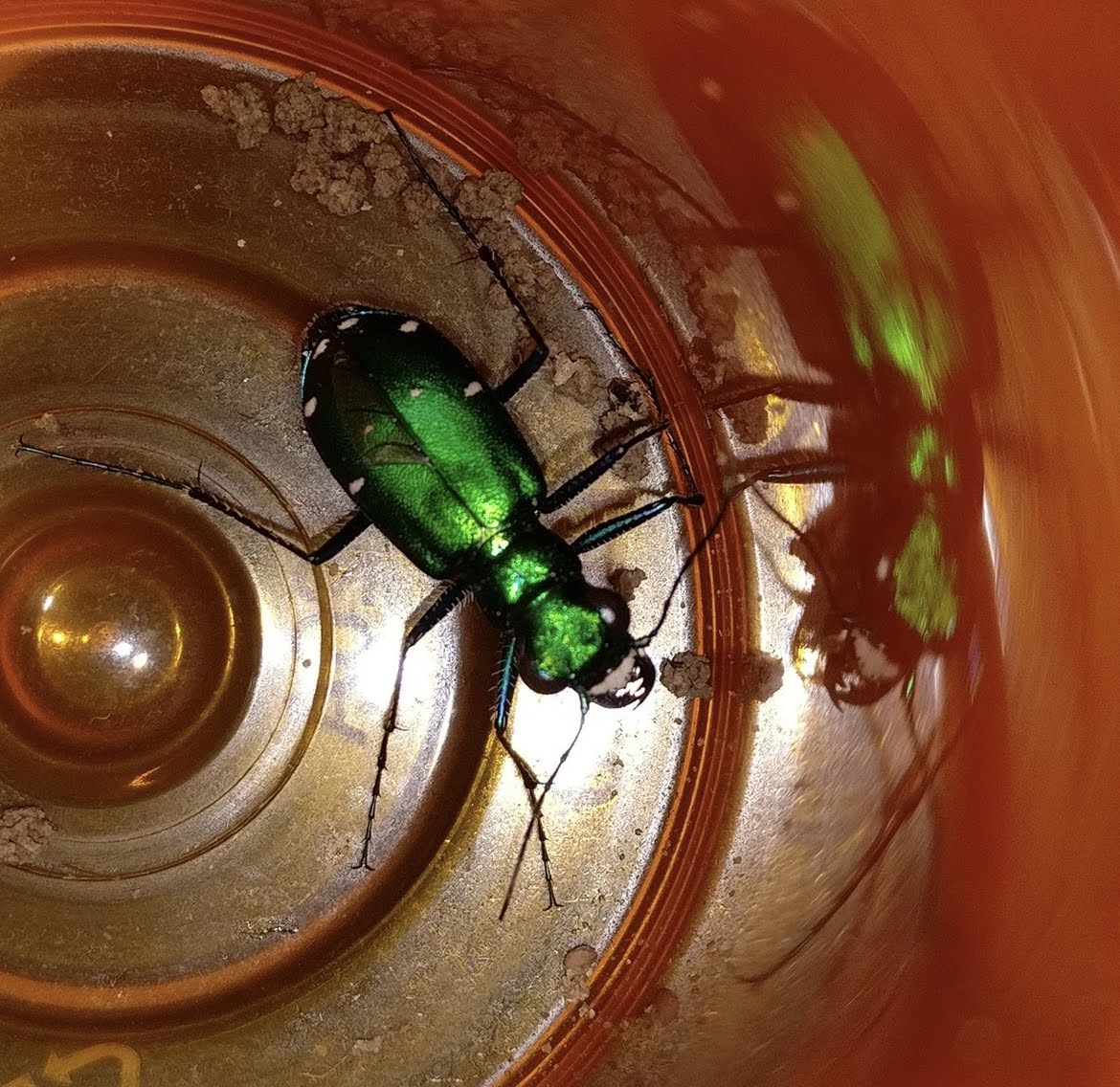
- Tiger beetles are some of the most charismatic insects on Earth: metallic, sharp-eyed, absurdly fast, and every bit as predatory as their name suggests. Come learn how they hunt, why their larvae live like tiny trapdoor monsters in the soil, and what their decline says about the fragile open habitats many other species need too.
Guides
Tachyporus transversalis
Tachyporus transversalis is a small rove beetle in the family Staphylinidae, subfamily Tachyporinae. It is a predatory species native to Europe and parts of Asia, with introduced populations in North America. Like other members of its genus, it inhabits moist ground-level habitats and contributes to natural pest control in agricultural and natural ecosystems.
Tachytes pennsylvanicus
square-headed wasp
Tachytes pennsylvanicus is a solitary square-headed wasp in the family Crabronidae. It belongs to a genus commonly known as "green-eyed wasps" due to the distinctive large green eyes of males and larger species. Like other Tachytes, it is a ground-nesting predator that provisions its burrows with paralyzed orthopteran prey. The species was described by Banks in 1921 and occurs in North America.
Taracticus ruficaudus
Taracticus ruficaudus is a species of robber fly described by Charles Howard Curran in 1930. As a member of the family Asilidae, it is a predatory fly that hunts other insects in flight. The specific epithet ruficaudus refers to its reddish tail. The genus Taracticus comprises small to medium-sized robber flies found primarily in the Americas.
Tarsostenus
checkered beetles
Tarsostenus is a genus of small checkered beetles in the family Cleridae, established by Spinola in 1845. The genus comprises six described species distributed across Papua New Guinea, New Caledonia, and Australia, with one species (T. univittatus) being cosmopolitan in distribution. Members are predators specializing on wood-boring beetles, particularly bostrichids and anobiines. The genus is characterized by distinctive morphological features including an oblong pronotum with glabrous streaks and elytra with ten rows of punctations.
Temnoscheila
bark-gnawing beetles
Temnoscheila is a genus of predatory bark-gnawing beetles in the family Trogossitidae, containing approximately 19 described species. Members of this genus are agile beetles often found in association with bark and wood of trees. At least one species, T. virescens, has been demonstrated to use cerambycid beetle pheromones to locate its prey, indicating sophisticated chemical eavesdropping behavior. The genus was historically often misspelled as "Temnochila" in literature.
Temnoscheila chlorodia
green bark-gnawing beetle, green bark beetle, Pine Trogossitid Beetle
Temnoscheila chlorodia is a bark-gnawing beetle in the family Trogossitidae, known by common names including green bark-gnawing beetle and Pine Trogossitid Beetle. Adults are metallic green or blue predators that forage beneath bark of dead trees. The species occurs in western North America and shows bimodal adult activity in late spring and late summer. Both adults and larvae are predatory, hunting in decaying wood and associated with wood-boring insect nests and wood-decay fungi.
Temnoscheila virescens
Temnoscheila virescens is a predatory beetle in the family Trogossitidae, commonly known as bark-gnawing beetles. Research demonstrates that this species is attracted to cerambycid beetle pheromones, specifically 3-hydroxyhexan-2-one, with ethanol enhancing this attraction. This chemical eavesdropping behavior indicates a predator-prey relationship with longhorn beetles (Cerambycidae). The species belongs to a family whose members are typically associated with dead or dying wood habitats.
Tenodera sinensis sinensis
Chinese praying mantis, Chinese mantis
Tenodera sinensis sinensis, the Chinese praying mantis, is a large non-native mantis in North America, first discovered in 1897 near Philadelphia, likely arriving as a stowaway in nursery stock from Asia. It has become one of the most well-known exotic mantids in the United States, recognized for its substantial size and effective predation on pest insects including the brown marmorated stink bug and spotted lanternfly. The species exhibits flexible hunting strategies that shift between active pursuit and ambush predation depending on satiety level. Adults typically appear in September, with females depositing brown, styrofoam-like egg cases (oothecae) on upright vegetation that overwinter and hatch in spring.
Tenthredo rubeola
Tenthredo rubeola is a species of sawfly in the family Tenthredinidae, distinguished from true wasps by its broad connection between thorax and abdomen lacking a narrow 'wasp waist.' Adults are often observed on flowers and consume both plant material and small insects. The species belongs to a genus of approximately 118 species in the U.S. and Canada, many of which exhibit mimicry of stinging wasps despite being harmless. Larval biology and host plant relationships remain poorly documented.
Teretriosoma
clown beetles
Teretriosoma is a genus of clown beetles in the family Histeridae, established by Horn in 1873. The genus comprises approximately 11 described species distributed primarily in the Americas. One species, Teretriosoma nigrescens, has been extensively studied as a biological control agent against the larger grain borer Prostephanus truncatus, a major pest of stored maize and cassava in Africa and Latin America. Members of this genus are small predatory beetles associated with decomposing organic matter and stored products.
Teretrius
clown beetles
Teretrius is a genus of clown beetles (family Histeridae) comprising at least 70 described species. The genus has gained significant attention due to the use of Teretrius nigrescens as a classical biological control agent against the invasive larger grain borer Prostephanus truncatus in Africa. Members of this genus are small predatory beetles associated with stored products and woodland habitats. The genus was established by Erichson in 1834 and is classified within the subfamily Abraeinae.
Tetracha
Metallic Tiger Beetles
Tetracha is a genus of metallic tiger beetles in the family Cicindelidae, containing approximately 100 described species. The genus was formerly treated as a subgenus of Megacephala but was elevated to full generic status based on morphological and molecular evidence. Tetracha species are exclusively New World in distribution, contrasting with the Old World distribution of Megacephala. Four species occur in the United States: T. carolina, T. floridana, T. virginica, and T. impressa.
Tetracha carolina
Carolina Metallic Tiger Beetle, Carolina Tiger Beetle
Tetracha carolina is a widely distributed tiger beetle species occurring across the southern United States, West Indies, Mexico, Central America, and western South America to Chile. Adults are strictly nocturnal, hiding during the day under cover objects such as irrigation pipes or in self-constructed burrows. The species has been observed to thrive in agricultural habitats, particularly in the Mississippi Alluvial Plain where it was once considered rare. It is one of four Tetracha species in the United States, distinguished from the similar T. floridana by purple or coppery reflections on the anteriolateral elytra and convergent anterior lobes of the apical lunules.
Tetracha floridana
Florida metallic tiger beetle, Florida big-headed tiger beetle
Tetracha floridana is a Florida endemic tiger beetle restricted to coastal salt marsh and mudflat habitats along the Gulf coast from Dixie County to the Florida Keys. Adults are strictly nocturnal and exhibit the characteristic metallic green to dark green elytra and enlarged head of the genus. The species was elevated from subspecies status in 2007 based on distinct morphological characters. Larvae inhabit burrows in dry ground adjacent to coastal marshes and can be distinguished from related genera by simple, thorn-like hooks on the fifth abdominal segment.
Tetracha virginica
Virginia Metallic Tiger Beetle, Virginia Big-headed Tiger Beetle
Tetracha virginica is a large, nocturnal tiger beetle with metallic green elytra lacking apical markings. It is the most widely distributed Tetracha species in the United States, occurring across the southern two-thirds of the eastern U.S. in diverse habitats including agricultural fields, bottomland forests, and barren clay soils. The species is strictly nocturnal and frequently encountered at building and street lights. Larvae are notable for their large size, white-margined pronotum, and simple thorn-like hooks on the fifth abdominal segment.
Tetragnatha
Stretch Spiders, Long-jawed Orb Weavers
Tetragnatha is a large genus of long-jawed orb-weaving spiders with hundreds of species distributed worldwide, though most occur in tropical and subtropical regions. These spiders are characterized by their elongated bodies, extremely long legs, and notably elongated chelicerae (jaws) with well-developed teeth. They construct horizontal orb webs, often near water, and many species can run across water surfaces. The genus exhibits remarkable variation in dispersal ability, with some species being excellent dispersers capable of colonizing islands, while others appear to have secondarily lost this capacity. Hawaiian Tetragnatha species have undergone adaptive radiation, with some lineages evolving cursorial (running) behavior and abandoning web-building entirely.
spiderorb-weaverlong-jawedaquaticstretch-spideradaptive-radiationHawaiicursorial-evolutionhorizontal-webwater-walkingcamouflagemultivoltinesocial-spiderTetragnathidaeAraneaeArachnidapredatorinsectivoreriparianwetlandmeadowtropicalsubtropicalcosmopolitandispersalisland-colonizationphylogeographychemical-species-recognitioncommunal-webbingkleptoparasitism-targetThanasimus dubius
dubious checkered beetle, American bark beetle destroyer, checkered beetle predator, Wavering Checkered Beetle
Thanasimus dubius is a predatory checkered beetle (Cleridae) native to North and Central America. It specializes in preying upon bark beetles, particularly species in the genera Ips and Dendroctonus, with the southern pine beetle (Dendroctonus frontalis) being a well-documented prey item. Adults exhibit a stereotyped five-act predatory sequence involving search/ambush, seizure, alignment, consumption, and grooming. The species demonstrates chemotactic responses to bark beetle pheromones and tree volatiles, and shows regional genetic differentiation across its eastern North American range. It has been investigated as a potential biological control agent for forest pest management.
Thanasimus undatulus
Wavy Checkered Beetle
Thanasimus undatulus is a species of checkered beetle (family Cleridae) known as the Wavy Checkered Beetle. It is a documented predator of bark beetles, specifically the spruce beetle (Dendroctonus rufipennis). The species responds to synthetic pheromones used by its prey, particularly frontalin. It occurs in North America and Central America.
Thelyphonidae
whipscorpions, vinegaroons, whip-scorpions
Thelyphonidae is the sole family of the arachnid order Uropygi (Thelyphonida), containing approximately 140 described species in 25 genera (16 extant, 9 fossil). Members are commonly known as whipscorpions or vinegaroons due to their whip-like flagellum and defensive secretion of acetic acid. The family is divided into four subfamilies: Hypoctoninae, Mastigoproctinae, Thelyphoninae, and Typopeltinae. Despite their conspicuous appearance and wide tropical distribution, systematic knowledge of the group has advanced slowly.
Thermonectus nigrofasciatus ornaticollis
Thermonectus nigrofasciatus ornaticollis is a subspecies of diving beetle in the family Dytiscidae, tribe Aciliini. As part of the genus Thermonectus, it is an aquatic predator inhabiting freshwater systems. The subspecies epithet 'ornaticollis' refers to decorative or ornate features of the pronotum or neck region. Like other members of Thermonectus, it possesses adaptations for underwater respiration and predation.
Thesprotia
Grass-like mantids
Thesprotia is a genus of small, cryptic praying mantids in the family Thespidae. Species in this genus are known for their grass-like appearance and exceptional camouflage among vegetation. The genus contains 14 Neotropical species, with most distributed in South America and one species, Thesprotia graminis, occurring in the southeastern United States. These mantids are considered beneficial due to their predatory habits.
Thinopinus pictus
Pictured Rove Beetle
Thinopinus pictus is a wingless rove beetle (Coleoptera: Staphylinidae) endemic to sandy beaches along the Pacific coast of North America from southern Alaska to Baja California. Both larvae and adults are strictly nocturnal predators that emerge from temporary sand burrows at night to hunt beach hoppers (Orchestoidea). The species exhibits limited dispersal and predictable emergence patterns tied to tidal cycles, with populations forming a 15–30 meter wide band that shifts seaward during neap tides and landward during spring tides.
Tortopus
Tortopus is a genus of burrowing mayflies in the family Polymitarcyidae, restricted to six species based on cladistic revision: T. igaranus, T. circumfluus, T. harrisi, T. zottai, T. bellus, and T. arenales. The genus is characterized by distinctive morphological synapomorphies including female parastyli receptors with long anterior furrows, entirely flattened penes, and nymphs bearing two subapical tubercles on mandibular tusks. Nymphs construct U-shaped tunnels in clay banks, a behavior that renders them difficult to sample with standard aquatic survey methods.
EphemeropteraPolymitarcyidaeburrowing-mayfliesNeotropicalclay-bank-habitatU-shaped-tunnelsmandibular-tusksTortopsisCampsurinaePanamerican-distributioncladistic-revisionsynapomorphyparastyli-receptorsflattened-penesfurcasternal-protuberancessubapical-tubercleslimnological-sampling-biasnymph-morphologyadult-morphologytype-species-T.-igaranusnew-species-T.-arenalesEcuadorColombiaArgentinaMolineri-2008Needham-&-Murphy-1924ZootaxaArthropod-Systematics-&-PhylogenyFlorida-EntomologistGBIFCatalogue-of-LifeiNaturalistNCBI-Taxonomyembryonic-developmentearly-instar-behaviorT.-harrisiT.-bellusT.-circumfluusT.-zottaiT.-igaranusT.-incertusT.-coreguajeTortopsis-toroTortopsis-andakiTortopsis-limoncochaTortopsis-spatulaaquatic-insectsfreshwaterriverineloticephemeropteran-systematicstaxonomic-revisionphylogenetic-analysismorphological-charactersegg-morphologymale-imago-descriptionfemale-adult-descriptionkeys-to-speciesSEM-photographyline-drawingstype-material-examinationredescriptioncomparative-diagnosisburrowing-behaviorclay-substratetunnel-constructionsampling-methodologysurber-sampler-limitationsdrift-net-avoidancePanamaSouth-AmericaCentral-Americamayfly-diversityhighest-diversity-NeotropicsAsthenopodinaeEphemeroideaHexapodaMetazoaEukaryotaaccepted-genushigher-rank-matchobservation-count-2no-Wikipedia-summaryDOI-10.11646/zootaxa.2481.1.1DOI-10.11646/zootaxa.2436.1.4DOI-10.3897/asp.79.e62735DOI-10.2307/3493493Scott-et-al.-1959NavásUlmerTraverLugo-Ortiz-&-McCaffertyDomínguezBanksMcDunnoughPictetNeedham-&-Murphyfreshwater-ecologyaquatic-entomologyinsect-developmentnymphal-stagesimago-descriptionalate-adultswing-venationR-sectorgonopore-structureparastyli-lengthpedestal-morphologylateral-view-curvaturemandibular-morphologytusk-tuberclesmesosternal-structureabdominal-sternum-notchfurcasternumprotuberance-configurationreceptor-socket-orientationIR-veinR2-veinclaw-like-structuregonopore-associationpenis-base-separationfemale-fore-wingadditional-veinscomparative-morphologytype-specimenholotypeallotypeparatypeneotropical-speciesnew-species-descriptionspecies-keyidentification-keymale-adult-keyfemale-adult-keynymph-keygeneric-keyPolymitarcyidae-generasystematicsphylogenycladisticsmonophylysister-groupcharacter-statetransformation-seriesparsimony-analysismorphological-data-setexternal-morphologyegg-chorionmicropyleegg-bursterhatchingemergencebehavioral-studyearly-instarembryologyovipositionsubstrate-preferencehabitat-specificityendemicregional-diversityconservationbiomonitoringwater-quality-indicatormacroinvertebratebenthicinfaunalinterstitialhyporheicriver-bankstream-bankerosionsedimentparticle-sizeclay-contentbank-stabilityroot-matvegetation-associationflow-regimecurrent-velocitydepthwidthstream-ordercatchmentbasinecoregionbiogeographydispersalcolonizationvicariancespeciationadaptive-radiationmorphological-divergenceconvergent-evolutionhomoplasycharacter-conflictbootstrap-supportBremer-supportconsensus-treestrict-consensusmajority-ruletaxonomic-stabilitynomenclatural-actoriginal-descriptionsubsequent-designationtype-localitytype-depositorymuseum-collectionspecimen-preservationalcohol-preservationslide-mountingSEM-preparationimaging-techniquesscientific-illustrationphotographymeasurementmorphometricsratiosproportionsallometrysexual-dimorphismgeographic-variationintraspecific-variationinterspecific-variationdiagnostic-charactersidentification-confidencetaxonomic-expertiseliterature-reviewbibliographic-searchdatabase-queryonline-repositoryopen-accesspaywallabstract-onlyfull-text-unavailablecitation-analysisreference-listsource-qualityevidence-strengthknowledge-gapresearch-needfuture-studycollaborationfield-workcollection-tripsampling-effortspecimen-availabilitytype-examinationrevision-scopetaxonomic-conceptcircumscriptioninclusionexclusionspecies-groupspecies-complexcryptic-speciesmorphospeciesphylogenetic-speciesevolutionary-significant-unitoperational-taxonomic-unitDNA-barcodingmolecular-systematicsintegrative-taxonomytraditional-taxonomyalpha-taxonomybeta-taxonomygamma-taxonomyclassification-hierarchyLinnaean-systemrank-based-nomenclaturephylogenetic-nomenclatureclade-namecrown-groupstem-grouptotal-evidencecongruenceincongruencedata-partitioncharacter-weightingimplied-weightingequal-weightingordered-charactersunordered-charactersmultistate-charactersbinary-characterscontinuous-charactersmeristic-charactersqualitative-charactersquantitative-charactersmorphological-matrixdata-matrixcharacter-matrixtaxon-samplingcharacter-samplingmissing-datainapplicable-datapolymorphismintraspecific-polymorphismfixed-differencediagnostic-differenceunique-derived-characterautapomorphyshared-derived-charactersymplesiomorphyconvergent-characterparallel-evolutionreversalcharacter-optimizationACCTRANDELTRANunambiguous-optimizationambiguous-optimizationmost-parsimonious-treetree-lengthconsistency-indexretention-indexrescaled-consistency-indexhomoplasy-indexcharacter-fitcharacter-congruencecharacter-supportbranch-supportnode-supportclade-stabilitytaxonomic-stability-indexphylogenetic-signalnoisesaturationsubstitution-modelrate-heterogeneityamong-site-rate-variationgamma-distributioninvariant-sitesmodel-selectionAkaike-information-criterionBayesian-information-criterionlikelihood-ratio-testBayesian-inferenceMarkov-chain-Monte-Carloposterior-probabilityprior-probabilityhyperpriorconvergenceeffective-sample-sizeburn-instationaritytrace-plotparameter-estimatecredible-intervalhighest-posterior-densitytree-topologytree-shapelineage-through-timediversification-rateextinction-ratespeciation-ratenet-diversificationbirth-death-modelYule-modelcoalescent-modelpopulation-sizeeffective-population-sizegene-flowmigration-rateisolation-by-distancephylogeographyhistorical-biogeographyancestral-area-reconstructiondispersal-vicariance-analysisdecisive-weightingevent-based-methodtaxon-area-cladogramarea-cladogrambiogeographic-homologytrack-analysispanbiogeographyphylogenetic-biogeographyecological-biogeographydispersal-biogeographyvicariance-biogeographycenter-of-originarea-of-endemismrefugiumPleistoceneglaciationclimate-changehabitat-fragmentationhabitat-lossanthropogenic-impactpollutioneutrophicationsedimentationdam-constructionwater-abstractionflow-modificationthermal-pollutiontoxic-substancesheavy-metalspesticidesurbanizationagriculturedeforestationland-use-changeriparian-degradationchannelizationdredgingmininginvasive-speciesbiological-invasioncompetitionpredationparasitismmutualismcommensalismamensalismfacilitationecosystem-engineerkeystone-speciesflagship-speciesumbrella-speciesindicator-speciessentinel-speciesbioindicatorecological-indicatorenvironmental-indicatorwater-quality-indexbiotic-indexmultimetric-indexrapid-bioassessmentprotocolstandardizationquality-assurancequality-controlreference-conditionleast-disturbedminimally-disturbedbest-availabletype-specificregion-specificstream-typeriver-typefunctional-feeding-groupcollector-gatherercollector-filtererscrapershredderpredatorparasiteengulferpiercerburrowersprawlerclingerswimmerskaterdiversurface-dwellerbenthic-dwellerinterstitial-dwellerhyporheic-dwellerphreatic-dwellertroglobitestygobitecave-inhabitantspring-inhabitantheadwatermid-orderhigh-orderlowlandmontanealpinesubtropicaltropicaltemperateborealarcticantarcticpalearcticnearcticafrotropicalorientalaustralianoceaniccosmopolitanwidespreadrestrictedrelictdisjunct-distributionrange-extensionnew-recordfirst-recordcountry-recordstate-recordprovince-recordlocality-recordelevation-recordaltitudinal-rangelatitudinal-rangelongitudinal-rangedistribution-patternrange-sizerange-fillextent-of-occurrencearea-of-occupancyIUCN-categorythreat-statusdata-deficientnot-evaluatedleast-concernnear-threatenedvulnerableendangeredcritically-endangeredextinct-in-wildextinctpopulation-trendpopulation-densitypopulation-structureage-structuresize-structuresex-ratioreproductive-outputfecundityfertilitymortalitysurvivorshiplife-tablecohort-analysisgeneration-timedoubling-timeintrinsic-rate-of-increasefinite-rate-of-increasenet-reproductive-ratestable-age-distributionstationary-populationexpanding-populationdeclining-populationsource-sink-dynamicsmetapopulationpopulation-viability-analysisminimum-viable-populationgenetic-diversityheterozygosityallelic-richnessprivate-allelefounder-effectbottleneckgenetic-driftinbreedinginbreeding-depressionoutbreedingoutbreeding-depressionhybridizationintrogressiongene-flow-barrierreproductive-isolationprezygotic-isolationpostzygotic-isolationmechanical-isolationtemporal-isolationhabitat-isolationbehavioral-isolationgametic-isolationzygotic-mortalityhybrid-inviabilityhybrid-sterilityhybrid-breakdownreinforcementcharacter-displacementecological-speciationallopatric-speciationsympatric-speciationparapatric-speciationperipatric-speciationcentrifugal-speciationdivergence-with-gene-flowspeciation-continuumanagenesiscladogenesisbudding-speciationbranching-speciationphyletic-gradualismpunctuated-equilibriumstasistrendprogressionorthogenesisaristogenesismosaic-evolutionco-evolutionarms-raceRed-Queen-hypothesisevolutionary-stable-strategyfrequency-dependent-selectiondensity-dependent-selectionr-selectionK-selectionbet-hedgingiteroparitysemelparityploidy-levelchromosome-numberkaryotypegenome-sizetransposable-elementgene-duplicationneofunctionalizationsubfunctionalizationpseudogeneregulatory-evolutioncis-regulatorytrans-regulatoryenhancerpromotersilencerinsulatortranscription-factorsignaling-pathwaydevelopmental-pathwaygene-networkepigenetic-modificationDNA-methylationhistone-modificationchromatin-remodelinggenomic-imprintingparental-effectmaternal-effectpaternal-effectcytoplasmic-inheritancemitochondrial-DNAchloroplast-DNAendosymbiontWolbachiaRickettsiaSpiroplasmaCardiniumArsenophonusHamiltonellaRegiellaSerratiaBuchneraCarsonellaPortieraprimary-endosymbiontsecondary-endosymbiontfacultative-symbiontobligate-symbiontmutualistic-symbiontparasitic-symbiontcommensal-symbiontpathogenvectordisease-transmissionzoonosisemerging-infectious-diseasebiosecurityquarantineeradicationcontrolmanagementconservation-biologyrestoration-ecologyhabitat-restorationriver-restorationstream-restorationfloodplain-restorationriparian-restorationwetland-restorationecosystem-restorationpassive-restorationactive-restorationassisted-recoverymanaged-relocationassisted-colonizationex-situ-conservationin-situ-conservationprotected-areanational-parknature-reservewildlife-refugebiosphere-reserveworld-heritage-siteramsar-siteimportant-bird-areakey-biodiversity-areaAlliance-for-Zero-ExtinctionEDGE-speciesevolutionarily-distinctglobally-endangeredconservation-prioritizationsystematic-conservation-planningMarxanZonationconservation-opportunityconservation-costconservation-benefittrade-offsocioeconomic-factorstakeholder-engagementcommunity-based-conservationadaptive-managementmonitoring-programlong-term-studycitizen-sciencepublic-participationenvironmental-educationoutreachscience-communicationknowledge-transfercapacity-buildinginstitutional-strengtheningpolicy-developmentlegislationregulationenforcementcomplianceincentivepayment-for-ecosystem-servicescarbon-creditbiodiversity-offsetmitigation-bankingconservation-easementland-trustprivate-land-conservationconservation-covenantstewardshipsustainable-usesustainable-managementecosystem-based-managementintegrated-water-resources-managementbasin-managementcatchment-managementlandscape-managementseascape-managementconnectivity-conservationcorridorstepping-stonebuffer-zonematrix-managementcountryside-biogeographyreconciliation-ecologynovel-ecosystemdesigner-ecosystemecosystem-serviceprovisioning-serviceregulating-servicesupporting-servicecultural-servicefood-productionwater-supplyraw-materialsgenetic-resourcesmedicinal-resourcesornamental-resourcesair-quality-regulationclimate-regulationwater-regulationerosion-regulationwater-purificationwaste-treatmentdisease-regulationpest-regulationpollinationseed-dispersalhabitat-provisionnutrient-cyclingsoil-formationprimary-productionrecreationtourismaesthetic-valuespiritual-valueeducational-valuescientific-valueinspirationsense-of-placecultural-heritagetraditional-knowledgeindigenous-knowledgelocal-knowledgeecosystem-service-valuationeconomic-valuationcontingent-valuationchoice-experimentbenefit-transfertotal-economic-valueuse-valuenon-use-valuedirect-useindirect-useoption-valuebequest-valueexistence-valuewillingness-to-paywillingness-to-acceptcost-benefit-analysiscost-effectiveness-analysismulti-criteria-analysisdecision-supportuncertaintyrisk-assessmentscenario-analysissensitivity-analysisrobustness-analysisadaptive-capacityresiliencevulnerabilityexposuresensitivitycoping-capacitytransformationsocial-ecological-systemcomplex-adaptive-systemtipping-pointregime-shiftalternative-stable-statehysteresispath-dependencelegacy-effectslow-variablefast-variablepanarchyadaptive-cycleexploitationreleasereorganizationforesightanticipatory-governancetransformative-changesustainability-sciencefuture-earthinterdisciplinarytransdisciplinaryproblem-orientedsolution-orientedaction-orientedknowledge-co-productionboundary-workboundary-objectboundary-organizationscience-policy-interfacescience-society-interfaceknowledge-brokerageknowledge-exchangeknowledge-integrationmode-1-sciencemode-2-sciencetriple-helixquadruple-helixresponsible-innovationreflexive-governanceadaptive-governancecollaborative-governancepolycentric-governancenetwork-governanceself-organizationcollective-actioncommon-pool-resourcetragedy-of-the-commonssocial-dilemmainstitutional-analysisinstitutional-designOstrom-design-principlesmonitoringsanctioningconflict-resolutionnested-enterprisesproportionalitycollective-choiceconstitutional-choiceoperational-choicecollective-action-theorygame-theoryprisoner's-dilemmachicken-gameassurance-gamecoordination-gameevolutionary-game-theoryreplicator-dynamicsESSNash-equilibriumPareto-optimalitysocial-optimummarket-failuregovernment-failurevoluntary-failurenon-market-valuepublic-goodcommon-goodclub-goodprivate-goodrivalryexcludabilityfree-riderhold-up-problemmoral-hazardadverse-selectioninformation-asymmetrytransaction-costproperty-rightcommon-propertystate-propertyprivate-propertyhybrid-propertybundle-of-rightsusufructaccesswithdrawalalienationtenure-securityland-tenurewater-tenureresource-tenurecustomary-tenurestatutory-tenurelegal-pluralismde-factode-jureformalinformallegalitylegitimacyrecognitiondeviancecorruptionelite-capturesocial-capitalbonding-capitalbridging-capitallinking-capitaltrustreciprocityreputationsocial-networksocial-embeddednessstructural-holebrokerageclosurecohesiondensitycentralitybetweennessdegreeeigenvectorPageRanksmall-worldscale-freerandom-networkregular-networkhierarchical-networkmodularitycommunity-structureclusteringassortativityhomophilyheterophilypreferential-attachmentfitness-modelnetwork-evolutionnetwork-dynamicstemporal-networkmultilayer-networkmultiplex-networkbipartite-networkaffiliation-networkone-mode-networktwo-mode-networkadjacency-matrixedge-listgraph-theoryvertexedgenodelinktieconnectionpathcycletreeforestcomponentgiant-componentpercolationphase-transitioncriticalityself-organized-criticalitypower-lawheavy-tailPareto-distributionlognormal-distributionexponential-distributionPoisson-distributionbinomial-distributionnormal-distributionGaussian-distributionstatistical-distributionprobability-distributioncumulative-distributionprobability-density-functioncumulative-distribution-functionsurvival-functionhazard-functionmomentmeanmedianmodevariancestandard-deviationcoefficient-of-variationskewnesskurtosisquantilepercentiledecilequartileinterquartile-rangerangeminimummaximumoutlierrobust-statisticparametric-testnon-parametric-testhypothesis-testingnull-hypothesisalternative-hypothesissignificance-levelp-valueconfidence-intervaltype-I-errortype-II-errorstatistical-powereffect-sizesample-sizesampling-designexperimental-designobservational-studyquasi-experimentnatural-experimentrandomized-controlled-trialbefore-after-control-impactBACIimpact-assessmentenvironmental-impact-assessmentstrategic-environmental-assessmentcumulative-impact-assessmentsocial-impact-assessmenthealth-impact-assessmentlife-cycle-assessmentcarbon-footprintwater-footprintecological-footprintmaterial-flow-analysissubstance-flow-analysisenergy-analysisexergy-analysisemergy-analysisinput-output-analysisenvironmentally-extended-input-outputsocial-accounting-matrixcomputable-general-equilibriumagent-based-modelsystem-dynamics-modelBayesian-networkstructural-equation-modelpath-analysisfactor-analysisprincipal-component-analysiscluster-analysisdiscriminant-analysiscanonical-correspondence-analysisredundancy-analysisnon-metric-multidimensional-scalingordinationclassificationregression-analysislinear-regressionnonlinear-regressiongeneralized-linear-modelgeneralized-additive-modelmixed-effects-modelmultilevel-modelhierarchical-modelBayesian-hierarchical-modelstate-space-modelhidden-Markov-modeltime-series-analysisspatial-analysisgeostatisticskrigingvariogramspatial-autocorrelationMoran's-IGeary's-cGetis-Ord-Gilocal-indicator-of-spatial-associationLISAhot-spotcold-spotspatial-clusterspatial-outlieredge-effectboundary-effectmodifiable-areal-unit-problemMAUPecological-fallacyatomistic-fallacycross-scale-inferenceupscalingdownscalingscaling-lawallometric-scalingfractalfractal-dimensionself-similaritymulti-fractallacunarityroughnesstexturepatternprocesspattern-process-relationshipneutral-modelnull-modelrandomization-testpermutation-testbootstrapjackknifecross-validationmodel-averagingmodel-comparisoninformation-criterionBayesian-model-averagingensemble-modelingconsensus-modelpredictionforecastprojectionscenarionarrative-scenarioquantitative-scenariostorylineshared-socioeconomic-pathwayrepresentative-concentration-pathwayemission-scenarioclimate-scenarioimpact-scenarioadaptation-scenariomitigation-scenariotransformation-scenariobackcastingforecastingtrend-extrapolationexpert-judgmentDelphi-methodparticipatory-modelingstakeholder-analysisinfluence-diagramconceptual-modelmental-modelsystem-archetypeleverage-pointintervention-pointpolicy-instrumenteconomic-instrumentregulatory-instrumentvoluntary-instrumentinformation-instrumentmarket-based-instrumentcommand-and-control-instrumentsubsidytaxchargefeelevydeposit-refundtradable-permitemission-tradingcarbon-taxbiodiversity-bankingconditional-cash-transfercommunity-based-natural-resource-managementjoint-forest-managementco-managementadaptive-co-managementtransboundary-managementinternational-regimeglobal-governancemultilateral-environmental-agreementconventiontreatycartagena-protocolnagoya-protocolAichi-targetsustainable-development-goalSDGpost-2020-global-biodiversity-frameworkKunming-Montreal-global-biodiversity-framework30-by-30-targetnature-based-solutionNbSecosystem-based-adaptationecosystem-based-mitigationgreen-infrastructureblue-infrastructurenatural-infrastructurehybrid-infrastructureclimate-smart-agricultureclimate-smart-landscapeclimate-smart-developmentlow-carbon-developmentgreen-economycircular-economybioeconomyblue-economysustainable-consumptionsustainable-productionlife-cycle-thinkingcradle-to-cradleindustrial-ecologyindustrial-symbiosisurban-metabolismsocio-ecological-metabolismmaterial-intensityenergy-intensitycarbon-intensitydecouplingabsolute-decouplingrelative-decouplingresource-efficiencyeco-efficiencyeco-innovationgreen-technologyclean-technologyenvironmental-technologyappropriate-technologyparticipatory-technologytechnology-transfertechnology-diffusioninnovation-systemnational-innovation-systemsectoral-innovation-systemtechnological-innovation-systemsocio-technical-systemsocio-technical-transitionmulti-level-perspectiveniche-innovationregimelandscapetransition-managementstrategic-niche-managementtransition-experimentliving-labreal-world-laboratoryurban-living-labrural-living-labsustainability-transitionfundamental-changesystem-innovationdirectionalityreflexivityresponsivenessanticipationlearning-by-doingdoing-by-learningsocial-learningorganizational-learningpolicy-learningtransformative-capacitycapacity-developmentinstitutional-learningevolutionary-governanceinstitutional-changepath-dependencylock-incarbon-lock-intechnological-lock-ininstitutional-lock-inbehavioral-lock-incultural-lock-inunlockingdestabilizationphase-outdivestmentstranded-assetjust-transitiontransition-pathwaytransition-scenariodeep-decarbonizationnet-zerocarbon-neutralclimate-neutralnature-positivebiodiversity-positiverestoration-positiveregenerativecirculardoughnut-economicsplanetary-boundarysafe-operating-spaceenvironmental-ceilingsocial-foundationintergenerational-equityintragenerational-equitydistributive-justiceprocedural-justicerecognition-justiceenvironmental-justiceclimate-justiceenergy-justicewater-justicefood-justicespatial-justiceterritorial-justiceecological-justicespecies-justiceintersectionalityadaptationmitigationsustainabilitysustainable-developmentwell-beinghuman-developmentcapability-approachhuman-securityenvironmental-securityclimate-securitywater-securityfood-securityenergy-securitylivelihood-securitydisaster-risk-reductionclimate-change-adaptationclimate-change-mitigationloss-and-damageclimate-financegreen-climate-fundadaptation-fundglobal-environment-facilitybiodiversity-financenature-financeblended-financeimpact-investmentESGenvironmental-social-governancesustainable-financegreen-bondsocial-bondsustainability-bondblue-bondnature-bondbiodiversity-creditoffsetinsetnature-based-creditecosystem-service-creditpayment-for-resultsresults-based-paymentconditional-paymentperformance-based-paymentoutcome-based-paymentenvironmental-service-paymentPSAPESREDDREDD+AFOLULULUCFNAMANAMCNDCNAPNBSAPnational-adaptation-plannational-biodiversity-strategy-and-action-plannationally-determined-contributionnationally-appropriate-mitigation-actionintended-nationally-determined-contributionlong-term-low-emission-development-strategynet-zero-targetcarbon-budgetremaining-carbon-budgetemission-gapadaptation-gapfinance-gapimplementation-gapambition-loopratchet-mechanismglobal-stocktaketransparency-frameworkenhanced-transparency-frameworkcommon-but-differentiated-responsibilitiesrespective-capabilitiesclimate-equityclimate-litigationclimate-governanceclimate-diplomacyclimate-negotiationUNFCCCCOPCMPCMASBSTASBIIPCCIPBESUNCCDCBDCITESRamsarWorld-HeritageMan-and-the-BiosphereMABUNESCOFAOWHOILOUNDPUNEPUN-HabitatWorld-BankIMFWTOOECDGEFGCFAFmultilateral-development-bankregional-development-banknational-development-bankdevelopment-finance-institutionexport-credit-agencysovereign-wealth-fundpension-fundinsurance-companyasset-managerasset-ownercorporate-investorretail-investorimpact-investorphilanthropic-investordevelopment-partnerbilateral-donormultilateral-donorprivate-donorfoundationNGOCSOcivil-society-organizationnon-governmental-organizationcommunity-based-organizationindigenous-peoples-organizationwomen's-organizationyouth-organizationfaith-based-organizationresearch-organizationthink-tankuniversityacademic-institutionknowledge-institutioncapacity-building-institutiontraining-institutionextension-serviceadvisory-serviceconsulting-firmengineering-firmtechnology-providerequipment-supplierservice-providercontractoroperatormaintainerutilitymunicipalitylocal-governmentprovincial-governmentnational-governmentfederal-governmentministrydepartmentagencyauthoritycommissionboardcouncilcommitteeparliamentcongresslegislatureexecutivejudiciarymediajournalistreportereditorpublisherbroadcasterplatformsocial-mediainfluencercelebrityactivistadvocatecampaignermobilizerorganizernetworkerconnectorbridge-builderboundary-spannerknowledge-brokerscience-communicatorextension-agentdevelopment-practitionerpolicy-makerdecision-makerplannermanageradministratorleaderchampionentrepreneurinnovatorintrapreneursocial-entrepreneursystems-entrepreneurinstitutional-entrepreneurpolicy-entrepreneurpolitical-entrepreneurbusiness-modelbusiness-model-innovationsocial-businessinclusive-businessbase-of-pyramidfortune-at-bottom-of-pyramidshared-valuecreating-shared-valuestakeholder-capitalismpurpose-driven-businessB-Corpbenefit-corporationsocial-enterprisecooperativemutualassociationcollectivecommonscommoningpeer-productionopen-sourcecreative-commonsknowledge-commonsdigital-commonsdata-commonsgenetic-commonsseed-commonswater-commonsfisheries-commonsforest-commonspasture-commonsland-commonsurban-commonsatmospheric-commonsglobal-commonscommon-heritage-of-mankindcommon-concern-of-humankindrestorative-justicemultispecies-justicemore-than-humananthropocenecapitaloceneplantationocenechthulucenesymbiocenegood-anthropocenegreat-accelerationgreat-transformationgreat-decouplinggreat-convergencegreat-divergencegreat-fragmentationgreat-integrationgreat-transitiongreat-worklong-nowdeep-timefutures-thinkingfuture-studiesstrategic-foresightscenario-planningtrend-analysisweak-signalwild-cardblack-swangrey-rhinoblue-skygreen-swansystemic-changestructural-changecultural-changebehavioral-changeindividual-changecollective-changesocial-changeorganizational-changetechnological-changeeconomic-changepolitical-changeecological-changeplanetary-changeearth-system-changebiodiversity-changeocean-changecryosphere-changeatmospheric-changebiogeochemical-changenitrogen-cycle-changephosphorus-cycle-changecarbon-cycle-changewater-cycle-changehydrological-changesoil-changevegetation-changeecosystem-changelandscape-changeseascape-changebiosphere-changenoosphere-changetechnosphere-changeanthroposphere-changesociosphere-changeeconosphere-changepolitosphere-changeculturosphere-changesemiosphere-changeinfosphere-changedigisphere-changecybersphere-changeurban-sphere-changeagricultural-sphere-changeindustrial-sphere-changeextractive-sphere-changemanufacturing-sphere-changeservice-sphere-changefinancial-sphere-changeknowledge-sphere-changeinnovation-sphere-changecreativity-sphere-changeculture-sphere-changeidentity-sphere-changemeaning-sphere-changevalue-sphere-changepurpose-sphere-changevision-sphere-changemission-sphere-changestrategy-sphere-changetactic-sphere-changeoperation-sphere-changeaction-sphere-changepractice-sphere-changehabit-sphere-changeroutine-sphere-changeritual-sphere-changetradition-sphere-changecustom-sphere-changeconvention-sphere-changenorm-sphere-changerule-sphere-changelaw-sphere-changeregulation-sphere-changestandard-sphere-changeprotocol-sphere-changeprocedure-sphere-changeprocess-sphere-changesystem-sphere-changestructure-sphere-changefunction-sphere-changepattern-sphere-changedynamic-sphere-changestate-sphere-changephase-sphere-changeregime-sphere-changeequilibrium-sphere-changestability-sphere-changeinstability-sphere-changechaos-sphere-changeorder-sphere-changecomplexity-sphere-changesimplicity-sphere-changediversity-sphere-changeuniformity-sphere-changeheterogeneity-sphere-changehomogeneity-sphere-changevariation-sphere-changeinvariance-sphere-changechange-sphere-changecontinuity-sphere-changediscontinuity-sphere-changeemergence-sphere-changesubmergence-sphere-changeevolution-sphere-changedevolution-sphere-changerevolution-sphere-changeinvolution-sphere-changeconvolution-sphere-changeresolution-sphere-changedissolution-sphere-changeabsolution-sphere-changesolution-sphere-changeTramea
Saddlebags, Saddlebags Gliders, Saddlebag Gliders
Tramea is a genus of dragonflies in the family Libellulidae, commonly called saddlebags or saddlebags gliders. Species are distributed across tropical and subtropical regions worldwide. They are characterized by colored bases on otherwise translucent hindwings that create the visual impression of carrying bags near the abdomen base. Members are medium to relatively large dragonflies known for sustained gliding flight and infrequent perching.
Tramea lacerata
Black Saddlebags
Tramea lacerata, commonly known as the Black Saddlebags, is a migratory skimmer dragonfly found throughout North America. It is distinguished by prominent black blotches at the base of its hindwings that resemble saddlebags. The species is one of five North American dragonflies targeted by the Migratory Dragonfly Partnership for citizen science monitoring due to its poorly understood migration patterns. Adults are aerial predators that capture flying insects, while nymphs are aquatic predators in wetland habitats.
Trepobates pictus
Trepobates pictus is a species of water strider in the family Gerridae, first described by Herrich-Schaeffer in 1847. It is distributed across eastern North America from Texas to Florida, extending northward to Illinois, Maine, and Ontario, as well as the Caribbean and South America. The species inhabits freshwater surface habitats where it utilizes the water surface tension to move and forage.
Trichocorixa verticalis
water boatman
Trichocorixa verticalis is a small water boatman (Corixidae) native to North America and the Caribbean, now established as an invasive species in Europe, Morocco, South Africa, and New Caledonia. It is exceptionally euryhaline, inhabiting brackish waters, saline ponds, coastal wetlands, and open marine environments—unusual for a corixid. The species overwinters as diapausing eggs and has demonstrated significant ecological impacts in invaded habitats, including dominance over native corixids and trophic cascades affecting phytoplankton abundance through predation on zooplankton.
Trichopsomyia banksi
White-faced Psyllid-killer
Trichopsomyia banksi is an uncommon species of hoverfly (family Syrphidae) found across North America. Adults are known as flower flies and visit flowers for nectar and pollen. The species has earned the common name "white-faced psyllid killer" though the specific larval biology of this species remains undocumented. Other members of the genus Trichopsomyia are known predators of psyllids, aphids, and Phylloxera.
Trimerina madizans
shore fly
Trimerina madizans is a species of shore fly in the family Ephydridae. The species was described by Fallén in 1813. Larvae are specialized predators of spider eggs, an unusual feeding strategy among Diptera. It occurs across northern and central Europe.
Trypoxylon carinatum
Trypoxylon carinatum is a species of solitary spider-hunting wasp in the family Crabronidae. As a member of the subgenus Trypargilum, it is among the larger species in the genus. Like other Trypoxylon, females nest in pre-existing cavities and provision cells with paralyzed spiders for their offspring. The species is distributed across North America and Middle America.
Tytthus
Tytthus is a genus of predatory plant bugs (Miridae) specialized in feeding on planthopper eggs. Species range from approximately 1 mm to 3.6 mm in length. The genus has undergone extensive taxonomic revision, having been placed in multiple tribes before current placement in Semiini. Several species have been used successfully in biological control programs against agricultural pests.
Ululodes quadripunctatus
Four-spotted Owlfly
Ululodes quadripunctatus, commonly known as the four-spotted owlfly, is a species of owlfly in the family Ascalaphidae and tribe Ululodini. The species is distributed across Central America and North America. Owlflies are neuropteran insects that share characteristics with both dragonflies and butterflies, possessing large eyes, many-veined wings, and long clubbed antennae.
Uropygi
whip scorpions, vinegaroons, uropygids
Uropygi is an order of arachnids commonly known as whip scorpions or vinegaroons, characterized by a whip-like flagellum on the posterior end and large scorpion-like pedipalps. They lack venom glands but possess defensive glands capable of spraying acetic and caprylic acid, producing a vinegar-like odor. These nocturnal predators use only six legs for walking, with the first two pairs modified as sensory appendages. The order comprises approximately 100 species across 18 extant genera, all placed in the single family Thelyphonidae.
Vespinae
Hornets and Yellowjackets
Vespinae is a subfamily of eusocial wasps within Vespidae, encompassing the largest and most familiar social wasps. The subfamily includes true hornets (genus Vespa), yellowjackets (genera Dolichovespula and Vespula), and the poorly known nocturnal genus Provespa from Southeast Asia. These wasps construct paper nests from chewed wood fibers and exhibit complex colonial organization with queen-worker caste differentiation. Several species have become invasive beyond their native ranges, posing significant threats to apiculture and native ecosystems.
Vespula atropilosa
Prairie Yellowjacket
Vespula atropilosa, the prairie yellowjacket, is a social wasp native to western North America. It forms annual underground colonies in prairie and grassland habitats, typically nesting in abandoned rodent burrows. Unlike scavenging yellowjackets, it is strictly predatory, hunting live insects to feed its larvae. The species exhibits male color polymorphism with xanthic (yellow) and melanic (black) abdominal variants.
Vespula germanica
German yellowjacket, European wasp, German wasp
Vespula germanica is a highly invasive social wasp native to Europe, Northern Africa, and temperate Asia that has established populations across much of the Northern Hemisphere and Southern Hemisphere, including North America, South America, Australia, New Zealand, and South Africa. It is one of the most successful invasive wasp species globally, characterized by exceptional cognitive flexibility, opportunistic foraging behavior, and adaptability to diverse environments. The species exhibits complex social organization with annual colonies founded by single queens, though perennial colonies occur in favorable climates. Its invasive success is attributed to flexible nesting habits, broad dietary range, and efficient resource exploitation, though human-aided transport of hibernating queens significantly contributes to long-distance dispersal.
Vespula maculifrons
Eastern yellowjacket, Eastern yellow jacket
Vespula maculifrons is a social wasp native to eastern North America, commonly known as the Eastern yellowjacket. It is among the most aggressive stinging insects in its range, known for vigorously defending nests and delivering painful stings with minimal provocation. Colonies are typically founded by a single queen in spring and can grow to contain thousands of workers by late summer. The species is polyandrous, with females mating with multiple males, and exhibits cooperative colony dynamics without significant reproductive conflict among patrilines.
Volucella
hover-flies, flower flies
Volucella is a genus of large, broad-bodied hoverflies in the family Syrphidae. These flies are notable for their Batesian mimicry of stinging Hymenoptera—particularly bumble bees and hornets—which provides protection from predators. Adults are regular flower visitors that feed on nectar, while larvae develop as inquilines in the nests of social bees and wasps, functioning as detritivores and predators of host larvae. The genus exhibits strong migratory behavior and males are often territorial.
Wagneriana
Wagneriana is a genus of orb-weaver spiders in the family Araneidae, first described by F. O. Pickard-Cambridge in 1904. The genus contains at least 29 species distributed across the Neotropical region, from the southern United States through Central America and into South America. Species in this genus construct typical orb webs for prey capture. The genus was revised by Levi in 1991, who described the majority of currently recognized species.
Wilcoxia forbesi
Wilcoxia forbesi is a species of robber fly (Diptera: Asilidae: Stenopogoninae) described in 2019 from New Mexico. It belongs to the martinorum species group, characterized by specific structural features, seasonality patterns, and natural history traits. As a predatory fly, it has been documented capturing prey from at least four insect orders, with a particular emphasis on true bugs, beetles, wasps, and other flies.
Wulfila albens
ghost spider
Wulfila albens is a species of ghost spider in the family Anyphaenidae, first described by Hentz in 1847. It is found in the United States and Jamaica. As an active hunting spider, it does not construct webs to capture prey. The species has been documented as part of natural enemy communities in urban landscapes, particularly in association with scale-infested trees.
Wulfila tantillus
Wulfila tantillus is a species of ghost spider in the family Anyphaenidae, first described by Chickering in 1940. It belongs to a guild of active hunting spiders that do not construct webs for prey capture. The genus Wulfila is part of a family commonly referred to as ghost spiders due to their pale coloration and nocturnal habits. Observations of Wulfila spiders have been documented in association with urban tree canopies infested with scale insects, where they contribute to predator communities.
Xeromantispa
Xeromantispa is a monotypic genus of mantidflies in the family Mantispidae, established by Hoffman in 2002. The genus contains a single described species, X. scabrosa. Mantidflies are predatory insects characterized by raptorial forelegs resembling those of praying mantises, though they belong to the order Neuroptera rather than Mantodea.
Xylocoris flavipes
Warehouse Pirate Bug
Xylocoris flavipes, commonly known as the warehouse pirate bug, is a predatory anthocorid bug widely distributed across Africa, Australia, Europe and Northern Asia (excluding China), North America, South America, and Southern Asia. It is a specialized predator of stored-product insect pests and has been extensively studied as a biological control agent in grain storage systems. The species exhibits traumatic insemination, where males pierce the female abdomen during copulation. Both nymphs and adults are predatory, with documented cannibalistic behavior under laboratory conditions.
Zelotes gabriel
Zelotes gabriel is a ground spider species in the family Gnaphosidae, described by Platnick and Shadab in 1983. It is native to the United States, specifically recorded from southern California and Baja California. Like other members of the genus Zelotes, it is a nocturnal hunting spider that does not build webs to capture prey. The species name honors Gabriel, the son of entomologist Walter Leal, who attended the ceremony where his father received the National Academy of Inventors Fellowship.
Zelus janus
Two-faced Assassin
Zelus janus is a species of assassin bug in the genus Zelus, first described by Stål in 1862. Like other members of this genus, it possesses the characteristic 'sundew' predatory adaptation: specialized glands on the forelegs secrete a sticky substance that traps prey. The species name references the Roman two-faced god Janus, though the specific reason for this epithet is not documented in available sources. It is one of approximately 71 species in the genus Zelus, which is distributed primarily in the Americas.
Zelus longipes
milkweed assassin bug, sundew assassin bug
Zelus longipes is a medium-sized assassin bug (Reduviidae: Harpactorinae) distributed across the southern United States, Central America, and South America (excluding Chile). The species is notable for its bright red and black coloration and its unique prey-capture strategy using sticky secretions on the forelegs—an adaptation that inspired the common name "sundew assassin bug." It has been evaluated as a potential biocontrol agent for agricultural pests including fall armyworm (Spodoptera frugiperda), picture-winged flies (Ulidiidae), and Asian citrus psyllid (Diaphorina citri), though its generalist predatory habits and documented attacks on beneficial insects such as honey bees and parasitoid wasps complicate its practical application.
Zelus luridus
Pale green assassin bug
Zelus luridus, commonly called the pale green assassin bug, is a species of assassin bug in the family Reduviidae. It is the most common Zelus species in the eastern United States, ranging from 12.5 to 18 mm in length with a pale green base color and variable markings. The species employs a unique predation strategy using sticky secretions from leg glands to trap prey, earning it the common name 'sundew assassin bug.'
Zelus nugax
Zelus nugax is a species of assassin bug in the family Reduviidae, first described by Stål in 1862. As a member of the genus Zelus, it possesses the characteristic sticky forelegs used to capture prey, a trait that has earned these insects the common name 'sundew assassin bugs.' The species is distributed across the Americas, with records from the Caribbean, Middle America, North America, and South America. Like other Zelus species, it is a predatory insect that feeds on other small arthropods.
Zelus tetracanthus
four-spurred assassin bug, sundew assassin bug
Zelus tetracanthus, commonly known as the four-spurred assassin bug, is a predatory true bug in the family Reduviidae. Adults measure 10–16 mm in body length and are recognized by a distinctive row of four spurs across the thorax. The species employs a unique prey-capture strategy using sticky secretions from specialized leg glands rather than muscular grasping. Both adults and nymphs produce these adhesive substances to immobilize prey. The species has been evaluated as a potential biological control agent for saltcedar leaf beetles (Diorhabda spp.) in tamarisk management systems.