
Tramea
Hagen, 1861
Saddlebags, Saddlebags Gliders, Saddlebag Gliders
Species Guides
6- Tramea abdominalis(Vermilion Saddlebags)
- Tramea carolina(Carolina Saddlebags)
- Tramea darwini(Striped Saddlebags)
- Tramea insularis(Antillean saddlebags)
- Tramea lacerata(Black Saddlebags)
- Tramea onusta(Red Saddlebags)
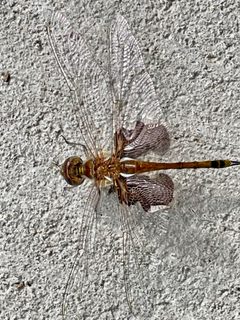
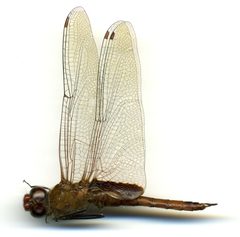
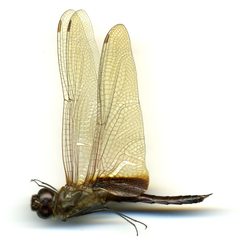
Tramea is a of in the Libellulidae, commonly called saddlebags or saddlebags gliders. are distributed across tropical and subtropical regions worldwide. They are characterized by colored bases on otherwise translucent hindwings that create the visual impression of carrying bags near the base. Members are medium to relatively large dragonflies known for sustained gliding and infrequent perching.
Pronunciation
How to pronounce Tramea: /ˈtræm.i.ə/
These audio files are automatically generated. While they are not always 100% accurate, they are a good starting point.
Identification
Distinguished from other Libellulidae by the distinctive colored patches at the base of the hindwings, typically dark brown to black or reddish, creating a "saddlebags" appearance. The hindwing patches are visible in and at rest. Members are generally larger than many sympatric skimmers with elongated and broad . Specific within the are distinguished by details of wing patch coloration, body coloration, and abdominal patterning.
Images
Habitat
Associated with standing or slow-moving freshwater bodies including ponds, lakes, ditches, marshes, and slow streams. may be found at some distance from water during or .
Distribution
Tropical and subtropical regions globally. Multiple occur in North America including the United States, Canada, and Mexico. Present in the Antilles, South America, Africa, Asia, and Australasia. Specific species have more restricted ranges; for example, Tramea lacerata occurs throughout North America while T. limbata has distribution including India.
Life Cycle
Aquatic nymph stage in freshwater . Final instar nymphs are robust, greenish-yellow, and translucent with distinctive morphological features including premental setae on the underside of the and lack of spiniform setae on abdominal segments 6-9. Nymphs possess spines on the and comb-like tufts of setae on tibia and . produces aerial that leave at the water margin.
Behavior
Strong, sustained fliers that glide extensively and perch infrequently. Some undertake . Freshly emerged are vulnerable and relatively sedentary before muscles fully develop and hardening completes. Adults are capable of rapid flight; Tramea lacerata has been reported to reach speeds of 17 miles per hour.
Ecological Role
Nymphs and are predatory. Nymphs are efficient in aquatic systems. Adults capture flying insect prey. Specific mention found of Tramea lacerata as a predator of mosquitoes in wetland .
Human Relevance
Observed in urban and suburban settings, including sidewalks and gardens, when dispersing or during . are subjects of nature observation and photography. No significant negative impacts reported; nymphs and adults may contribute to mosquito control in wetland areas.
Similar Taxa
- Other Libellulidae (skimmers)Lack the distinctive colored hindwing bases that define Tramea; wing patches absent or differently patterned.
- Pantala (wandering gliders)Similar gliding and association, but Pantala have more uniformly colored or patterned wings without the discrete patches characteristic of Tramea.
Sources and further reading
- BugGuide
- Wikipedia
- GBIF taxonomy match
- iNaturalist taxon
- NCBI Taxonomy
- Catalogue of Life
- Of Predators, Sidewalks and Black Saddlebags... | Bug Squad
- Ms. Black Saddlebags Dragonfly Pays a Visit | Bug Squad
- Bug Squad
- A Yellow Face and Red Saddlebags | Bug Squad
- Five Reasons Why All This Rain Is Bad for Almond Pollination Season | Bug Squad
- Bug Squad
- Morphometric Description of the Final Instar Nymphs and Exuviae of Odonata: Tramea limbata Des.