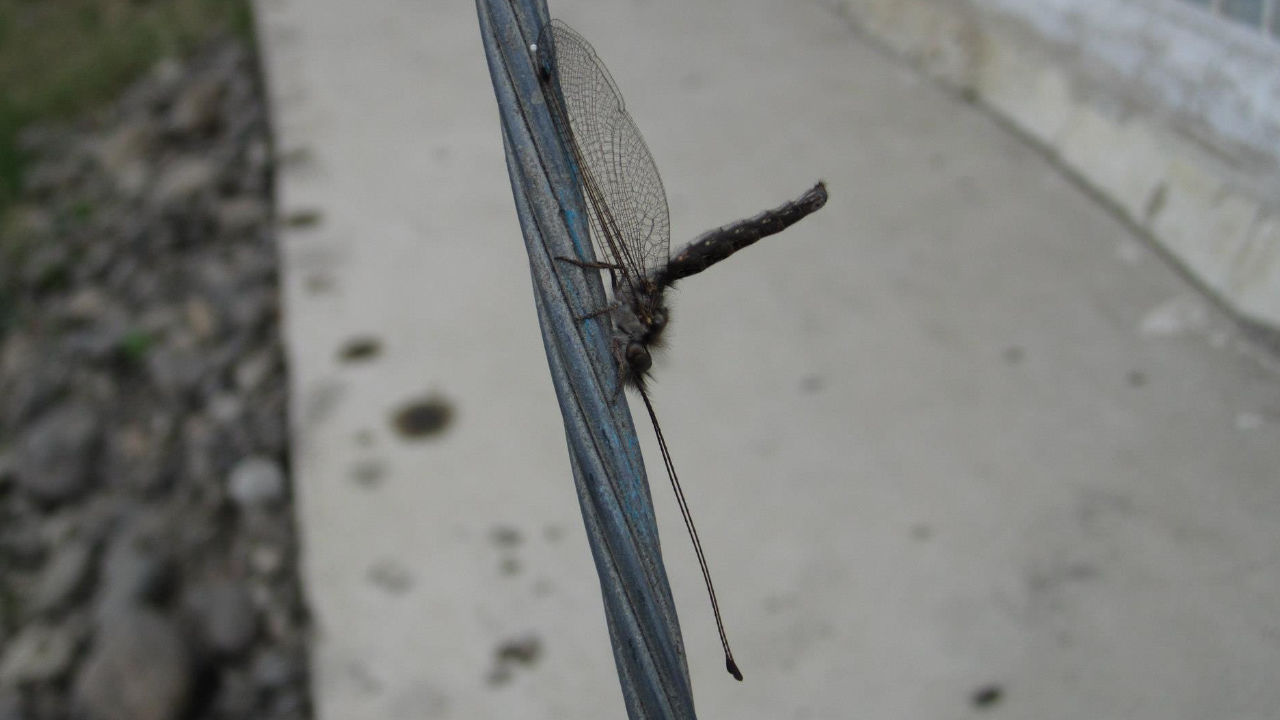
Eureka Green Lacewing
Abachrysa eureka is a species of green lacewing and the sole member of the genus Abachrysa. It belongs to the family Chrysopidae, a group of predatory insects valued for their role in biological control. The species was originally described by Nathan Banks in 1931 under the name Chrysopa eureka before being transferred to the monotypic genus Abachrysa.
Apertochrysa is a genus of green lacewings in the family Chrysopidae, comprising 183 described species. The genus has undergone substantial taxonomic revision, having been previously classified under the names Navasius, Dichochrysa, and Pseudomallada before being synonymized under Apertochrysa in 2021. It is a subcosmopolitan genus with the majority of species distributed in the Palearctic region, particularly Asia and Africa. Species in this genus are predators of soft-bodied insects and some exhibit debris-carrying behavior as larvae.
Apertochrysa sierra is a species of green lacewing in the family Chrysopidae. The species is known from the western United States and Baja California, Mexico. As a member of the Chrysopidae, it belongs to a family of predatory insects commonly recognized by their delicate, net-veined wings and often green coloration. Available records for this species are limited, with few documented observations.
split-eyed owlflies, owlflies
Ascalaphinae is the type subfamily of the owlfly family Myrmeleontidae (order Neuroptera), distinguished by the diagnostic apomorphy of a ridge dividing each large compound eye—hence 'split-eyed owlflies.' This trait is shared with the subfamily Ululodinae. The subfamily is predominantly tropical in distribution and represents one of two main lineages of living Ascalaphidae, the other being Haplogleniinae with unsplit eyes. The first fossil record dates to the Miocene, suggesting Paleogene origin.
owlflies
Ascaloptynx is a genus of owlflies established by Banks in 1915. The genus contains at least two described species: Ascaloptynx appendiculata (Fabricius, 1793) and Ascaloptynx oligocenica Nel, 1991. Owlflies in this genus share the characteristic features of the family Ascalaphidae, including large compound eyes and raptorial forelegs adapted for predation.
Atricholeon is a genus of antlions in the family Myrmeleontidae, established by Stange in 1994. The genus is distinguished by reduced or absent trichosors (fringe hairs along the wing margin), a characteristic that gives the genus its name. Species within this genus are found in the Neotropical region. As with other antlions, adults are aerial predators while larvae are sit-and-wait predators that construct pit traps in sandy substrates.
Atricholeon tuberculatus is a species of antlion in the family Myrmeleontidae, first described by Banks in 1899 under the basionym Brachynemurus tuberculatus. The species is distributed across North and Middle America. As with other antlions, adults are aerial predators while larvae are ambush predators that construct pit traps in sandy substrates. The genus Atricholeon is characterized by reduced wing venation and specific structural features distinguishing it from related genera.
Ant-loving Lacewings
Belonopterygini is a tribe of green lacewings within the family Chrysopidae, commonly known as Ant-loving Lacewings. Members of this tribe exhibit myrmecophilous associations, with larvae living in arboreal ant nests. Larvae possess distinctive morphological adaptations that appear to defend them against ant aggression. The tribe includes at least the genus Italochrysa, with species documented from Australia and Europe.
Long-tailed Antlions
Brachynemurini is a tribe of antlions within the family Myrmeleontidae, containing 28 genera and approximately 117 described species. Members are commonly known as long-tailed antlions. The tribe shows considerable diversity in the Americas, with genera distributed across North, Central, and South America, including the Galápagos Islands. Notable genera include Brachynemurus and Scotoleon, each containing 22 species. The tribe was established to accommodate antlions with distinctive morphological features separating them from other Myrmeleontinae.
antlions
Brachynemurus is a genus of antlions (family Myrmeleontidae, order Neuroptera) containing at least 20 described species. Unlike the pit-digging larvae of the genus Myrmeleon, Brachynemurus larvae are sit-and-wait predators that bury themselves just below the soil surface without constructing funnel traps. The genus is widespread across arid regions of North America, with species adapted to dry environments. Adult Brachynemurus are delicate, lacy-winged insects with short, clubbed antennae that distinguish them from superficially similar damselflies.
Brachynemurus abdominalis is a species of antlion in the family Myrmeleontidae. It is one of 18 genera of antlions recorded north of Mexico. The species was originally described as Myrmeleon abdominalis by Thomas Say in 1823. Like other antlions, it undergoes complete metamorphosis with a predatory larval stage and a delicate, lacy-winged adult stage.
Brachynemurus blandus is a species of antlion in the family Myrmeleontidae, order Neuroptera. The genus Brachynemurus is one of 18 genera of antlions recorded north of Mexico. Like other antlions, this species undergoes complete metamorphosis with a predatory larval stage and a delicate, lacy-winged adult stage. The larvae are predatory, while adults are typically found in tall grasses, especially at dusk.
Brachynemurus californicus is a species of antlion (family Myrmeleontidae) first described by Banks in 1895. As a member of the order Neuroptera, it shares the characteristic net-veined wings and complete metamorphosis typical of this group. The genus Brachynemurus contains species known for their distinctive adult morphology and predatory larval behavior. This species occurs in western North America, with records from California and surrounding regions.
Brachynemurus ferox is a species of antlion in the family Myrmeleontidae, first described by Walker in 1853. The species is distributed across North America and Middle America. Like other antlions, it belongs to an order of predatory insects characterized by their distinctive larval pit-digging behavior and elongated, net-veined wings in adults.
Brachynemurus hubbardii is an antlion species in the family Myrmeleontidae, distributed across Central America and North America. The genus Brachynemurus belongs to a diverse group of antlions whose larvae typically do not construct the characteristic funnel-shaped pits associated with the more familiar genus Myrmeleon. Instead, Brachynemurus larvae bury themselves just below the soil surface and wait for prey to pass by. Adults are delicate, lacy-winged insects that resemble damselflies but possess short, clubbed antennae.
Brachynemurus irregularis is a species of antlion in the family Myrmeleontidae, first described by Currie in 1906. As a member of the genus Brachynemurus, its larvae do not construct the characteristic pit traps associated with the genus Myrmeleon; instead, they bury themselves just below the soil surface to ambush prey. Adults are delicate, slender insects with lacy wings and short, clubbed antennae that distinguish them from superficially similar damselflies. The species is recorded from North America, though specific details about its biology remain poorly documented compared to better-studied antlion genera.
Brachynemurus longicaudus is an antlion species in the family Myrmeleontidae, distributed across North America. Adults are delicate, slender insects with lacy wings that superficially resemble damselflies but are distinguished by their short, clubbed antennae. Larvae are predatory, burying themselves just below the soil surface to ambush prey rather than constructing the characteristic funnel-shaped pits seen in some other antlion genera. The species was originally described as Myrmecoleon longicaudus by Burmeister in 1839.
antlion
Brachynemurus nebulosus is a species of antlion in the family Myrmeleontidae, distributed across North America. Like other antlions, it undergoes complete metamorphosis with a predatory larval stage and a delicate, lacy-winged adult stage. The species belongs to a genus characterized by distinctive wing patterns and morphology among antlions.
Brachynemurus pulchellus is a species of antlion in the family Myrmeleontidae, first described by Banks in 1911. The genus Brachynemurus belongs to the diverse neuropteran lineage of antlions, which are predatory insects known for their distinctive larval pit-trap construction behavior. As a member of this genus, it shares the elongated body form and relatively long, narrow wings typical of Brachynemurus species. The specific epithet 'pulchellus' (diminutive of 'pulcher', meaning beautiful) suggests this species was noted for its attractive appearance among its describers.
Brachynemurus ramburi is a species of antlion (family Myrmeleontidae) described by Nathan Banks in 1907. Like other antlions, it undergoes complete metamorphosis with a predatory larval stage and a delicate, aerial adult stage. The genus Brachynemurus is one of 18 genera of antlions recorded north of Mexico. Adults of this genus are typically nocturnal and attracted to lights.
Sacken's Antlion
Brachynemurus sackeni is a widespread, arid-adapted antlion species in the family Myrmeleontidae. Phylogeographic studies using mitochondrial COI sequences have revealed it comprises a cryptic species-complex with two distinct lineages that diverged approximately 3.8–4.7 million years ago, potentially associated with Neogene mountain-building events. This represents the first documented cryptic species-complex in Myrmeleontidae. The species is attracted to mercury-vapor lights and has been documented in juniper chaparral habitats.
Calomantispinae is a subfamily of mantidflies (Mantispidae, Neuroptera) characterized by distinctive morphological features that distinguish them from the larger Mantispinae subfamily. The subfamily contains multiple genera distributed across Australia and the New World, including the endemic New World genus Nolima and Australian genera such as Calomantispa and Asperala. Species within this subfamily are small to moderate-sized neuropterans with raptorial forelegs convergent with those of praying mantises.
trash-carrier lacewings, green lacewings
Ceraeochrysa is a genus of green lacewings in the family Chrysopidae, established by Adams in 1982 based on distinct genitalia structure. It is the second largest genus in Chrysopidae with 61 species distributed from southeastern Canada to Argentina, with highest diversity in the Neotropics. Larvae are known as 'trash carriers' that construct dorsal packets of debris for camouflage, including insect wax, lichen, and plant material. The genus contains important biological control agents that prey on mealybugs, aphids, mites, thrips, and lepidopteran eggs.
Ceraeochrysa cincta is a green lacewing species in the family Chrysopidae, distributed across the Americas from North America through the Caribbean to South America. Laboratory studies demonstrate its potential as a biological control agent, with larvae showing instar-specific predatory preferences on prey eggs. Populations in southeast Brazilian agroecosystems exhibit high genetic diversity with broad gene flow across different crop systems. The species produces non-pedunculated infertile eggs in later generations under laboratory conditions, a trait relevant to mass rearing programs.
trash bug (larval stage)
A green lacewing in the family Chrysopidae, Ceraeochrysa claveri is a polyphagous predator with established value in biological control of agricultural pests. Larvae are "trash carriers" that construct dorsal camouflage packets using assorted materials including lichen, plant trichomes, and notably the wax of mealybugs and other insects. The species has been documented incorporating live mealybug nymphs into these packets, representing the first recorded instance of active placement of live prey onto the larval packet. Adults feed on pollen and may contribute to pollination. The species shows high genetic diversity across agroecosystems and is compatible with certain biopesticides including Bacillus thuringiensis serovar aizawai.
green lacewing
Ceraeochrysa cubana is a green lacewing species widely distributed across the Americas, from the Caribbean and Middle America through South America. Larvae are voracious polyphagous predators important for biological control of agricultural pests. The species exhibits high genetic diversity in agroecosystems and shows associative learning capabilities in immature stages.
Smith's Green Lacewing
Ceraeochrysa smithi is a species of green lacewing in the family Chrysopidae. It is found across the Caribbean, Central America, North America, and South America. As a member of the genus Ceraeochrysa, it belongs to a group known for larvae that construct dorsal packets of debris for camouflage. The species was first described by Navás in 1914.
Ceraeochrysa valida is a green lacewing species in the family Chrysopidae. Like other Ceraeochrysa species, its larvae are predatory and construct dorsal packets of debris for camouflage. The species has been documented as a predator of Diaphorina citri nymphs, the Asian citrus psyllid, a significant agricultural pest. Adults are likely green lacewings with delicate, net-veined wings typical of the family.
Chaetoleon is a genus of antlions (family Myrmeleontidae) comprising at least four described species. The genus was established by Nathan Banks in 1920. Species in this genus are found in the Americas, with records from the United States south through Central America. Antlions in this genus share the general characteristics of Myrmeleontidae, including predatory larvae that construct pit traps in sandy substrates.
Chaetoleon pusillus is a species of antlion in the family Myrmeleontidae. It is native to Central America and North America. The species was originally described as Brachynemurus pusillus by Currie in 1899. As with other antlions, the larvae are predatory and construct pit traps in sandy substrates to capture prey.
X-marked Green Lacewing
Chrysopa chi is a species of green lacewing in the family Chrysopidae, first described by Fitch in 1855. It is found in North America, with observations recorded from Vermont and other regions of the United States. As a member of the green lacewings, it belongs to a group of predatory insects valued for their role in biological control.
Colorado green lacewing
Chrysopa coloradensis is a species of green lacewing in the family Chrysopidae, described by Nathan Banks in 1895. It occurs in North America. As with other members of the genus Chrysopa, adults are predatory and feed on soft-bodied insects and other small arthropods. The larvae are known as "aphid lions" for their voracious consumption of aphids and other pests.
Chrysopa excepta is a species of green lacewing in the family Chrysopidae, described by Banks in 1911. It belongs to a genus whose larvae are predatory and commonly known as 'aphid lions' due to their voracious consumption of soft-bodied insects. Adults are recognized for their delicate appearance with long antennae and translucent, veined wings. The species is recorded from North America.
Black-horned Green Lacewing
Chrysopa nigricornis, commonly known as the Black-horned Green Lacewing, is a species of green lacewing in the family Chrysopidae. It is distributed across Central America and North America. The species exhibits a facultative larval diapause during the third instar within its cocoon, induced by short-day photoperiods acting on the first three free-living larval stages. As both larvae and adults, it is predatory, feeding on soft-bodied insects such as aphids.
green lacewing
Chrysopa pleuralis is a species of green lacewing in the family Chrysopidae, described by Banks in 1911. It belongs to a genus of predatory insects whose larvae are known as "aphid lions" for their voracious consumption of soft-bodied prey. The species is recorded from North America, though specific details about its biology and ecology remain limited in available sources.
Comanche Green Lacewing
Chrysoperla comanche is a green lacewing species native to northern Mexico and the southern United States, with records extending to Canada, Chile, and Hawaii. It has been evaluated for commercial insectary production due to its non-diapausing behavior in California's San Joaquin Valley, where adults remain green and continue egg deposition through winter months. The species is a generalist predator of soft-bodied arthropods, with documented prey including aphids, leafhoppers, psyllids, whiteflies, thrips, and cochineal insects. It has shown particular promise for biological control in vineyard ecosystems, where it was the most commonly encountered lacewing species in post-release surveys. Development occurs optimally around 29.7°C, with lower temperature threshold near 10°C.
Chrysoperla downesi is a species of green lacewing in the family Chrysopidae, first described by Smith in 1932. Like other members of the genus Chrysoperla, it is a predatory insect whose larvae feed on soft-bodied arthropod pests. The species is part of the taxonomically complex Chrysoperla carnea-group, in which species are often difficult to distinguish by morphology alone and may require acoustic or molecular methods for identification. It is native to North America and has been documented in museum collections.
Red-lipped Green Lacewing
Chrysoperla rufilabris, the red-lipped green lacewing, is a predatory insect in the family Chrysopidae native to eastern North America. Larvae are voracious predators of soft-bodied insects, particularly aphids, and are widely used as biological control agents in agricultural and ornamental systems. Adults are primarily nocturnal and are commonly attracted to artificial lights. The species has been extensively studied for its potential in integrated pest management, with research demonstrating its effectiveness against diverse prey including aphids, scale insects, and lepidopteran eggs.
Green lacewings, lacewings, stinkflies, aphid lions, aphid wolves, junk bugs, trash bugs
Chrysopidae, commonly known as green lacewings, is a large family of neuropteran insects comprising approximately 85 genera and 1,300–2,000 species worldwide. Adults are delicate, often bright green insects with conspicuous golden compound eyes and translucent, iridescent wings with characteristic wide costal fields in the venation. Larvae are voracious predators nicknamed "aphid lions" or "trash bugs," known for carrying debris on their backs for camouflage while hunting soft-bodied prey. The family is economically significant as biological control agents, with millions reared annually for agricultural pest management.
Typical Green Lacewings
Chrysopinae is the nominate and largest subfamily of green lacewings (Chrysopidae), comprising approximately 60 genera. The subfamily includes well-known genera such as Chrysoperla and Chrysopa, which are common in Europe and North America. Members are distinguished by their delicate, green bodies and golden eyes. Larvae are predatory and several species have been employed in biological pest control programs.
green lacewings
Chrysopini is a tribe of green lacewings within the family Chrysopidae, comprising approximately 17-32 genera and 300-926 described species. Members are recognized by their delicate, net-veined wings and often green or yellow-green bodies. The tribe represents one of the most species-rich and commonly encountered groups of lacewings in temperate and tropical regions worldwide.
Chrysopodes collaris is a species of green lacewing in the family Chrysopidae. It occurs across the Americas from North America through the Caribbean to South America. As a member of the Chrysopodes genus, it belongs to a group of lacewings distinguished by specific morphological characteristics within the family.
Ring-clawed Deer Fly
Chrysops cincticornis is a deer fly in the family Tabanidae, first described by Walker in 1848. It is commonly known as the Ring-clawed Deer Fly. The species has been documented in Vermont and other parts of the United States, with 291 observations recorded on iNaturalist. Research on this species has focused on its oviposition behavior and fecundity, with laboratory studies showing females deposit eggs in gelatinous masses on mud substrates near water, averaging 156 eggs per female.
Clathroneuria is a genus of antlions in the family Myrmeleontidae, established by Banks in 1913. The genus contains five described species distributed in North America. Species were described between 1898 and 1970, with several named by Banks in 1938. Like other antlions, adults are aerial predators while larvae are ground-dwelling predators that construct pit traps to capture prey.
Clathroneuria arapahoe is a species of antlion (family Myrmeleontidae) in the order Neuroptera. Described by Nathan Banks in 1938, this species is part of a genus characterized by distinctive wing venation patterns. The species epithet references the Arapahoe, connecting to its geographic association with the western United States. Like other antlions, adults are aerial predators while larvae construct pit traps in sandy soils to capture prey.
Clathroneuria coquilletti is a species of antlion in the family Myrmeleontidae, originally described as Brachynemurus coquilletti by Currie in 1898. The species is distributed across Central America and North America. Like other antlions, it undergoes complete metamorphosis with predatory larval and adult stages. The genus Clathroneuria is distinguished from related antlion genera by features of the wing venation and genitalia.
Clathroneuria schwarzi is a species of antlion in the family Myrmeleontidae, first described by Currie in 1903 as Brachynemurus schwarzi. The species is distributed across Central America and North America. Antlions are predatory insects in their larval stage, known for constructing pit traps in sandy or loose soil to capture prey.
spongillaflies
Climacia is a genus of spongillaflies in the family Sisyridae, containing more than 20 described species. Larvae of this genus are obligate associates of freshwater sponges, feeding on sponge tissues. Adults are short-lived and non-feeding. The genus is found in freshwater habitats across North America.
spongillafly
Climacia areolaris is a small spongillafly (Sisyridae) native to North America. Adults measure slightly over 3 mm from head to wingtips. The species is distinguished from congeners by wing pattern. It is active from March through December, with adults attracted to lights and feeding on pollen.
wasp mantidflies
Climaciella is a genus of wasp mantidflies in the family Mantispidae, comprising approximately 10 described species distributed from North America through Central America to South America and parts of the Caribbean. Adults are notable for their striking Batesian mimicry of polistine paper wasps (Vespidae), featuring a constricted "wasp waist," wings folded longitudinally over the back rather than pitched roof-like, and darkened wing bases that simulate the longitudinal fold of vespid wings. The genus is best known from the common and widespread species C. brunnea, which has been extensively studied for its unique life history involving obligate spider egg-sac parasitism.