
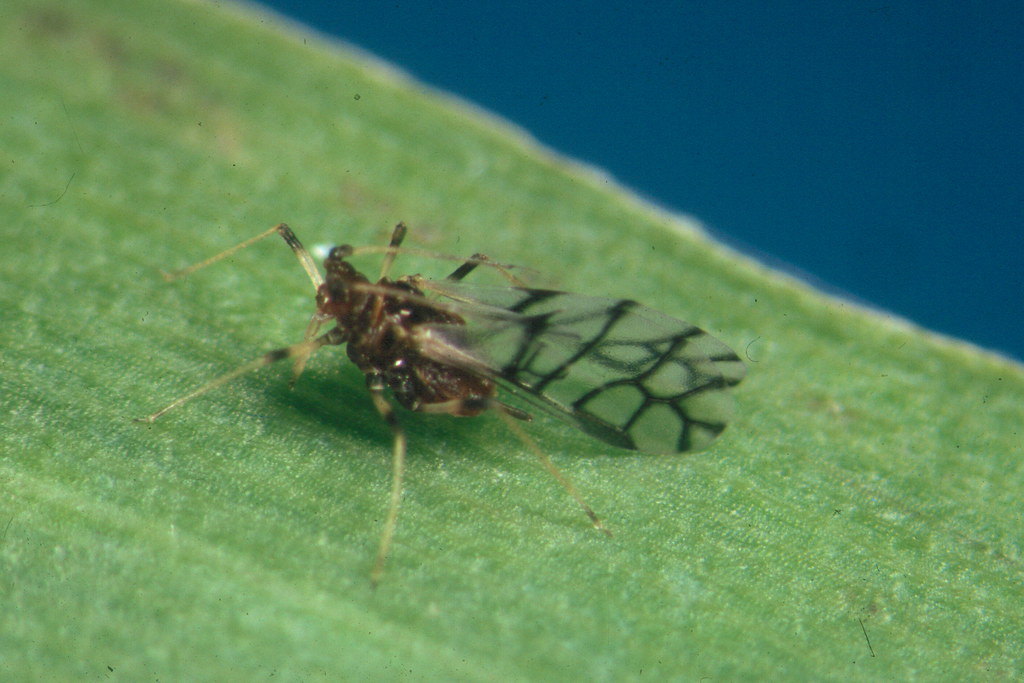
People usually talk about aphids like they are already explained. Tiny green bugs. Bad for the roses. Spray them, squish them, move on. That is not wrong. It is just a very small version of the story.
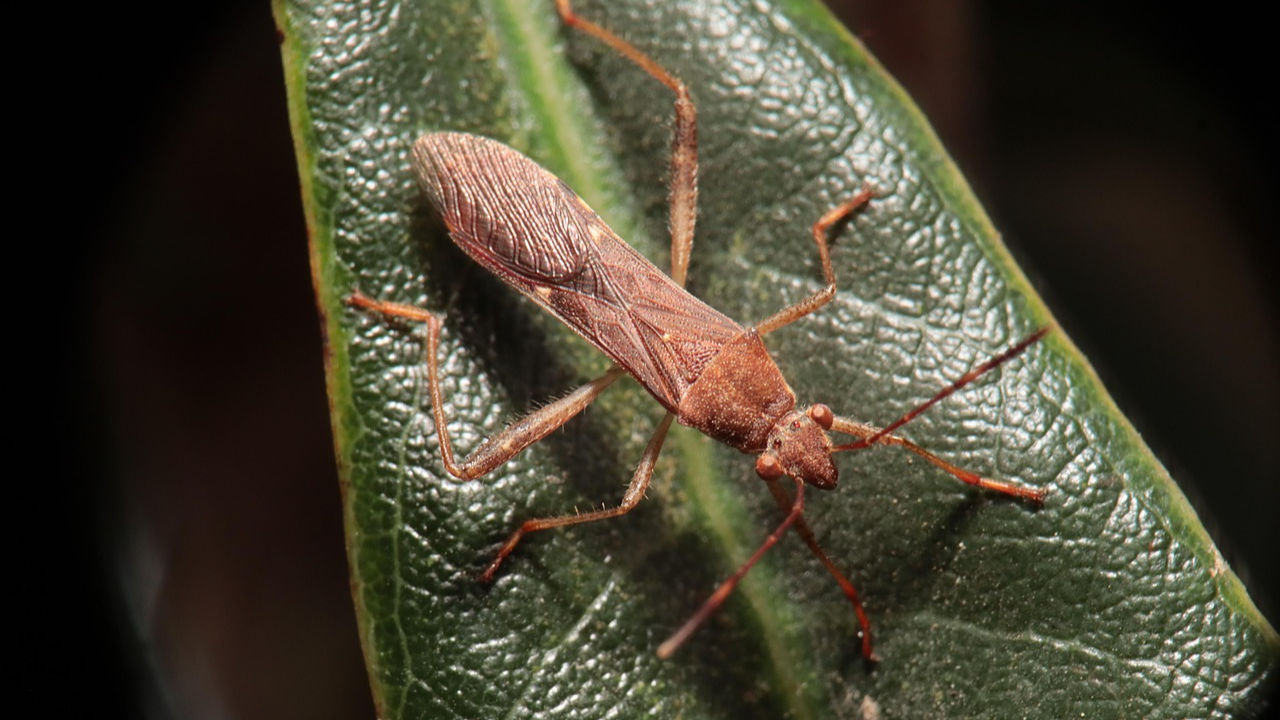
water bug
Abedus breviceps is a giant water bug in the family Belostomatidae, characterized by exclusive paternal care behavior where males carry egg masses on their backs. Research using capture-recapture multistate modeling found no survival cost to males from brooding eggs, challenging assumptions about parental care trade-offs. The species inhabits aquatic environments in Middle and North America.
Abedus immaculatus is a species of giant water bug in the family Belostomatidae. It is the only Abedus species found in the eastern United States, with a range extending throughout Florida north into Georgia and west along the Gulf Coast to Mississippi. Adults measure 13–14 mm in length, making them the smallest species in the genus Abedus and the smallest belostomatid in the United States. The species is the sole member of the subgenus Microabedus. It is locally common in parts of the Everglades, where it occurs in shorter hydroperiod sites.
Acalypta barberi is a species of lace bug in the family Tingidae, described by Drake in 1934. It is found in North America. Lace bugs in this family are small, flattened insects that feed on plant sap using piercing-sucking mouthparts.
Cooley's lace bug, Cooley's tingid
Acalypta cooleyi is a species of lace bug in the family Tingidae. It has a broad geographic distribution spanning Europe and Northern Asia (excluding China), North America, and Southern Asia. As a member of the lace bug family, it possesses the characteristic reticulated, lace-like forewings typical of Tingidae. The species was described by Carl J. Drake in 1917.
Acalypta elegans is a species of lace bug in the family Tingidae, order Hemiptera. The species was described by Horváth in 1906. Like other lace bugs, it possesses the characteristic reticulated, lace-like forewings that give the family its common name. It has a documented distribution across the Holarctic region.
moss lacebug
Acalypta parvula is a species of lace bug in the family Tingidae, commonly known as the moss lacebug. It is a small true bug with a widespread distribution spanning Africa, Europe, Northern Asia (excluding China), and North America. The species was originally described as Tingis parvula by Fallén in 1807. Records from the Azores (Faial, Flores, Pico, São Miguel, Terceira) indicate established populations on Atlantic islands.
Green Cone-headed Planthopper
Acanalonia conica is a planthopper species native to North America that has established invasive populations across Europe since its first detection in Italy in 2003. Adults are bright green with a distinctive conical head and red eyes, while nymphs are brown with white waxy filaments. The species is univoltine, highly polyphagous, and produces abundant honeydew. In Europe, it has been observed forming denser populations than in its native range and is considered a potential agricultural pest.
Acanalonia fasciata is a small planthopper species in the family Acanaloniidae, measuring 4.2 to 6.2 mm in length. It occurs in the Southwestern United States and northwestern Mexico. The species is frequently mistaken for the closely related Acanalonia bivittata but differs in size, elytral surface texture, and geographic range. Local dryinid wasp species have been reported as possible predators.
Acanalonia parva is a species of planthopper in the family Acanaloniidae, first described by Doering in 1932. It is a relatively small member of the genus Acanalonia, which is characterized by their distinctive flattened, often leaf-like appearance. The species is known from the southwestern United States, with confirmed records from New Mexico and Texas. Like other acanaloniids, it likely feeds on plant sap using its piercing-sucking mouthparts.
Acanalonia servillei is a relatively large planthopper in the family Acanaloniidae, measuring more than 9 mm in length. It is widely distributed across the eastern and Gulf coastal regions of the United States and throughout the Caribbean. The species feeds on plant sap and has been documented in association with Capparis cynophallophora and other members of the caper family.
Acanalonia similis is a small planthopper species in the family Acanaloniidae, measuring 4.2–4.9 mm in length. It occurs in the southwestern United States, specifically Texas, New Mexico, and Arizona. The species is distinguished from its close relative Acanalonia invenusta by more prominent reticulation (network-like sculpturing) across its elytra.
Acanalonia virescens is a planthopper species in the family Acanaloniidae, first described by Stål in 1864. It has a restricted coastal distribution along the western Gulf of Mexico and Caribbean, ranging from southern Texas through eastern Mexico to Panama. The species was once recorded in Florida but has not been observed there since the initial report, suggesting either extirpation or misidentification.
leaf-footed bug
Acanthocephala alata is a species of leaf-footed bug in the family Coreidae, described by Burmeister in 1835. It is native to Mexico and occurs from Texas through Central America to Colombia. The species belongs to the tribe Acanthocephalini and is one of the more frequently observed coreids in its range, with over 3,000 documented observations.
Giant leaf-footed bug
Acanthocephala declivis is the largest species in its genus across its North American range, reaching 28–34 mm in length. Males possess dramatically enlarged, leaf-like hind tibiae used in aggressive combat with rival males and courtship displays toward females. The species exhibits pronounced sexual dimorphism in hind leg morphology, with females retaining slender, unmodified legs. It occurs from the southern United States through Central America to El Salvador and Guatemala, with a subspecies A. d. guatemalana described from Guatemala.
Acanthocerini leaf-footed bugs
Acanthocerini is a tribe of leaf-footed bugs (family Coreidae) established by Bergroth in 1913. The tribe comprises at least 20 genera and 50 described species, with taxonomic diversity concentrated in South America. Members belong to the subfamily Coreinae and share the general morphology of coreid bugs, including the characteristic leaf-like expansions on the hind legs that give the family its common name.
leaf-footed bug
Acanthocerus lobatus is a species of leaf-footed bug in the family Coreidae, first described by Burmeister in 1835. It is known from the Caribbean region and parts of North America including Florida and New Mexico. The species belongs to the tribe Acanthocerini, a group characterized by distinctive morphological features including expanded hind tibiae.
lace bugs
Acanthocheila is a genus of lace bugs (family Tingidae) established by Stål in 1858. The genus comprises approximately 17 described species. Lace bugs in this genus exhibit the characteristic reticulated, lace-like forewings typical of the family Tingidae. Species within Acanthocheila are primarily associated with host plants, though specific host associations remain incompletely documented for many species.
Acantholomidea porosa is a shield bug species in the family Scutelleridae, first described by Germar in 1839 as Pachycoris porosus. The species has undergone taxonomic reclassification, currently placed in the genus Acantholomidea though historically treated under Camirus. It is a true bug (Hemiptera) distributed across the Americas with records from North, Middle, and South America.
Shield Bugs
Acanthosomatidae is a family of shield bugs within Pentatomoidea comprising approximately 200 species in 55 genera across three subfamilies (Acanthosomatinae, Blaudusinae, Ditomotarsinae). The family is notable for its distinctive reproductive biology, with females exhibiting either maternal care (egg-nymph guarding) or egg smearing using secretions from Pendergrast's organs. Maternal care has evolved independently at least three times within the subfamily Acanthosomatinae and is correlated with reduction or loss of Pendergrast's organs, suggesting an evolutionary trade-off between these strategies.
Aceratagallia robusta is a species of leafhopper in the family Cicadellidae, order Hemiptera. It belongs to a genus of small, plant-feeding insects commonly known as leafhoppers. Very little specific information has been documented about this particular species.
Autumn Assassins
Acholla is a genus of assassin bugs (Reduviidae) in the tribe Harpactorini. Adults are most conspicuous in autumn, though they can be found from July onward in some regions. The genus contains three recognized species: A. multispinosa (widespread in eastern and central North America), A. ampliata (western North America), and A. tabida (California and Mexico). These predatory true bugs are primarily arboreal and associated with woodlands and orchards.
Achorotile angulata is a species of planthopper in the family Delphacidae, first described by Beamer in 1954. The genus Achorotile belongs to the subfamily Delphacinae, a group of small, typically grass-feeding planthoppers. Records indicate this species occurs in Colorado, North America. Delphacid planthoppers are characterized by their distinctive facial carinae and reduced wing venation compared to other fulgoroid families.
Acinopterus acuminatus is a leafhopper species in the family Cicadellidae, first described by Van Duzee in 1892. It belongs to the tribe Acinopterini within the subfamily Deltocephalinae. The species is recorded from multiple U.S. states including Alabama, Alaska, Arizona, California, and Colorado. As a member of the leafhopper family, it is a small, plant-feeding insect with piercing-sucking mouthparts.
Acinopterus pulchellus is a leafhopper species in the family Cicadellidae, subfamily Deltocephalinae, described by Lawson in 1927. The genus Acinopterus belongs to the tribe Acinopterini. Distribution records indicate occurrence in the southwestern United States including Arizona, California, Colorado, Nevada, and New Mexico. As a member of the Cicadellidae, it is presumed to feed on plant sap via piercing-sucking mouthparts, though specific host plant associations have not been documented in the provided sources.
flat grass scales
Aclerda is a genus of scale insects (family Aclerdidae) commonly known as flat grass scales. Species in this genus are legless as adults, with strongly reduced 1-segmented antennae and a unique anal apparatus. They inhabit leaf sheaths of grasses in hot, dry regions. The genus includes both sexually and parthenogenetically reproducing species, with unusual cytogenetic systems including heterochromatinization of one haploid chromosome set in males of some species.
lantana bug, lantana treehopper, lantana stemsucking treehopper, lantana sap-sucking bug
Aconophora compressa is a treehopper (family Membracidae) native to Mexico, Central America, and Colombia. It was introduced to Australia in 1995 as a biological control agent for the invasive weed Lantana camara. The species is brown, up to 8 mm long, with a thorn-shaped body and produces copious honeydew. It has been documented to attack non-target plants, particularly fiddlewood (Citharexylum spinosum) in Australia, leading to its discontinuation as a biocontrol agent after 2001. It was also rejected for use in South Africa due to unacceptable risks to indigenous Lippia species.
Aconophorini is a tribe of treehoppers within the subfamily Membracinae, family Membracidae, order Hemiptera. The tribe was established by Goding in 1892 and contains genera distributed in the Americas, including Mexico and Argentina. Members of this tribe possess the characteristic enlarged pronotum typical of Membracidae, though specific morphological features distinguishing Aconophorini from related tribes such as Hoplophorionini and Membracini are not detailed in available sources. The genus Aconophora is included in this tribe, with at least one species (Aconophora sp.) documented from Mexico.
Acusana condensa is a leafhopper species in the family Cicadellidae, described by DeLong in 1942. It belongs to the tribe Gyponini within the subfamily Iassinae. The species is known from Arizona, where it has been documented in distribution records. As a member of the leafhopper family, it likely shares general ecological traits with related species, including plant-feeding habits and association with host vegetation, though specific biological details remain undocumented in available sources.
Acusana rota is a species of leafhopper in the family Cicadellidae, described by DeLong in 1942. It belongs to the subfamily Iassinae and tribe Gyponini, a group of small to medium-sized leafhoppers often associated with herbaceous vegetation. Distribution records indicate occurrence in Arizona.
Acutalis is a genus of treehoppers in the family Membracidae, subfamily Smiliinae, first described by Léon Fairmaire in 1846. The genus contains four species distributed across eastern North America and parts of Central and South America. Like other treehoppers, species in this genus possess an enlarged pronotum that extends over the body. Acutalis tartarea has been photographed in the field on goldenrod (Solidago sp.) in Missouri.
Acuticauda is a genus of aphids in the family Aphididae, established by Hille Ris Lambers in 1956. The genus belongs to the tribe Macrosiphini and is part of the diverse aphid fauna within the order Hemiptera. As with other aphid genera, species within Acuticauda are likely phloem-feeding insects, though specific ecological details for the genus as a whole remain poorly documented in available sources.
Pea aphid, green dolphin, pea louse, clover louse
Acyrthosiphon pisum, the pea aphid, is a sap-sucking hemipteran and major agricultural pest of legume crops worldwide. It is notable as the first hemimetabolous insect with a fully sequenced genome and serves as a model organism for studying aphid biology, endosymbiosis, polyphenism, and asexual reproduction. The species exhibits complex polyphenism with multiple morphs including winged and wingless parthenogenetic females, sexual males and females, and green or red/pink color morphs. Its survival depends entirely on the obligate endosymbiont Buchnera aphidicola, which provides essential amino acids lacking in its phloem sap diet.
Pineapple-gall Adelgid, Eastern Spruce Gall Adelgid, Spruce Gall Aphid
Adelges abietis, commonly known as the pineapple-gall adelgid or eastern spruce gall adelgid, is a conifer-feeding insect that induces distinctive pineapple-shaped pseudocone galls on spruce shoots. The species is one of the most common adelgids in its genus and has been documented across Europe and North America. Unlike the closely related hemlock woolly adelgid (Adelges tsugae), A. abietis is not considered a major destructive pest, though its gall formation causes shoot deformation. The species exhibits strongly aggregated spatial distributions within and among host trees.
adelgids, woolly conifer aphids, pine aphids, spruce aphids
Adelgidae is a small family of sap-sucking insects in the order Hemiptera, closely related to aphids. Members are commonly known as "woolly conifer aphids" due to their waxy secretions and exclusive association with conifer hosts in the family Pinaceae. The family includes some of the most destructive invasive forest pests in North America, notably the hemlock woolly adelgid (*Adelges tsugae*) and balsam woolly adelgid (*A. piceae*), which have caused widespread tree mortality. Adelgids exhibit complex, multigeneration life cycles that may include cyclical parthenogenesis, host alternation, and polymorphism.
shield bug
Aelia is a genus of shield bugs (family Pentatomidae) in the tribe Aelini. These true bugs (Hemiptera) are characterized by their shield-shaped bodies. The genus is well-documented with over 11,000 observations on iNaturalist, indicating widespread recognition among naturalists. Aelia species are associated with grassland and agricultural habitats.
Aeneolamia contigua is a spittlebug species in the family Ischnorhinidae (formerly placed in Cercopidae). The genus Aeneolamia contains economically significant pests of pasture grasses and sugarcane in the Neotropics. This species is part of a group known for dense aggregations and damage to graminoid hosts through sap-feeding. Adults are robust with the characteristic compact body form of the tribe Tomaspidini.
A small leafhopper species in the family Cicadellidae, described by Oman in 1933. It belongs to the tribe Agalliini, a group of leafhoppers often associated with herbaceous vegetation. The species is documented from Arizona and is characterized by distinctive genital structures that aid in identification.
Agallia pumila is a species of leafhopper in the family Cicadellidae, described by Oman in 1971. It belongs to the tribe Agalliini within the subfamily Megophthalminae. The species is known from the western United States, with records from California and Oregon. Like other members of the genus Agallia, it is likely associated with vegetation in its habitat, though specific ecological details remain poorly documented.
Four-spotted Clover Leafhopper
Agallia quadripunctata is a leafhopper species in the family Cicadellidae, commonly known as the Four-spotted Clover Leafhopper. The species was described by Provancher in 1872, with the basionym Bythoscopus quadripunctatus. It belongs to the subfamily Megophthalminae and tribe Agalliini. The species has been recorded in the iNaturalist database with over 1,700 observations, indicating it is relatively well-documented. Taxonomic databases show some disagreement regarding its generic placement, with GBIF listing it as a synonym under Agalliota quadripunctata while NCBI and Catalogue of Life maintain it in Agallia.
Agalliopsis novella is a species of leafhopper in the family Cicadellidae, subfamily Megophthalminae. First described by Thomas Say in 1830, this species belongs to a genus of small, wedge-shaped leafhoppers. The species has been recorded across much of North America, with distribution records from both the United States and Canada. As a member of the Megophthalminae, it shares characteristics with other Agalliopsis species, though specific distinguishing features require close examination.
Agalliopsis stella is a species of leafhopper in the family Cicadellidae, described by Oman in 1970. It belongs to the tribe Agalliini within the subfamily Megophthalminae. Records indicate this species occurs in the south-central United States, specifically in Louisiana, Oklahoma, and Texas. The genus Agalliopsis comprises small leafhoppers, though species-level biological details for A. stella remain poorly documented in available literature.
Agaveocoris barberi is a species of plant bug in the family Miridae, subfamily Phylinae. It was originally described by Knight and later transferred to the genus Agaveocoris by Henry & Menard in 2020. The species is associated with agave plants and has a limited distribution in the southwestern United States and northern Mexico.
Agnocoris is a genus of plant bugs in the family Miridae, established by Reuter in 1875. The genus contains seven described species distributed across the Holarctic region. Members are small, soft-bodied true bugs with the characteristic hemelytra of mirids. The genus has been documented from Europe and North America based on specimen records.
Agoo is a genus of palm-feeding planthoppers in the family Derbidae, described by Bahder & Bartlett in 2019. The genus is known from Mexico, with two described species: A. kizini from the Yucatán Peninsula and A. palmalopezi from Tabasco. Specimens have been found in association with palms, representing the first record of this genus in Mexico. Molecular sequence data for 18S rRNA and COX1 genes have been published for A. kizini.
Aguayomiris pallipes is a species of plant bug in the family Miridae, described by Maldonado in 1986. It belongs to the subfamily Cimicomorpha within the order Hemiptera. The genus Aguayomiris is part of the diverse mirid fauna of the Neotropical region.
Alconeura lappa is a species of leafhopper in the family Cicadellidae, first described by Griffith in 1938. It belongs to the subfamily Typhlocybinae, a group commonly known as typhlocybine leafhoppers. Records indicate this species occurs in Arizona. As with other members of its genus, it is likely a small, plant-feeding insect, though specific ecological details remain poorly documented.
Alconeura tricolor is a species of leafhopper in the family Cicadellidae, subfamily Typhlocybinae, tribe Dikraneurini. It was described by Van Duzee in 1914. The species is known from the southwestern United States, with records from California and New Mexico. As a member of the Typhlocybinae, it belongs to a group commonly known as the 'sharpshooters' or 'leafhoppers,' though specific biological details for this species remain poorly documented.
Alebra aurea is a species of leafhopper in the family Cicadellidae, first described by Walsh in 1862. It belongs to the subfamily Typhlocybinae, a group commonly known as the typhlocybine leafhoppers. The species name 'aurea' (Latin for 'golden') likely refers to coloration characteristics. As a member of the Hemiptera, it possesses piercing-sucking mouthparts typical of true bugs.
Alebra bicincta is a species of leafhopper in the family Cicadellidae, first described by DeLong in 1918. It belongs to the subfamily Typhlocybinae, a group of small leafhoppers often associated with woody plants. The specific epithet "bicincta" (meaning "two-banded") likely refers to a color pattern feature, though detailed morphological descriptions remain limited in accessible literature. The species is recorded from several U.S. states but appears to be relatively poorly known compared to other Alebra species.
Alebra elegans is a species of leafhopper in the family Cicadellidae, subfamily Typhlocybinae, described by Hamilton in 1995. It belongs to the genus Alebra, a group of small, often pale-colored leafhoppers. The species has been recorded in northeastern North America, specifically in the U.S. states of Maine and New Hampshire, and in the Canadian province of Québec. Like other members of Typhlocybinae, it likely feeds on plant phloem sap using piercing-sucking mouthparts.