
Acholla
Stål, 1862
Autumn Assassins
Species Guides
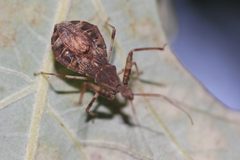
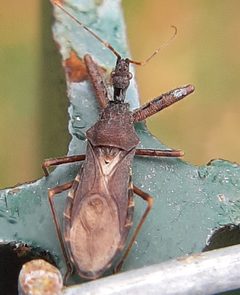
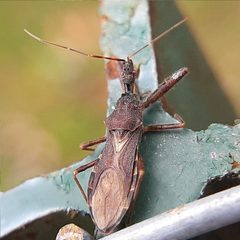
2Acholla is a of assassin bugs (Reduviidae) in the tribe Harpactorini. are most conspicuous in autumn, though they can be found from July onward in some regions. The genus contains three recognized : A. multispinosa (widespread in eastern and central North America), A. ampliata (western North America), and A. tabida (California and Mexico). These predatory true bugs are primarily arboreal and associated with woodlands and orchards.
Pronunciation
How to pronounce Acholla: /əˈkoʊlə/
These audio files are automatically generated. While they are not always 100% accurate, they are a good starting point.
Identification
Acholla can be distinguished from the similar Sinea by their lack of prominent spines on the inner surface of the tibia of the front leg; Sinea has a distinctly 'thorny' appearance that Acholla lacks. Acholla species average slightly larger than Sinea, with body lengths of 12–16 mm compared to 12–14 mm for Sinea.
Images
Habitat
Primarily arboreal; associated with woodlands and orchards. Specimens have been found beneath cottonwood trees in urban residential areas, suggesting adaptability to human-modified environments provided tree cover exists.
Distribution
North America. A. multispinosa: eastern North America from New England south through the Appalachian Mountains to Tennessee and North Carolina, west through the Great Lakes region to Kansas, Nebraska, and southeast Iowa. A. ampliata: Colorado, California, Utah, Arizona, and New Mexico. A. tabida: California and Mexico.
Seasonality
appear from July onward in some localities, with peak conspicuousness in autumn (September–November). Activity extends until late fall; specimens have been recorded as late as November 1 in Massachusetts.
Diet
Predatory; feeds on insects associated with trees. A. multispinosa has been documented preying on caterpillars of the Pine Webworm (Pococera robustella, Pyralidae) and the Codling Moth (Cydia pomonella, Tortricidae).
Life Cycle
Overwinters in the stage. Eggs are adhered to substrate with a hardened secretion from the female's subrectal glands, which likely provides insulation from weather and desiccation and may repel egg .
Behavior
Arboreal; individuals have been observed fallen from trees onto artificial structures beneath .
Ecological Role
of arboreal insects, including economically significant caterpillar pests in forest and orchard .
Human Relevance
Potential agent for orchard and forest pests; incidental encounters in residential areas where trees are present.
Similar Taxa
- SineaSimilar appearance but distinguished by prominent spines on inner tibia of front leg and smaller average size (12–14 mm vs. 12–16 mm).
- Leptoglossus occidentalisMisidentification risk; this leaf-footed bug (Coreidae) has thicker hind legs and is not an assassin bug, but has been confused with Acholla by observers.