
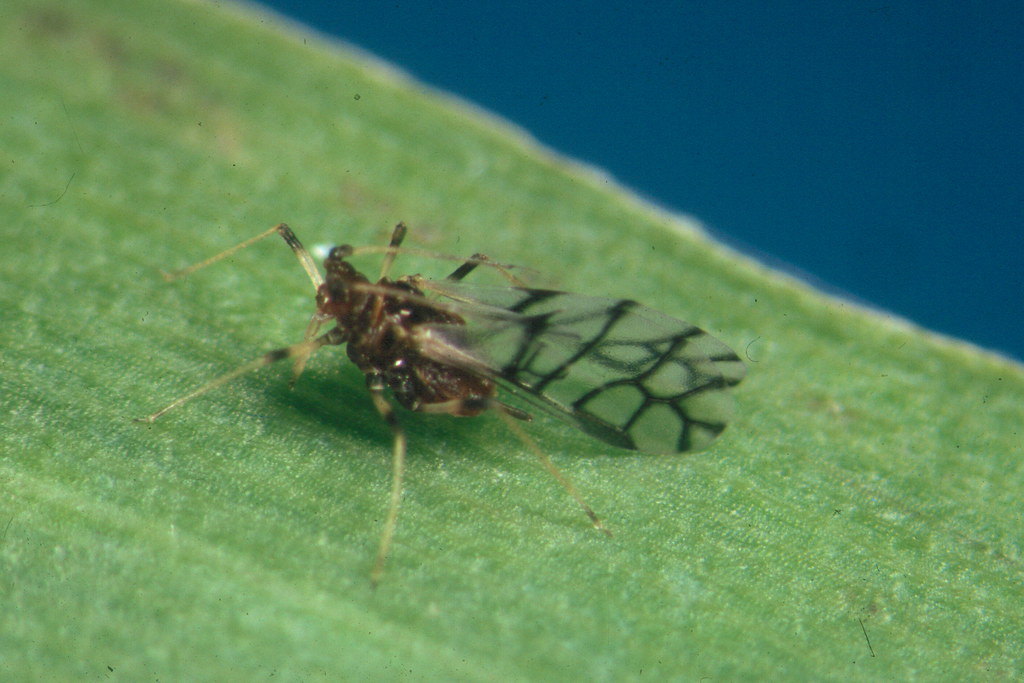
People usually talk about aphids like they are already explained. Tiny green bugs. Bad for the roses. Spray them, squish them, move on. That is not wrong. It is just a very small version of the story.
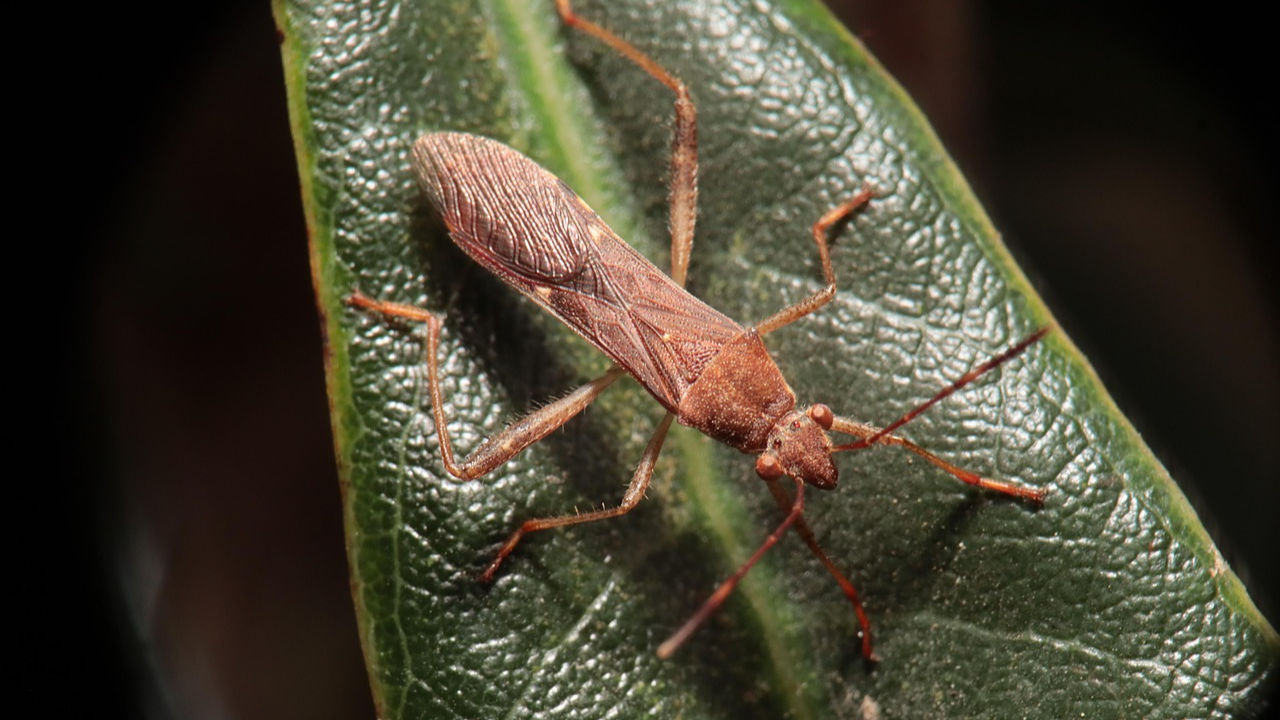
Alebra wahlbergi is a species of leafhopper in the family Cicadellidae, first described by Boheman in 1845. It belongs to the subfamily Typhlocybinae and tribe Alebrini. The species has been recorded in multiple geographic regions including parts of Europe, Asia, and North America. As a member of the Hemiptera, it possesses piercing-sucking mouthparts characteristic of true bugs.
whiteflies, spiraling whiteflies, rugose spiraling whitefly (for A. rugioperculatus), giant whitefly (for A. dugesii)
Aleurodicus is a genus of whiteflies (Hemiptera: Aleyrodidae) comprising at least 30 described species distributed across tropical and subtropical regions worldwide. Several species are significant agricultural and ornamental pests, including the invasive rugose spiraling whitefly (A. rugioperculatus) and the spiraling whitefly (A. dispersus). The genus is characterized by distinctive wax-producing capabilities and puparial morphology used extensively in taxonomic identification.
Aleuroplatus is a genus of whiteflies (Hemiptera: Aleyrodidae) established by Quaintance & Baker in 1914. Whiteflies in this genus are small, sap-feeding insects with powdery wax-covered wings. The genus has accumulated over 1,700 observations on iNaturalist, indicating moderate documentation of its species in the field.
whiteflies
Aleyrodoidea is a superfamily of small hemipteran insects commonly known as whiteflies. The superfamily contains a single family, Aleyrodidae, with more than 1,550 described species. Whiteflies are phytophagous insects that feed on plant sap, typically from the undersides of leaves. Several species are significant agricultural pests, including the citrus blackfly (Aleurocanthus woglumi) and the Bemisia tabaci species complex.
Aligia colei is a species of leafhopper in the family Cicadellidae, subfamily Deltocephalinae. Described by Van Duzee in 1925, this species belongs to the tribe Platymetopiini, a group of small, often cryptic leafhoppers. As with many members of this genus and tribe, detailed natural history information remains limited in the accessible literature.
Allogonia is a genus of leafhoppers in the family Cicadellidae, tribe Cicadellini. It was described by Melichar in 1926. Members of this genus are part of the diverse Cicadellinae subfamily, which contains many economically significant agricultural pests. The genus is documented in entomological collections and has approximately 200 iNaturalist observations, indicating moderate documentation of its species in nature.
Allygidius atomarius is a species of leafhopper in the family Cicadellidae, subfamily Deltocephalinae. First described by Fabricius in 1794 as Cicada atomaria, this species has been documented across parts of Europe and Asia, with distribution records from locations including Belgorod and Chernihiv in Ukraine, Bursa in Turkey, Corse (Corsica), and Emilia-Romagna in Italy. The species belongs to the tribe Athysanini within the diverse leafhopper fauna.
leaf-footed bugs
Althos is a genus of leaf-footed bugs in the family Coreidae, first described by Kirkaldy in 1904. The genus comprises more than 20 described species distributed primarily in South America. Members of this genus belong to the tribe Hypselonotini within the subfamily Coreinae.
A species of lace bug in the family Tingidae, described by Osborn and Drake in 1917. It is one of several species in the genus Alveotingis, which belongs to a family characterized by distinctive reticulated forewings and flattened body form. The specific epithet "brevicornis" refers to short antennae.
broad-headed bugs, broad headed bugs
Alydidae, commonly known as broad-headed bugs, is a family of true bugs in the order Hemiptera containing at least 60 genera and approximately 300 species worldwide. Members are characterized by their notably broad heads, often similar in length and width to the pronotum and scutellum, and elongated, curved terminal antennal segments. The family is closely related to Coreidae (leaf-footed bugs) and shares many morphological features, though Alydidae generally lack the flattened hind tibiae typical of many coreids. Most species are tropical or subtropical in distribution, with relatively few species occurring in temperate regions. Several species are economically significant agricultural pests, particularly in Asia where they damage rice and legume crops.
broad-headed bugs
Alydinae is a subfamily of true bugs comprising approximately 24 genera and over 140 described species. Members are commonly known as broad-headed bugs due to their distinctive head shape. The subfamily was established by Amyot & Serville in 1843 and is classified within the family Alydidae, superfamily Coreoidea. Alydinae represents one of the primary lineages within the broad-headed bug family.
ant bug
Alydus calcaratus is a large, dark plant bug in the family Alydidae with a Holarctic distribution spanning Europe, Asia, and northern North America. It is the sole representative of its family in northern Central Europe outside the Alps. Adults are 10–12 mm, blackish with an orange-red dorsal abdomen visible only in flight, and exhibit wasp-like resemblance. Nymphs are convincing ant mimics with an unclear relationship to ant nests. The species feeds primarily on fallen legume seeds, with carrion-feeding also observed.
broad-headed bug
Alydus conspersus is a species of broad-headed bug in the family Alydidae, first described by Montandon in 1893. It is one of three recognized subspecies within the species complex. The species is distributed across North America with documented records from Arizona, Colorado, Louisiana, Massachusetts, and Michigan. Like other members of the Alydidae, it is associated with feeding on seeds and has been observed utilizing extra-phytophagous food sources including animal dung.
Alydus scutellatus is a species of broad-headed bug in the family Alydidae, first described by Van Duzee in 1903. This small true bug belongs to a group commonly known for their seed-feeding habits, though members of the family have been documented engaging in extra-phytophagous feeding behaviors including carrion and dung consumption. The species has been recorded from western North American localities including British Columbia, Colorado, Montana, and New Mexico.
Amastris templa is a treehopper species in the family Membracidae, first described by Ball in 1933. It belongs to the tribe Amastrini within the subfamily Smiliinae. The species is currently accepted in taxonomic databases but remains poorly documented in published literature.
Amaurochrous magnus is a stink bug species in the family Pentatomidae, first described by Barber and Sailer in 1953. The genus name "Amaurochrous" derives from Greek roots meaning "dark-colored," reflecting the typically dull coloration of species in this genus. Like other pentatomids, it possesses the characteristic shield-shaped body and scent glands for chemical defense. The species occurs in North America, though detailed ecological information remains limited.
Amblysellus dorsti is a leafhopper species in the family Cicadellidae, described by Oman in 1940. Originally placed in the genus Deltocephalus, it was later transferred to Amblysellus. The species is known from a limited number of records in the southwestern United States. Like other members of its genus, it belongs to the large and diverse leafhopper subfamily Deltocephalinae.
Ambracius liviae is a species of plant bug in the family Miridae, described by Ferreira and Henry in 2010. The species is known from Texas, USA. As a member of the subfamily Phylinae (implied by genus placement), it likely exhibits the slender body form and reduced cuneus characteristic of this group. The specific epithet honors an individual named Livia.
California creeping water bug
Ambrysus californicus is a species of creeping water bug in the family Naucoridae. It was described by Montandon in 1897. The species is native to North America and belongs to the subfamily Cryphocricinae, commonly known as saucer bugs due to their round, flat body shape. Like other members of the genus Ambrysus, it is an aquatic insect adapted to life in running streams.
creeping water bug
Ambrysus circumcinctus is a species of creeping water bug in the family Naucoridae, distributed across Central America and North America. As a member of the subfamily Cryphocricinae, it inhabits aquatic environments including running streams. The genus Ambrysus is widespread in the New World, with its greatest diversity in Mexico. Like other naucorids, this species has adaptations for clinging to substrates in flowing water.
creeping water bug
Ambrysus lunatus is a species of creeping water bug in the family Naucoridae. It occurs in Central America and North America. The subspecies A. lunatus lunatus has been described with documented immature stages. Like other members of the genus Ambrysus, it is an aquatic predator inhabiting running streams.
A species of plant bug in the family Miridae, originally described as Icodema nigrolineata by Knight in 1923. The species is distributed across eastern North America and parts of Central America, with records from Canada through the United States to Mexico. It is a member of the diverse plant bug fauna of the Nearctic region.
pallid burrowing bug
Amnestus pallidus is a burrowing bug species in the family Cydnidae, characterized by its subterranean lifestyle and association with soil habitats. The species occurs across Central America and North America, with documented records from the United States including Vermont. As a member of the burrowing bug family, it possesses morphological adaptations for digging and is typically found in contact with soil or ground-level vegetation. The species was described by Zimmer in 1910 and remains relatively poorly known in terms of detailed natural history.
Amnestus pusillus is a species of burrowing bug in the family Cydnidae, characterized by fossorial (burrowing) habits typical of this group. The species is distributed across the Caribbean, Central America, and North America. As a member of the burrowing bug family, it likely inhabits soil-associated environments, though specific ecological details remain poorly documented in published literature.
burrowing bug
Amnestus spinifrons is a species of burrowing bug in the family Cydnidae, first described by Thomas Say in 1825. It belongs to the genus Amnestus, which comprises burrowing bugs that live in soil and are associated with plant roots. The species is known from North America. Burrowing bugs in this family are characterized by fossorial (digging) adaptations and are often found in association with host plants.
Sagebrush mealybug
Amonostherium lichtensioides is a species of mealybug in the family Pseudococcidae, commonly known as the sagebrush mealybug. The species was described by Theodore Dru Alison Cockerell in 1897. It belongs to the genus Amonostherium, a group of scale insects within the order Hemiptera.
Amorphicola pallida is a psyllid species in the family Psyllidae, first described by Tuthill in 1943. Psyllids, commonly known as jumping plant lice, are small sap-feeding insects that typically specialize on particular host plants. This species has been recorded from the central United States including Iowa, Kansas, Minnesota, and Nebraska.
Amycle saxatilis is a fulgorid planthopper species described by Van Duzee in 1914. It belongs to the family Fulgoridae, a group of large, often strikingly patterned planthoppers sometimes called lanternflies. The specific epithet "saxatilis" (meaning "of rocks" or "rock-dwelling") suggests an association with rocky habitats. The genus Amycle is part of the subfamily Amyclinae, a primarily New World group. Very little specific biological information is available for this particular species.
Anaelia is a genus of minute predatory bugs in the family Anthocoridae, established by Carpintero in 2014. The genus is currently classified as doubtful by GBIF, indicating taxonomic uncertainty regarding its validity or circumscription. It belongs to the order Hemiptera, which includes true bugs with piercing-sucking mouthparts. Members of Anthocoridae are generally small insects that prey on other small arthropods, particularly mites and thrips, though specific information for Anaelia is unavailable.
squash bugs
Anasa is a genus of squash bugs in the family Coreidae, containing more than 70 described species distributed throughout North, Central, and South America. The genus includes major agricultural pests, particularly Anasa tristis, which causes significant damage to cucurbit crops and vectors cucurbit yellow vine disease. Members of this genus are specialized herbivores of plants in the family Cucurbitaceae.
Anasa andresii is a leaf-footed bug species in the family Coreidae, first described by Guérin-Méneville in 1857. It belongs to a genus containing several economically significant agricultural pests, though specific information about this species remains limited. The species has been documented across a broad geographic range spanning the Caribbean, Central America, North America, and South America.
Anasa repetita is a leaf-footed bug in the family Coreidae, described by Heidemann in 1905. It is native to North America, with confirmed records from Maryland, New York, and the District of Columbia. As a member of the genus Anasa, it belongs to a group commonly known as squash bugs, though specific ecological details for this species remain limited compared to the well-studied congener Anasa tristis.
Aneurus borealis is a species of flat bug in the family Aradidae, described by Picchi in 1977. It is distributed in North America. Members of the genus Aneurus are generally associated with decaying wood and fungal habitats. The species belongs to a family characterized by dorsoventrally flattened bodies adapted for living in tight spaces under bark.
Aneurus fiskei is a species of flat bug in the family Aradidae, first described by Heidemann in 1904. Flat bugs in this family are characterized by their dorsoventrally flattened bodies, an adaptation for living in confined spaces under bark or within decaying wood. The species is documented from both Central America and North America. Like other members of Aradidae, it likely inhabits microhabitats associated with dead or dying trees.
Aneurus minutus is a species of flat bug in the family Aradidae, described by Bergroth in 1886. It belongs to the order Hemiptera, characterized by their flattened body form adapted for living under bark. The species has been recorded from the Caribbean and North America according to GBIF distribution data. Very little specific information is available about this particular species in the provided sources.
Aneurus simplex is a species of flat bug in the family Aradidae, order Hemiptera. The species is known from North America. Flat bugs in this family are typically associated with decaying wood and fungal habitats.
Anochrostomus is a genus of seed bugs (family Lygaeidae) established by Slater in 1992. The genus contains at least two described species: Anochrostomus formosus, described by Blanchard in 1840, and Anochrostomus formosoides, described by Baranowski in 2005. Both species epithets suggest a connection to Formosa (Taiwan), though this may reflect type localities or morphological resemblance rather than geographic restriction. The genus is placed in the subfamily Lygaeinae within the lygaeoid group of true bugs.
Anochrostomus formosus is a seed bug species in the family Lygaeidae. It is found across southern North America, Central America, and South America, with records from the United States, Mexico, Costa Rica, Panama, Jamaica, Haiti, Cuba, and Venezuela. The species was described by Blanchard in 1840. As a member of the Lygaeidae, it belongs to a family commonly known as seed bugs, though specific biological details for this species remain poorly documented.
planthopper
Anotia is a genus of planthoppers in the family Derbidae, subfamily Otiocerinae. Members of this genus are small to medium-sized insects with distinctive wing venation and often striking color patterns. The genus was established by Kirby in 1821 and is classified within the true bugs (Hemiptera), specifically in the fulgoroid lineage. Species in this genus feed on plant phloem sap using piercing-sucking mouthparts.
Anotia kirkaldyi is a species of planthopper in the family Derbidae, described by Ball in 1902. The species is currently recognized as valid, though it was previously listed as a synonym of A. kirkaldayi. Like other derbids, it belongs to a group of sap-feeding insects associated with vascular plants. The species has accumulated over 1,300 observations on iNaturalist, indicating it is relatively well-documented in citizen science records.
Anotia lineata is a species of planthopper in the family Derbidae, described by Ball in 1937. It belongs to the subfamily Otiocerinae and tribe Otiocerini. The species is known from limited observations, with distribution records from Arizona. As a member of the planthopper superfamily Fulgoroidea, it shares the characteristic morphology of this group, including an often enlarged or modified head structure. Information on its biology, ecology, and life history remains sparse in published literature.
Anotia mcateei is a species of derbid planthopper described by Dozier in 1928. The species is known from the central United States, with confirmed records from Illinois and Mississippi. Like other members of the genus Anotia, it belongs to the tribe Otiocerini, a group of planthoppers characterized by distinctive wing venation and often striking color patterns. The species is documented in entomological collections and citizen science observations, though detailed biological studies remain limited.
Antheminia sulcata is a species of stink bug in the family Pentatomidae, order Hemiptera. The genus Antheminia is part of a group of Old World stink bugs with limited documentation in available English-language sources. Records from iNaturalist indicate observations of this species, though detailed natural history information appears sparse in the accessible literature. The species epithet 'sulcata' refers to grooved or furrowed features, likely describing surface sculpturing on the body.
minute pirate bugs
Anthocoris is a genus of minute pirate bugs in the family Anthocoridae, containing at least 30 described species. These small predatory true bugs are important biological control agents in orchards and natural ecosystems, feeding on aphids, psyllids, mites, and other small arthropods. Several species have been studied extensively for their potential in integrated pest management, particularly in pear orchards and pistachio cultivation. The genus exhibits host-specific associations with particular tree species and prey types, with life cycles often synchronized to exploit seasonal aphid or psyllid populations.
minute pirate bug
Anthocoris bakeri is a species of minute pirate bug in the family Anthocoridae, a group of predatory true bugs. It occurs in North America. As a member of the genus Anthocoris, it is part of a diverse group of small predatory insects commonly found on trees and shrubs. The species was described by Poppius in 1913.
Anthocoris dimorphicus is a species of minute pirate bug in the family Anthocoridae, described by Anderson & Kelton in 1963. It occurs in North America, including the Nearctic region and parts of Beringia. As a member of the Anthocoris genus, it likely shares the predatory habits typical of this group, though specific biological details remain poorly documented.
minute pirate bug
Anthocoris musculus is a species of minute pirate bug in the family Anthocoridae, found across Europe, Northern Asia (excluding China), and North America. At 3.4–4.0 millimeters, it is notably larger than many congeners. The species is associated with cottonwood, willow, and other deciduous trees and shrubs, and has been documented as a predator of red mites and eye-spotted bud moth in orchard settings.
dirt-colored seed bug
Antillocoris minutus is a species of dirt-colored seed bug in the family Rhyparochromidae. The species is found in North America, with records from the United States and Canada. It belongs to a group of true bugs commonly associated with seed feeding habits, though specific ecological details for this species remain limited.
dirt-colored seed bug
Antillocoris pilosulus is a species of dirt-colored seed bug in the family Rhyparochromidae, first described by Stål in 1874. It belongs to the tribe Antillocorini within the subfamily Rhyparochrominae. The species has been documented from multiple localities across North America and the Caribbean, with confirmed records from the United States, Canada, and the Dominican Republic.
Aoplonema princeps is a species of plant bug in the family Miridae, first described by Uhler in 1894. This true bug is native to western North America, with documented occurrences in the southwestern United States and northwestern Mexico. As a member of the large and diverse Miridae family, it is likely associated with herbaceous or woody vegetation, though specific host plant relationships remain poorly documented.