Alydus calcaratus
(Linnaeus, 1758)
ant bug
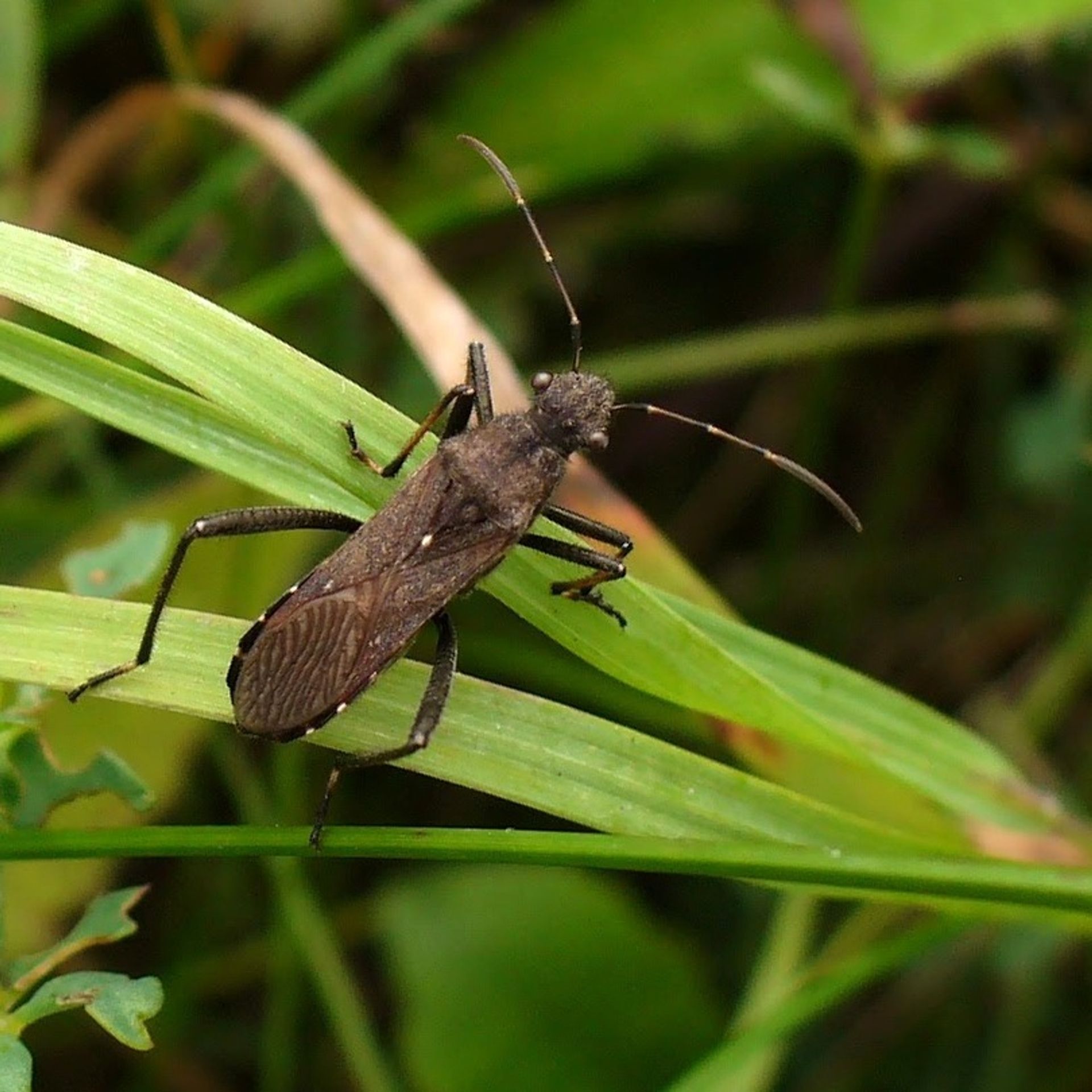
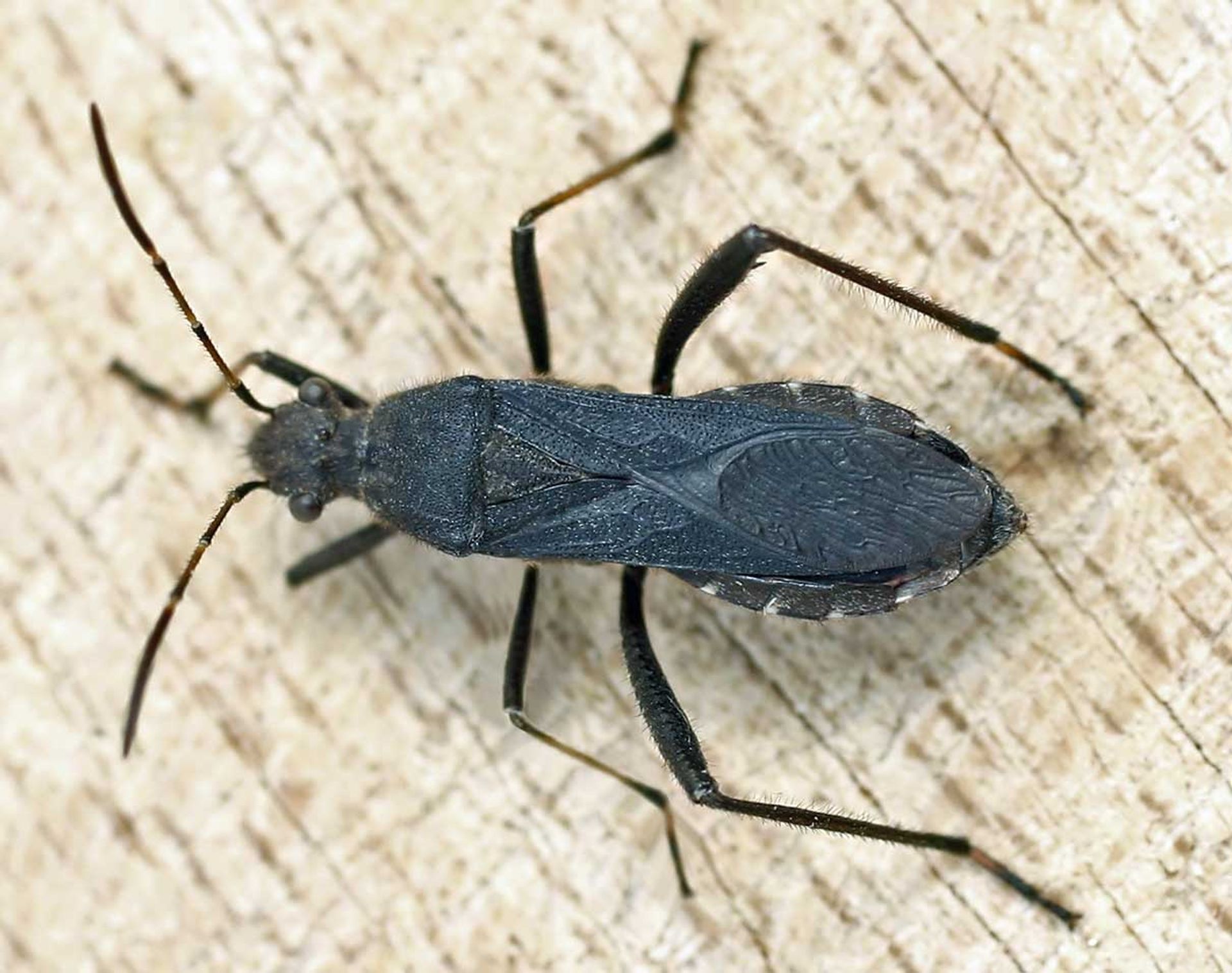
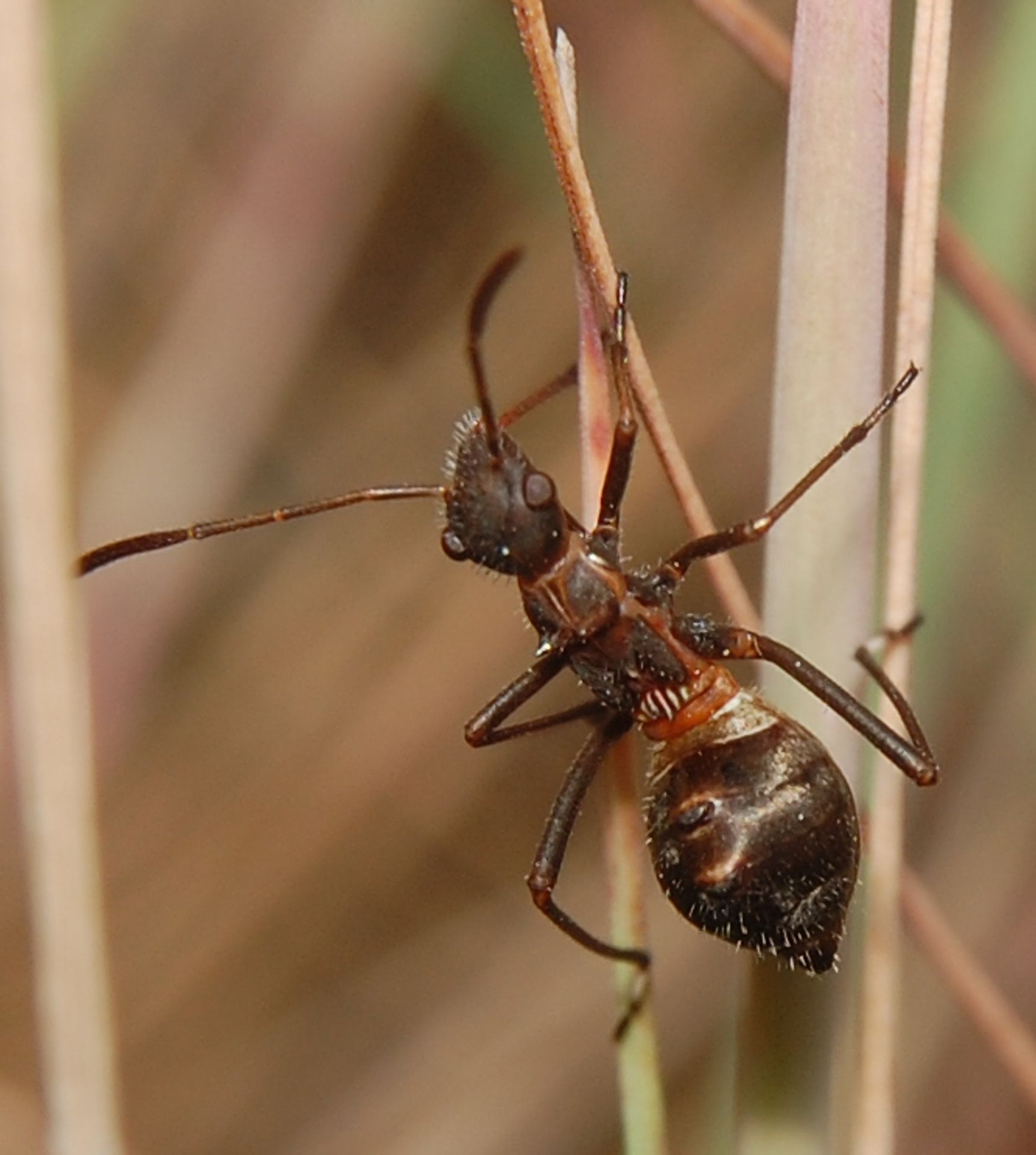
Alydus calcaratus is a large, dark plant bug in the Alydidae with a Holarctic distribution spanning Europe, Asia, and northern North America. It is the sole representative of its family in northern Central Europe outside the Alps. are 10–12 mm, blackish with an orange-red visible only in , and exhibit -like resemblance. Nymphs are convincing mimics with an unclear relationship to ant nests. The feeds primarily on fallen legume seeds, with carrion-feeding also observed.
Pronunciation
How to pronounce Alydus calcaratus: //əˈlaɪdəs kælˈkærətəs//
These audio files are automatically generated. While they are not always 100% accurate, they are a good starting point.
Identification
Distinguished from other Alydidae by its Holarctic distribution and large size. The combination of blackish body, curved fourth antennal segment, and orange-red visible in is diagnostic. Males are further identified by thickened hind with strong spines. Resembles spider-hunting wasps (e.g., Arachnospila) in flight due to exposed orange abdomen. Only Alydidae in northern Central Europe outside Alps.
Images
Appearance
Large (10.0–12.0 mm), oblong, mainly blackish-coloured . as wide as pronotum with evenly rounded front. Pronotum with rounded rear corners. four-segmented with distinctly curved fourth segment. Hind of males thickened with several strong spines on underside. with bright orange-red patch visible only in . Nymphs are convincing mimics.
Habitat
Heaths, dry grassland, dry places with light soils, and sand dunes. In Britain and Ireland, primarily coastal areas and sandy in southern England and parts of Wales.
Distribution
Holarctic: British Isles through Europe to eastern Siberia (Yakutia) and China; northern North America from Alaska and Québec across United States to Wyoming. Only Alydidae in northern Central Europe outside Alps. In Britain and Ireland: southern England, parts of Wales, one record from County Down, Northern Ireland.
Seasonality
observed from mid-June to October, with peak abundance early August to mid-September. Mating occurs July to September. Nymphs found May to August. Adults overwinter; new appears in July.
Diet
Phytophagous: and nymphs feed mainly on fallen seeds of legumes (Fabaceae), especially Sarothamnus, Cytisus, Genista, and Ulex. Carrion-feeding and consumption of vertebrate faeces have been observed.
Life Cycle
Incomplete understanding. overwinter. Nymphs present May to August; nature of relationship with nests is unclear despite ant-mimicry. Mating July to September. Exact developmental details and nymphal remain poorly documented.
Behavior
Nymphs are convincing mimics. exhibit -like appearance due to exposed orange-red . Both adults and nymphs feed on fallen seeds; opportunistic carrion-feeding documented.
Similar Taxa
- Arachnospila spp.Spider-hunting wasps that A. calcaratus resembles in due to exposed orange-red and overall appearance; belongs to different order (Hymenoptera)
- Other AlydidaeA. calcaratus is the only Alydidae in northern Central Europe outside Alps; other members restricted to southern Europe or different continents
Sources and further reading
- BugGuide
- Wikipedia
- GBIF taxonomy match
- iNaturalist taxon
- NCBI Taxonomy
- Catalogue of Life
- Buprestidae | Beetles In The Bush | Page 10
- A jewel of a beetle | Beetles In The Bush
- Mexico | Beetles In The Bush
- Bug Eric: What's on Dat Scat?
- A “leafless” leaf-footed bug | Beetles In The Bush
- Bug Eric: Priocnemis minorata
- The genome sequence of the plant bug, Alydus calcaratus (Linnaeus, 1758) (Hemiptera: Alydidae).