
Aelia
shield bug
Species Guides
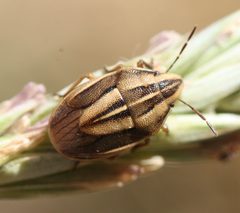
1Aelia is a of shield bugs ( Pentatomidae) in the tribe Aelini. These true bugs (Hemiptera) are characterized by their shield-shaped bodies. The genus is well-documented with over 11,000 observations on iNaturalist, indicating widespread recognition among naturalists. Aelia are associated with grassland and agricultural .

Pronunciation
How to pronounce Aelia: //ˈaɪliə//
These audio files are automatically generated. While they are not always 100% accurate, they are a good starting point.
Identification
Aelia can be distinguished from other pentatomid by tribal characteristics of Aelini, including features of the and . The genus is recognized by the combination of a relatively elongate body form compared to many shield bugs, with a distinct scutellum. -level identification requires examination of genitalia and punctation patterns on the pronotum and scutellum.
Images
Habitat
Grasslands, meadows, and agricultural fields, particularly areas with cereal crops and grasses.
Distribution
Palearctic region, with primary distribution across Europe, North Africa, and Asia. Individual have more restricted ranges within this broad area.
Diet
Phytophagous; feeds on grasses (Poaceae) and cereal crops.
Host Associations
- Poaceae - food plantgrasses and cereals
Life Cycle
Hemimetabolous development with , nymph, and stages. typically occurs as adults.
Ecological Role
Herbivore in grassland ; some are agricultural pests of cereal crops.
Human Relevance
Some Aelia are recognized as pests of wheat and other cereals, causing damage to developing grains. The is monitored in agricultural pest management programs.
Similar Taxa
- Aelia acuminataA. acuminata is the most widespread and commonly observed in the , often used as a reference for genus-level identification.
- EurygasterAnother of shield bugs in Pentatomidae that shares cereal-feeding habits and agricultural pest status, but differs in body shape and scutellum proportions.
More Details
Taxonomic note
The name Aelia has been used in other contexts, including a Roman name (gens) and a Roman colony (Aelia Capitolina in Jerusalem), but in entomology it refers exclusively to this hemipteran genus.
Agricultural significance
The includes of economic importance, particularly in European cereal production, where they can cause significant yield losses if are not managed.