
Brachynemurus abdominalis
(Say, 1823)
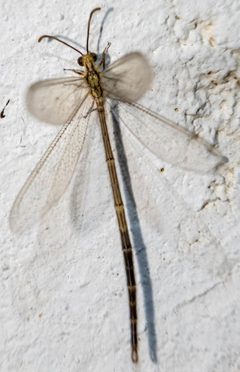
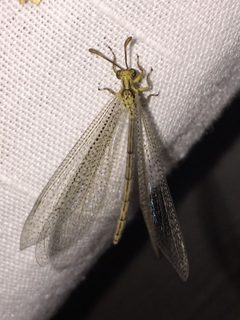
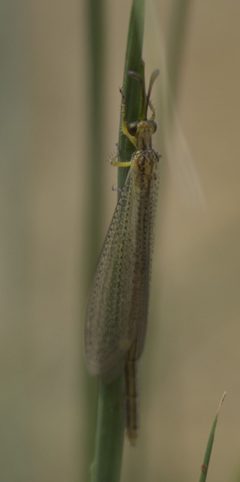
Brachynemurus abdominalis is a of antlion in the Myrmeleontidae. It is one of 18 of antlions recorded north of Mexico. The species was originally described as Myrmeleon abdominalis by Thomas Say in 1823. Like other antlions, it undergoes complete with a predatory larval stage and a delicate, lacy-winged stage.
Pronunciation
How to pronounce Brachynemurus abdominalis: //ˌbrækɪnɪˈmjʊrəs æbˌdɒməˈnaɪlɪs//
These audio files are automatically generated. While they are not always 100% accurate, they are a good starting point.
Identification
can be distinguished from damselflies (order Odonata) by their short, clubbed versus the long, thread-like antennae of damselflies. From other antlion , Brachynemurus can be separated by their relatively large size and specific wing venation patterns. The genus Brachynemurus is distinguished from the pit-digging genus Myrmeleon by larval —Brachynemurus larvae do not construct pits but instead lie in wait buried in loose substrate. Adults are most often seen among tall grasses, especially at dusk, and are frequently attracted to lights at night.
Images
Habitat
Larvae occur in fine, powdery soil or sandy substrates. They are found in dry, open including areas beneath rock overhangs, under bridges, dirt floors of old barns and sheds, and at the base of trees—situations that remain perpetually dry. frequent grasslands, prairies, and open areas with tall grasses, particularly near dusk.
Distribution
Found in Central America and North America. Within North America, the Brachynemurus occurs across the United States with recorded from Massachusetts west to Colorado and south through Texas and Florida.
Seasonality
are most commonly observed from late spring through summer. They are frequently attracted to lights at night. Larvae are present year-round in suitable substrates, in their developmental stage.
Diet
Larvae are predatory, feeding on ants and other small insects that come within reach of their jaws. They inject through hollow that paralyze prey and begin , then imbibe the liquefied tissues. do not feed; their mouthparts are reduced and their attention is focused on .
Life Cycle
are laid in or on dry soil. Larvae hatch and bury themselves in loose substrate, where they remain for one or more years depending on and conditions. They pass through three instars, feeding on prey throughout this period. occurs inside a silken cocoon spun underground, with grains of sand incorporated into the structure. emerge from the and live for a relatively short period, as they do not feed.
Behavior
Larvae are sit-and-wait that remain motionless with jaws agape, sensing vibrations from approaching prey. When prey triggers their trap, they grasp it with their hooked . are weak, clumsy fliers that are highly cryptic. Upon landing on grass stems or twigs, they instantly align themselves to match the substrate and become nearly invisible. They are most active at dusk.
Ecological Role
Larvae function as of small soil-dwelling , particularly ants, contributing to of these . serve as prey for various including birds and other insects. As a group, antlions represent an important component of dry, sandy .
Human Relevance
Antlions, including Brachynemurus , are sometimes kept in captivity for observation by providing a container of fine sand and periodically adding prey. They have been used in educational contexts to demonstrate -prey relationships and insect . The larvae pose no threat to humans or agriculture.
Similar Taxa
- Myrmeleon spp.Larvae of Myrmeleon construct distinctive funnel-shaped pits to trap prey, while Brachynemurus larvae simply bury themselves in loose substrate without digging pits. Myrmeleon also have different wing patterns and body proportions.
- Scotoleon spp.Another antlion with similar , but Scotoleon males have particularly elongated with prominent claspers, and the genus shows different geographic distribution patterns.
- Damselflies (suborder Zygoptera) antlions superficially resemble damselflies in their slender bodies and wing posture, but are distinguished by short, clubbed versus long, thread-like antennae, and by their net-veined rather than parallel-veined wings.
More Details
Taxonomic history
Originally described by Thomas Say in 1823 as Myrmeleon abdominalis, this was later transferred to the Brachynemurus. Say's original description came from specimens collected in the eastern United States.
Larval behavior variation
Within Myrmeleontidae, two distinct predatory strategies exist: pit-digging (exemplified by Myrmeleon) and pit-less ambush (exemplified by Brachynemurus and most other ). This behavioral dichotomy represents an important evolutionary divergence within the .
Sources and further reading
- BugGuide
- Wikipedia
- GBIF taxonomy match
- iNaturalist taxon
- NCBI Taxonomy
- Catalogue of Life
- Bug Eric: "Doodlebugs" (Antlions)
- Mini-review of the Cicindelidia abdominalis species-group | Beetles In The Bush
- Ospriocerus abdominalis | Beetles In The Bush
- The (almost) Florida-endemic Cicindelidia scabrosa | Beetles In The Bush
- Of Bots and Warbles | Beetles In The Bush
- ID Challenge #10 | Beetles In The Bush