
Calomantispinae
Genus Guides
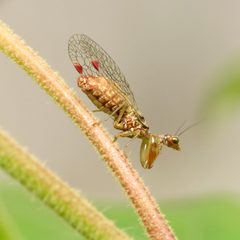
1Calomantispinae is a of mantidflies (Mantispidae, Neuroptera) characterized by distinctive morphological features that distinguish them from the larger Mantispinae subfamily. The subfamily contains multiple distributed across Australia and the New World, including the New World genus Nolima and Australian genera such as Calomantispa and Asperala. within this subfamily are small to moderate-sized neuropterans with forelegs convergent with those of praying mantises.

Pronunciation
How to pronounce Calomantispinae: //ˌkæloʊˌmæntɪˈspaɪniː//
These audio files are automatically generated. While they are not always 100% accurate, they are a good starting point.
Identification
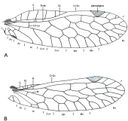
Calomantispinae can be distinguished from Mantispinae by male abdominal cuticular structures, which are circular or polygonal in form rather than the structures found in Mantispinae. Male genitalia and wing venation patterns provide additional diagnostic characters. The lacks the more robust body form typical of many Mantispinae .
Images
Distribution
Disjunct distribution spanning Australia and the New World. In Australia, represented by three across multiple including Calomantispa and Asperala. In the New World, the genus Nolima ranges from the southwestern United States south to Rica, with records from Nevada, Arizona, New Mexico, Texas, Mexico (including Puebla), Guatemala, and Honduras.
Similar Taxa
- MantispinaeLarger within Mantispidae; distinguished by different male abdominal cuticular structures, male genitalia , and generally more robust body form. Calomantispinae exhibits circular or polygonal male abdominal structures versus the condition in Mantispinae.
More Details
Taxonomic history
The has undergone significant revision, particularly in Australian and New World faunas. Australian Calomantispinae were revised in 1987, recognizing three and establishing new Asperala and Spaminta. The New World genus Nolima was revised in 2019, with species synonymies reducing the number of recognized species and clarifying distribution patterns.
Diagnostic characters
Key morphological features for identification include: male abdominal cuticular structures (circular or polygonal), specific configurations of male genitalia, and distinctive wing venation patterns. These characters have been used to separate Calomantispinae from Mantispinae and to distinguish within the subfamily.