
Nolima
Navás, 1914
Species Guides
1Nolima is a of mantidflies (order Neuroptera, Mantispidae, Calomantispinae) to the New World, ranging from the southwestern United States south to Rica. The genus currently contains four valid following a 2019 taxonomic revision: N. infensa, N. pinal, N. victor, and the newly described N. costaricensis. Several previously described species were synonymized in this revision. Nolima species are distinguished from related genera by specific morphological features of the male genitalia and female reproductive structures.


Pronunciation
How to pronounce Nolima: //nəˈlaɪmə//
These audio files are automatically generated. While they are not always 100% accurate, they are a good starting point.
Identification
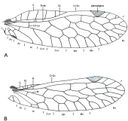
Nolima can be distinguished from the related Calomantispa by three key morphological features: forewing subcostal space length (proportionally shorter in Nolima), position of the spermatheca accessory gland ( in Nolima versus in Calomantispa), and shape of the male mediuncus (strongly projecting posteriorly and deeply bifid in Nolima). Male Nolima possess a scoop-like ninth sternum that extends posteriorly beyond the ectoprocts, and abdominal cuticular structures that are circular or polygonal. The gonarcal bears small dorsolaterally. -level identification requires examination of male genitalia and female spermathecal structures.
Images
Distribution
to the New World, with a range extending from the southwestern United States (Nevada) south through Mexico and Central America to Rica. Documented localities include: Guatemala and Honduras (N. infensa); Nevada, western United States (N. pinal); Puebla, central Mexico (N. victor); and Costa Rica (N. costaricensis, described 2019).
Similar Taxa
- CalomantispaSimilar Calomantispinae; distinguished by forewing subcostal space length, spermatheca accessory gland position ( versus ), and mediuncus shape (not strongly projecting posteriorly and deeply bifid)
More Details
Taxonomic History
The was established by Navás in 1914. A 2019 revision by Reynoso & Contreras in ZooKeys clarified the composition, reducing the number of valid species from seven to four through synonymization: N. dine and N. kantsi were synonymized with N. pinal; N. praeliator and N. pugnax were synonymized with N. victor (for which a lectotype was designated). The new species N. costaricensis was described from Rica.
Diagnostic Morphology
Key diagnostic features include: male abdominal cuticular structures (circular or polygonal); male genitalia with mediuncus apex strongly projecting posteriorly and deeply bifid; female spermatheca with accessory gland appearing as a protuberant ovoid sclerotized structure; and male ninth sternum scoop-like and extending posteriorly beyond ectoprocts.
Sources and further reading
- BugGuide
- Wikipedia
- GBIF taxonomy match
- iNaturalist taxon
- NCBI Taxonomy
- Catalogue of Life
- Volunteer “community scientists” do a pretty darn good job generating usable data | Blog
- community science | Blog
- citizen scientists | Blog
- biodiversity | Blog - Part 19
- Pensoft blog - Part 50
- Taxonomic review of the mantidfly genus Nolima Navás (Neuroptera, Mantispidae, Calomantispinae)