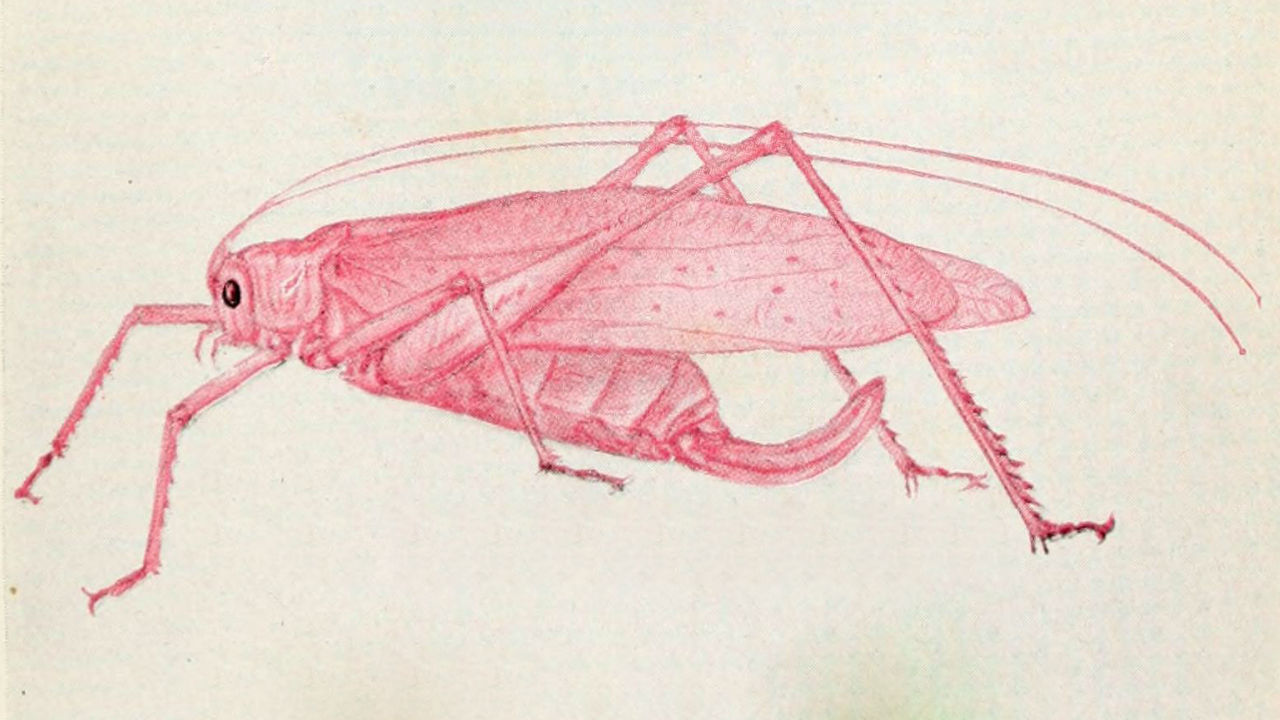
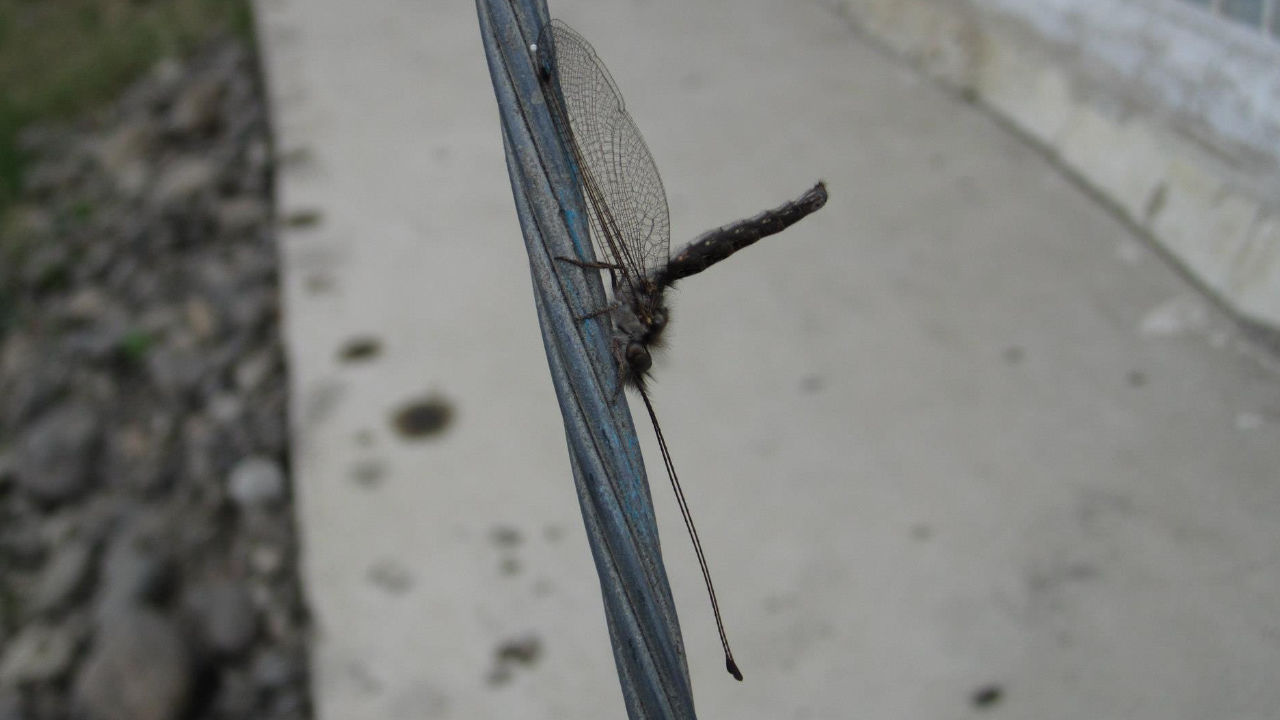
Agrilus restrictus is a metallic wood-boring beetle in the family Buprestidae. The species was described by Waterhouse in 1889 and occurs in Central America and North America. Field observations indicate it is associated with oak woodlands, specifically collected by beating Emory oak (Quercus emoryi). The species appears to be uncommon and has been noted as a desirable target for collectors in the southwestern United States.
Orange-tailed Wood Fly
Blera analis is an uncommon syrphid fly found in northeastern North America. Adults are medium-sized hoverflies, 9–13 mm in length, with distinctive orange-yellow abdominal markings. The species was described by Macquart in 1842. Larvae develop in tree rot holes and feed on exuding sap.
Fuzzy Olive-Green Grasshopper, Olive Grasshopper
Campylacantha olivacea is a species of spur-throated grasshopper in the family Acrididae, commonly known as the fuzzy olive-green grasshopper or olive grasshopper. The species is characterized by its uniform olive-green to brown body coloration and is classified within subfamily Melanoplinae (Catantopinae). Three subspecies are recognized: C. o. olivacea, C. o. similis, and C. o. vivax. It is an uncommon species with a scattered distribution in North America.
Yellow-haired Leafwalker
Chalcosyrphus inarmatus, commonly known as the yellow-haired leafwalker, is an uncommon species of syrphid fly distributed across northern North America. The species belongs to a genus whose larvae are typically associated with decaying wood rather than the aphid predation common to many hover flies. Adults are flower visitors that obtain nectar and pollen from floral resources.
Yellow-legged Leafwalker
Chalcosyrphus metallicus is an uncommon species of syrphid fly found in the southeastern United States. Unlike many hoverflies that visit flowers for nectar and pollen, adults of this species are associated with dead and decaying wood. The species exhibits distinctive enlarged and spinose metafemora on the hind legs, a trait shared with related species in the genus. Larvae develop as saprophages in rotting wood rather than as aphid predators like many other syrphids.
Black-hipped Leafwalker
Chalcosyrphus plesia, known as the black-hipped leafwalker, is an uncommon syrphid fly found in the northeastern United States and southeastern Canada. The species is a documented mimic of the digger wasp Sphex nudus. Unlike many syrphids that hover at flowers, this species exhibits behavioral and morphological adaptations associated with dead wood habitats. The specific epithet "plesia" and common name "black-hipped leafwalker" refer to distinctive dark coloration on the posterior body region.
Mescalero Sand Tiger Beetle
Cicindela formosa rutilovirescens is a sand dune endemic subspecies of tiger beetle restricted to the Mescalero Sands region of southeastern New Mexico and adjacent Texas. First described by Rumpp in 1986, it is distinguished from other C. formosa subspecies by its distinctive greenish-red to coppery coloration. The subspecies is active in late summer and fall, with adults running on open sandy surfaces. It is considered uncommon and patchily distributed within its restricted habitat range.
bare-cheeked bumble fly
Criorhina nigriventris is an uncommon species of syrphid fly known as the bare-cheeked bumble fly. Adults are flower visitors that feed on nectar and pollen. The species exhibits bumble bee mimicry, a common defensive adaptation in the genus Criorhina. Larval development occurs in decaying wood. The species has been documented across northern North America with scattered records in the Appalachian region.
Harvester
Feniseca tarquinius, commonly known as the harvester, is a small and uncommon butterfly native to North America. It is the sole member of the monotypic genus Feniseca, making it taxonomically unique within the family Lycaenidae. The species is notable for its carnivorous larvae, which feed on aphids rather than plant material—a highly unusual trait among butterflies. Adults are typically associated with wooded habitats and forest edges.
Huron River Leafhopper
Flexamia huroni is a leafhopper species in the family Cicadellidae, described by Bess & Hamilton in 1999. It belongs to the genus Flexamia, a group of leafhoppers known for their specialized host plant associations with grasses. The species is named after the Huron River in Michigan, where it was first collected. Like other members of the genus, it likely exhibits strong ecological dependence on specific grass host plants.
maculate flower scarab
Gnorimella is a monotypic genus of scarab beetles in the family Scarabaeidae, containing the single species Gnorimella maculosa. This uncommon beetle is notable for its spotted patterning and association with deciduous woodland habitats in eastern North America. The genus was established by Casey in 1915 and remains one of the more rarely encountered cetoniine scarabs in its range.
Cobalt Trunksitter
Lejota cyanea, commonly known as the cobalt trunksitter, is an uncommon syrphid fly found in northeastern and western North America. Adults are flower-visiting hoverflies that feed on nectar and pollen. The larvae develop in decaying tree roots, a trait characteristic of the genus Lejota.
black-legged gossamer fly, Black-legged Gossamer
Megasyrphus laxus, the black-legged gossamer fly, is an uncommon syrphid fly species found across North America. Adults are associated with flowers, where they feed on nectar and pollen. The species is capable of hovering flight. Larval stages remain undescribed.
Dirt-colored Grasshopper
Mestobregma terricolor, commonly known as the dirt-colored grasshopper, is a band-winged grasshopper in the family Acrididae. The species was described by Rehn in 1919 and is native to North America, with records from Texas and northeastern Mexico. It belongs to the subfamily Oedipodinae, a group characterized by banded hindwings. Information on its biology and ecology remains limited.
spiny-shield ant fly
An uncommon syrphid fly of the eastern United States and adjacent Canada. Adults are metallic greenish or bluish black with distinctive cupreous thoracic stripes and a spiny scutellum. Larvae develop within nests of the ant Lasius americanus. The species is one of approximately 6,200 described syrphid flies worldwide.
Microthylax olivacea is a grasshopper species in the family Acrididae, subfamily Catantopinae. The species was originally described as Campylacantha olivacea by Scudder. It is characterized by uniform green to brown coloration without bright contrasting patterns. The species is uncommon and has a restricted distribution in southeast Colorado.
Black Pegleg
Myolepta nigra, commonly known as the Black Pegleg, is a syrphid fly species found in the eastern and central United States and eastern Canada. Adults are flower-visiting hoverflies that feed on nectar and pollen. The larvae develop in rot holes of deciduous trees, making this species dependent on mature forest habitats with suitable tree cavities. It is considered uncommon throughout its range.
Orange-banded Pegleg, Orange-banded Spineleg
Myolepta varipes is an uncommon syrphid fly found in the eastern United States. Adults visit flowers for nectar and pollen. The species is distinguished by orange banding on the legs. Larvae of the genus develop in rot holes of deciduous trees.
Fluke's Mucksucker
Orthonevra flukei is an uncommon syrphid fly species known from the Western United States. Males measure approximately 4.5 mm and females 5.5 mm. The species exhibits distinctive metallic coloration on the head and thorax, with complex wing venation patterns that include clouded areas and brown spots. Like other members of its genus, it possesses rat-tailed larvae, though specific larval habitat preferences for this species remain undocumented.
black bog fly
Parhelophilus porcus, commonly known as the black bog fly, is an uncommon syrphid fly species recorded from northern North America. Adults are flower-visiting insects that obtain nectar and pollen from blooms. The species possesses the rat-tailed larval form characteristic of related aquatic or semi-aquatic hoverflies, with an elongated breathing siphon.
Cypress Bark Borer
Physocnemum andreae, commonly known as the cypress bark borer, is a longhorned beetle in the family Cerambycidae. Native to eastern North America, the species is classified as uncommon. Adults are associated with cypress trees, as indicated by both its common name and the ecological patterns observed in related species within the genus. The species was first described by Haldeman in 1847.
Poecilonota thureura is a species of metallic wood-boring beetle in the family Buprestidae. The species is found in North America, with records from Canada (Manitoba, Saskatchewan) and the United States. It has been collected as prey by the biosurveillance wasp Cerceris fumipennis, which specializes in capturing buprestid beetles. The species is considered uncommon in collections.
Broad-banded Hornet Fly
Spilomyia alcimus is a syrphid fly first described by Walker in 1849. It exhibits wasp mimicry, resembling yellowjackets in appearance, sound, and behavior. Adults visit flowers for nectar and pollen. The species is uncommon and distributed across Canada and the United States.
Black Spur Fly
Teuchocnemis lituratus, commonly known as the Black Spur Fly, is an uncommon species of syrphid fly found in eastern North America. Adults are medium-sized hover flies, measuring 10.5–15.4 mm in length. The species is distinguished by distinctive morphological features, particularly in males. Larval biology remains unknown.
White-faced Psyllid-killer
Trichopsomyia banksi is an uncommon species of hoverfly (family Syrphidae) found across North America. Adults are known as flower flies and visit flowers for nectar and pollen. The species has earned the common name "white-faced psyllid killer" though the specific larval biology of this species remains undocumented. Other members of the genus Trichopsomyia are known predators of psyllids, aphids, and Phylloxera.
flower longhorn
Trigonarthris atrata is a species of flower longhorn beetle in the family Cerambycidae. It is found in North America and has been documented in the south-central United States, particularly in Oklahoma. The species is considered relatively uncommon and is attracted to sweet red wine and ethanol-based traps.