
Blera analis
(Macquart, 1842)
Orange-tailed Wood Fly
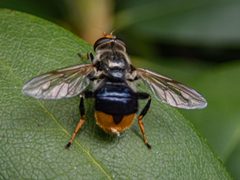
Blera analis is an uncommon syrphid fly found in northeastern North America. are medium-sized hoverflies, 9–13 mm in length, with distinctive orange-yellow abdominal markings. The was described by Macquart in 1842. Larvae develop in tree rot holes and feed on exuding sap.
Pronunciation
How to pronounce Blera analis: /ˈblɛ.ra əˈnaː.lɪs/
These audio files are automatically generated. While they are not always 100% accurate, they are a good starting point.
Identification
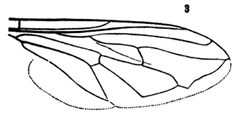
The combination of yellow , shiny black , and black with widely orange apex distinguishes this . The orange-yellow fifth abdominal segment is particularly conspicuous. Similar European species Blera fallax differs in distribution. The specific wing venation— R4+5 almost straight and joining just before the tip— aids identification. Male and female differ in separation and abdominal pattern shape.
Images
Habitat
Associated with mature forests containing trees with rot holes. Larval is exuding sap and rot holes of trees. habitat includes forest edges and areas with flowering vegetation.
Distribution
Northeastern North America. Documented from Vermont and surrounding regions.
Diet
feed on nectar and pollen from flowers. Larvae feed on exuding sap and material in tree rot holes.
Life Cycle
Larvae are of the rat-tailed type, adapted for breathing in liquid or semi-liquid environments while feeding in tree rot holes. and full details are not documented.
Behavior
hover in , a characteristic of syrphid flies. Commonly found on and around flowers.
Ecological Role
may contribute to pollination through flower visitation. Larvae function as saprophages in forest , processing decaying organic matter in tree cavities.
Human Relevance
No documented economic or medical significance. Uncommonly encountered due to restricted distribution and specificity.
Similar Taxa
- Blera fallaxSimilar appearance but occurs in Europe rather than North America; the two are