
Blera
Billberg, 1820
Wood Flies
Species Guides
11- Blera analis(Orange-tailed Wood Fly)
- Blera armillata(Orange-faced Wood Fly)
- Blera badia(Common Wood Fly)
- Blera confusa(Confusing Wood Fly)
- Blera flukei(red-cheeked wood fly)
- Blera humeralis(Yellow-legged Wood Fly)
- Blera nigra(Golden-haired Wood Fly)
- Blera pictipes(Painted Wood Fly)
- Blera robusta(Greenish Wood Fly)
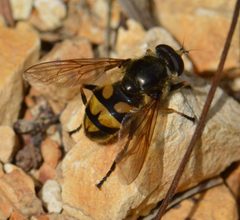
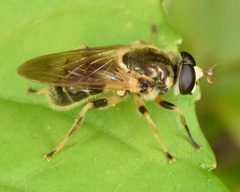
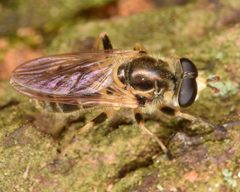
Blera is a of hoverflies (Syrphidae) established by Billberg in 1820. The genus is primarily North American in distribution, with approximately three European . One species, Blera fallax (pine hoverfly), has been the subject of conservation efforts in Britain since 2018. A fossil species, Blera miocenica, has been described from Early Miocene deposits in the Czech Republic, representing the first known fossil record of the genus.
Pronunciation
How to pronounce Blera: /ˈblɛ.ra/
These audio files are automatically generated. While they are not always 100% accurate, they are a good starting point.
Images
Distribution
Primarily North America; three occur in Europe. Documented in Denmark, Norway, Sweden, and the United States (including Vermont). Fossil evidence from Early Miocene (Burdigalian) deposits in the Most Basin, Czech Republic.
Human Relevance
Blera fallax (pine hoverfly) has been subject to conservation efforts in Britain since 2018, representing one of the few documented reintroduction projects for this . The fossil B. miocenica has been used as a paleoenvironmental indicator for Early Miocene reconstruction.
Sources and further reading
- BugGuide
- Wikipedia
- GBIF taxonomy match
- iNaturalist taxon
- NCBI Taxonomy
- Catalogue of Life
- Conservation Translocations: It’s Not Just Beavers - Buglife Blog - Buglife
- Blera miocenica: a new species of Early Miocene hoverfly (Diptera: Syrphidae) from the Czech Republic and its palaeoenvironmental significance
- The genome sequence of the pine hoverfly, Blera fallax (Linnaeus, 1758).