
Blera humeralis
(Williston, 1882)
Yellow-legged Wood Fly
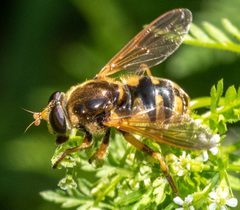
Blera humeralis, commonly known as the yellow-legged wood fly, is a Nearctic of hoverfly (Syrphidae) described by Samuel Wendell Williston in 1882. are flower visitors that feed on nectar and pollen. The species is notable for its distinctive yellow and black coloration and rat-tailed larvae that develop in tree rot holes and sap flows. It is considered uncommon and has a restricted coastal distribution in western North America.
Pronunciation
How to pronounce Blera humeralis: /ˈblɛ.rə hjuːˈmɛr.ə.lɪs/
These audio files are automatically generated. While they are not always 100% accurate, they are a good starting point.
Identification
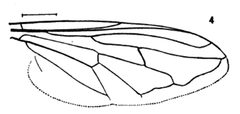
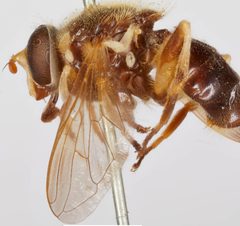
Distinguished from other Blera and similar syrphid flies by the combination of: opaque yellow postpronotum (humeri); large yellow mesopleural spot; specific abdominal pattern with finger-like yellow stripes that do not meet medially; and yellow legs with characteristic black and brown markings. The yellow stigma and predominantly yellow wing at the base and margin are additional diagnostic features. The rat-tailed larval separates it from non-eristaline syrphids.
Images
Appearance
exhibit striking black and yellow patterning. The is shining black with orange-yellowish pile and four more or less distinct cupreous stripes (vittae). The postpronotum (humeri) is opaque yellow. The scutellum is shining black with a yellow margin. A large yellow spot extends on the mesopleuron from the transverse to the middle legs. The is black with wide yellow finger-like stripes that do not meet medially, leaving a black central stripe. The second abdominal segment has a large triangular yellow spot rounded toward the mid-back; the third segment has a more rectangular yellow stripe. occurs in abdominal banding: females have more broadly separated yellow bands on the third and fourth segments than males. The fifth segment is yellow with a black tip. Abdominal pile is fulvous (dull orange) and long on basal angles, black on the half of the second and third segments. Wings are cinereous (ashy grey) hyaline, somewhat clouded on the outer part, with yellow stigma and yellow at the base and margin. The squamae (calypters) are whitish with yellow border and pale yellow fringe. are yellow.
Habitat
Associated with woodland environments, particularly where trees produce sap flows or develop rot holes. Larval consists of exuding sap and rot holes in trees. habitat includes flowering vegetation in or near wooded areas.
Distribution
Nearctic region, distributed along the coast of western North America. Specific documented locations include coastal areas from California northward, though precise range boundaries require further documentation.
Diet
feed on nectar and pollen from flowers. Larvae feed on exuding tree sap or in rot holes of trees.
Life Cycle
Larvae are of the rat-tailed type, possessing a telescoping respiratory siphon that allows breathing while submerged in liquid substrates. Development occurs in exuding sap or rot holes of trees. Specific details of laying, , and are not documented in available sources.
Behavior
are flower visitors. Like other hoverflies, they are capable of nearly motionless hovering . The is considered uncommon, suggesting either genuinely low densities or habits that make it infrequently encountered.
Ecological Role
contribute to pollination through flower visitation. Larvae function as saprophages in tree rot holes and sap flows, contributing to nutrient cycling in woodland .
Human Relevance
No documented economic or medical significance. The is of interest to entomologists and naturalists due to its distinctive appearance and uncommon status. Not known to be a pest or beneficial species in agriculture or forestry.
Similar Taxa
- Blera fallaxAnother Blera with similar woodland and rat-tailed larvae; distinguished by specific color pattern differences, particularly in thoracic and abdominal markings.
- Other Milesiini genera (e.g., Criorrhina, Spilomyia)Share rat-tailed larval type and similar habits; distinguished by specific thoracic and abdominal color patterns, leg coloration, and wing venation details.
More Details
Nomenclatural history
Originally described as Criorrhina humeralis by Williston in 1882, later transferred to the Blera. The basionym Criorrhina humeralis is recognized in taxonomic databases.
Sources and further reading
- BugGuide
- Wikipedia
- GBIF taxonomy match
- iNaturalist taxon
- NCBI Taxonomy
- Catalogue of Life
- Meloidae Holdings | Entomology Research Museum
- A Silver Anniversary | Beetles In The Bush
- Conservation Translocations: It’s Not Just Beavers - Buglife Blog - Buglife
- North America’s largest stag beetle | Beetles In The Bush