
Blera nigra
(Williston, 1887)
Golden-haired Wood Fly
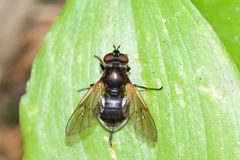
Blera nigra, commonly known as the golden-haired wood fly, is a Nearctic syrphid fly first described by Williston in 1887. are flower-visiting hoverflies that feed on nectar and pollen. The species exhibits distinct in facial coloration and antennal structure. Larvae are of the rat-tailed type, developing in tree rot holes or exuding sap.
Pronunciation
How to pronounce Blera nigra: //ˈblɛ.rɑ ˈniː.ɡrə//
These audio files are automatically generated. While they are not always 100% accurate, they are a good starting point.
Identification
Distinguished from similar syrphid flies by combination of: shining black body with greenish reflections; long golden-yellow pile on abdominal sides; in color (male black-brown with silvery pollen and bare vitta, female reddish yellow with yellow median triangle); reddish yellow female versus dark male antennae; yellow wing bases; and yellow and squamae. The Nearctic distribution and association with forest further aid identification.
Images
Habitat
Associated with and cool temperate forest . Larval development occurs in tree rot holes and exuding sap of woody plants. frequent flowers in forested and edge habitats.
Distribution
Nearctic region. Distributed across northern North America including Alaska and throughout Canada.
Diet
feed on nectar and pollen from flowers. Larvae feed on exuding sap and organic matter in tree rot holes.
Life Cycle
Larvae are rat-tailed type, adapted for aquatic or semi-aquatic conditions in rot holes and sap flows. Specific developmental duration and stage not documented.
Behavior
hover in and are commonly observed visiting flowers. Exhibits typical syrphid fly of remaining nearly motionless while in flight.
Ecological Role
contribute to pollination through flower visitation. Larvae function as decomposers in tree rot hole , processing decaying organic matter and sap exudates.
Similar Taxa
- Blera fallaxCongeneric European with similar rat-tailed larval and wood-associated ; distinguished by geographic distribution (Palearctic vs. Nearctic) and subtle morphological differences in coloration and pile .
- Other Blera speciesShare -level traits of rat-tailed larvae and wood-associated ; require detailed examination of facial pattern, antennal color, and pile characteristics for separation.
More Details
Sexual Dimorphism
Marked differences between sexes in facial coloration, antennal pigmentation, and frontal dusting pattern are key diagnostic features for this .