
Physocnemum andreae
(Haldeman, 1847)
Cypress Bark Borer
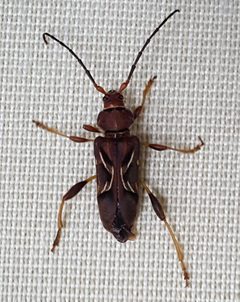
Physocnemum andreae, commonly known as the cypress bark borer, is a longhorned beetle in the Cerambycidae. Native to eastern North America, the is classified as uncommon. are associated with cypress trees, as indicated by both its and the ecological patterns observed in related species within the . The species was first described by Haldeman in 1847.
Pronunciation
How to pronounce Physocnemum andreae: //ˌfaɪsoʊˈniːməm ˈændriːaɪ//
These audio files are automatically generated. While they are not always 100% accurate, they are a good starting point.
Images
Habitat
Associated with cypress trees (Cupressaceae), specifically within the bark of living or stressed trees. The occupies wooded wetlands and riparian zones where cypress species occur.
Distribution
Eastern North America, with records from the United States and Canada (Ontario, Québec). The is considered uncommon throughout its range.
Host Associations
- cypress trees - larval association inferred from and ecological patterns in related Physocnemum ; larvae bore in bark
Human Relevance
Larvae bore in the bark of cypress trees, potentially causing damage to stressed or ornamental specimens. The is not considered a major pest due to its uncommon status and specialized association.
Similar Taxa
- Physocnemum brevilineumBoth share the Physocnemum and exhibit - or -mimicking appearance with dark coloration and pale elytral markings. P. brevilineum is associated with elm rather than cypress and occurs in more western and central regions of North America.
- Other ant-mimicking cerambycids (Euderces, Molorchus, Tilloclytus, Cyrtinus)Similar body form and coloration patterns involving dark bodies with pale markings creating the illusion of a constricted waist. These differ in associations, geographic range, and specific elytral pattern details.
Sources and further reading
- BugGuide
- Wikipedia
- GBIF taxonomy match
- iNaturalist taxon
- Catalogue of Life
- The “silky-bellied humpbacked” ant | Beetles In The Bush
- Coleoptera | Beetles In The Bush | Page 10
- Cerambycidae | Beetles In The Bush | Page 5
- entomology | Beetles In The Bush | Page 11
- Physocnemum andreae, Cypress Bark Borer (Coleoptera: Cerambycidae): A Review of Specimen Records with an Updated Distribution in the USA