
Physocnemum brevilineum
(Say, 1824)
Elm Bark Borer
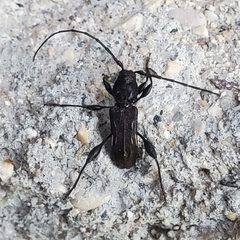
A small, -mimicking longhorned beetle commonly known as the elm bark borer. are dark with reddish accents and possess polished ivory-colored longitudinal ridges at mid- that create the illusion of a narrow wasp waist. The is considered uncommon despite having a and documented pest status. Larvae typically mine within the bark of living elm trees but have been observed in recently dead trees as well, occasionally causing injury to inner bark and cambium.
Pronunciation
How to pronounce Physocnemum brevilineum: /ˌfaɪ.soʊˈniː.məm ˌbrɛ.vɪˈlɪ.ni.əm/
These audio files are automatically generated. While they are not always 100% accurate, they are a good starting point.
Identification
Distinguished from other -mimicking cerambycids (Cyrtinus, Cyrtophorus, Euderces, Molorchus, Tilloclytus) by the combination of -like antennal quivering and the specific pattern of ivory elytral ridges creating waist illusion. The overall 'nasty hymenopteran' appearance combines ant and wasp mimicry elements.
Images
Habitat
Associated with standing and fallen trunks of large dead trees, particularly cottonwood (Populus deltoides). Primary is outer bark of living elm trees (Ulmus americana), though also found in inner bark and cambium where injury occurs. Larval atypical in felled logs compared to natural living tree habitat.
Distribution
North America: Canada (Manitoba, Ontario, Québec) and United States. Specifically documented from Oklahoma (Woods County near Cimarron River) and associated with American elm range.
Diet
Larvae mine within bark of living elm trees. have been observed on dead cottonwood trunks; specific adult feeding habits not documented.
Host Associations
- Ulmus americana - larval American elm; larvae mine in outer bark, inner bark, and occasionally cambium
- Populus deltoides - associationEastern cottonwood; observed on standing and fallen dead trunks
Life Cycle
Larval stage spent mining within bark of living elms. presumably occurs within bark. timing not specifically documented.
Behavior
exhibit distinctive antennal quivering resembling that of ensign wasps ( Evaniidae). This -like movement, combined with visual mimicry, suggests targeting both and wasp . Larvae exhibit atypical behavior in felled logs compared to natural .
Ecological Role
Bark-mining larvae may contribute to tree stress through cambium damage. Associated with studies, though specific role in not established. Serves as example of multi-modal mimicry (visual and behavioral) in defense strategies.
Human Relevance
Documented as occasional pest of elm trees due to cambium damage. Uncommonly encountered by collectors despite pest status. Subject of interest for mimicry studies due to combined / mimicry.
Similar Taxa
- Cyrtinus pygmaeus-mimicking cerambycid with similar small size and dark coloration, but lacks -like antennal and distinct elytral waist markings
- Euderces spp.-mimicking cerambycids with constricted waist appearance, but differ in antennal structure and lack -like quivering
- Molorchus bimaculatus-mimicking cerambycid found on flowering trees, but with different elytral pattern and no mimicry elements
- Tilloclytus geminatus-mimicking cerambycid with waist illusion created by different elytral marking pattern, associated with hardwoods rather than elms
Misconceptions
Despite 'elm bark borer' and documented pest status, the is actually uncommon in collections and field observations. Initial impressions based on pinned specimens suggest pure mimicry, but living specimens reveal more complex mimicry .
More Details
Mimicry Strategy
The appears to employ both (avoiding detection through bark-like coloration) and mimicry (visual and behavioral signals resembling stinging hymenopterans). The mimicry component may simultaneously target both and recognition by , maximizing defensive signal efficacy.
Taxonomic History
Originally described as Callidium brevilineum by Say in 1824, later transferred to Physocnemum. The genus belongs to tribe Callidiini within Cerambycinae.
Sources and further reading
- BugGuide
- Wikipedia
- GBIF taxonomy match
- iNaturalist taxon
- NCBI Taxonomy
- Catalogue of Life
- Coleoptera | Beetles In The Bush | Page 10
- Cerambycidae | Beetles In The Bush | Page 5
- entomology | Beetles In The Bush | Page 11
- August | 2015 | Beetles In The Bush
- The “silky-bellied humpbacked” ant | Beetles In The Bush
- On the Habits of the Elm Bark Borer Physocnemum brevilineum (Say); (Coleoptera: Cerambycidae)