
Callidium
Fabricius, 1775
Species Guides
9- Callidium antennatum(Blackhorned Pine Borer)
- Callidium californicum
- Callidium cicatricosum(long-horned beetle)
- Callidium frigidum
- Callidium pseudotsugae
- Callidium sempervirens
- Callidium sequoiarium
- Callidium texanum(Black-horned Juniper Borer)
- Callidium violaceum(violet tanbark beetle)
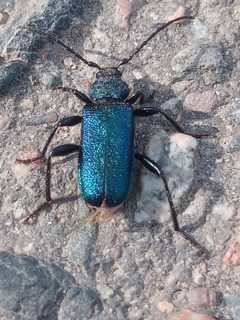
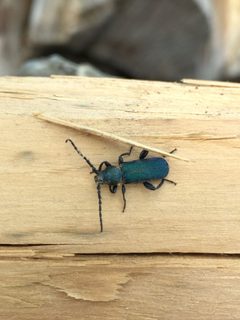
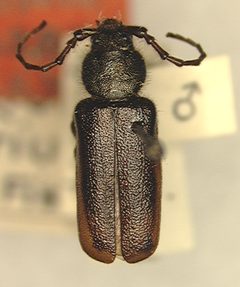
Callidium is a of longhorn beetles (Cerambycidae) comprising approximately 24 described distributed across North America and Eurasia. Species are associated with coniferous trees, particularly pines and spruces, where larvae develop in dead or dying wood. The genus has a fossil record extending from the Eocene to the Pliocene in Europe.
Pronunciation
How to pronounce Callidium: //kəˈlɪdiəm//
These audio files are automatically generated. While they are not always 100% accurate, they are a good starting point.
Images
Habitat
Coniferous forests; larvae develop in dead or dying conifer wood, particularly in large branches and trunks of trees killed by bark beetle attacks or other disturbances.
Distribution
North America (western and eastern United States, Canada) and Eurasia. Fossil occurrences documented from Poland, Germany, and France (Eocene to Pliocene). GBIF records indicate presence in Denmark, Norway, and Sweden.
Seasonality
emerge in mid-spring to early summer; recorded in mid-May for European .
Diet
Larvae are , feeding on dead conifer wood.
Life Cycle
Larval and pupal development lasts approximately two years. emerge from cut branches or trunk sections placed in rearing cages.
Ecological Role
Decomposer in dead coniferous wood; associated with post-disturbance conifer stands following bark beetle and other tree mortality events.