
Callidium antennatum
Newman, 1838
Blackhorned Pine Borer
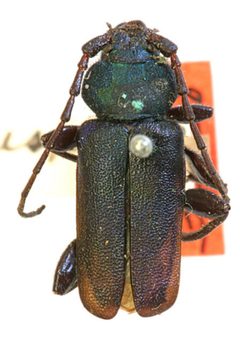
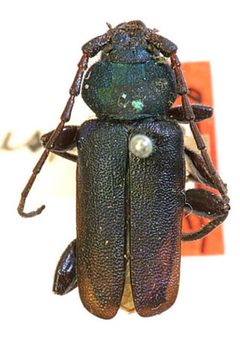
Callidium antennatum is a of longhorned beetle ( Cerambycidae) described by Newman in 1838. It is commonly known as the Blackhorned Pine Borer. The species is native to North America and has been recorded from both Canada and the United States. Like other members of the Callidium, it is associated with coniferous trees, particularly pines.
Pronunciation
How to pronounce Callidium antennatum: /kəˈlɪdiʌm ænˈtɛnætəm/
These audio files are automatically generated. While they are not always 100% accurate, they are a good starting point.
Identification
Members of the Callidium are small to medium-sized cerambycids with cylindrical bodies and relatively short . The specific epithet 'antennatum' suggests distinctive antennae, though detailed morphological descriptions are not readily available in the provided sources. The 'Blackhorned Pine Borer' implies dark coloration and association with pine . Positive identification requires examination of specific morphological characters including antennal structure, pronotal shape, and elytral .
Images
Habitat
Associated with coniferous forests, particularly pine-dominated . The indicates specialization on pine (Pinus) . Based on related species in the , it likely inhabits dead or dying pine wood where larvae develop as borers.
Distribution
North America. Recorded from Canada (CA) and United States (US). Specific states/provinces not detailed in available sources, but the Callidium is broadly distributed across northern North America.
Diet
Larvae bore into wood of coniferous trees, specifically pines. may feed on bark, foliage, or other plant tissues, though specific adult feeding habits are not documented.
Host Associations
- Pinus - larval implied by 'Blackhorned Pine Borer'
Life Cycle
Typical cerambycid with , larva, pupa, and stages. Larvae are wood-borers in coniferous , developing within dead or dying pine wood. Specific timing of and details are not documented.
Ecological Role
As a wood-boring , contributes to decomposition of dead pine wood and nutrient cycling in coniferous forest . May also serve as prey for woodpeckers and other .
Human Relevance
May occasionally be considered a pest in forestry contexts when attacking stressed or recently killed pine timber. However, primary ecological role is in natural decomposition processes rather than as a significant economic pest.
Similar Taxa
- Semanotusclosely related within tribe Callidiini with similar conifer-associated and ; often found together on dead pines
- Phymatodesanother callidiine with similar small to medium size and conifer associations
- Callidium other speciescongeneric share similar and ; identification to species level requires careful examination of antennal and pronotal characters
More Details
Taxonomic history
Described by Newman in 1838, making it one of the earlier-described North American cerambycids. The specific epithet 'antennatum' (meaning 'provided with ' or 'antenna-bearing') likely refers to distinctive antennal characteristics that Newman found notable.
Observation frequency
Relatively infrequently observed, with only 35 observations recorded in iNaturalist as of the data source date, suggesting it may be genuinely uncommon, underreported, or difficult to detect due to its wood-boring habits.