
Phymatodes
Species Guides
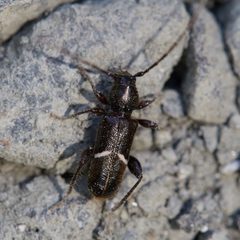
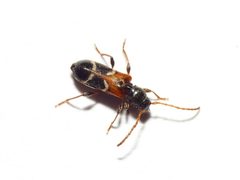
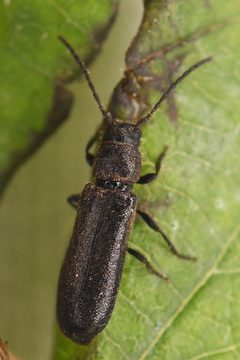
20Phymatodes is a of longhorn beetles (Cerambycidae) in the tribe Callidiini, with more than 50 described distributed across the northern hemisphere. The genus is most diverse in western North America, where 26 species are currently recognized. Species exhibit considerable taxonomic complexity, with recent nomenclatural revisions clarifying misapplied names and synonymies. Some species are associated with specific plants, including grape vines (Vitis) and maple (Acer), while others have broader host associations.
Pronunciation
How to pronounce Phymatodes: //faɪˈmeɪtədiːz//
These audio files are automatically generated. While they are not always 100% accurate, they are a good starting point.
Identification
Phymatodes are small to medium-sized cerambycine beetles. Recent taxonomic work (Swift & Ray 2010) provides diagnostic notes, comparative features, and an updated key to North American species, accompanied by color habitus photographs. The can be distinguished from related callidiine genera by combinations of antennal, pronotal, and elytral characters detailed in the revised key.
Images
Habitat
occur in diverse across the northern hemisphere. In western North America, they are associated with various woody plants including oaks, walnuts, maples, and grape vines. Phymatodes vulneratus shows strong association with shaded conditions, with larvae found predominantly in dead wood of Vine Maple (Acer circinatum) in shaded positions rather than sun-exposed locations.
Distribution
Widespread across much of the northern hemisphere. In North America, most diverse in western states and provinces, with 26 recognized . Distribution extends from western Canada through the western United States. Phymatodes abietinus occurs in Siberia and eastern European Russia, including the Chuvash Republic.
Seasonality
In the North American Intermountain West, activity of Phymatodes has been documented from mid-May through mid-August, with overlapping flight periods among sympatric species. Phymatodes dimidiatus and at least three other species show this seasonal pattern in Idaho.
Host Associations
- Vitis (grape vines) - larval Phymatodes amoenus associated exclusively with Vitis, larvae developing in dead vines
- Acer circinatum (Vine Maple) - larval Phymatodes vulneratus; new record from British Columbia, larvae in dead wood 6 inches to 0.5 inch diameter
- Quercus (oaks) - Phymatodes obliquus and related associated with oaks
- Juglans (walnuts) - True Phymatodes decussatus associated with walnut, distinct from oak-associated P. obliquus
Life Cycle
Larvae develop in dead wood of plants. In Phymatodes vulneratus, larvae were found in a Vine Maple tree that had been dead for three years, developing in sections ranging from 6 inches to 0.5 inch in diameter. Rearing success appears enhanced by shaded conditions.
Behavior
are active fliers with seasonal overlapping among sympatric in the Intermountain West. Males of Phymatodes dimidiatus produce a volatile , (R)-2-methylbutan-1-ol, which serves in mate attraction. Sympatric Phymatodes species may maintain reproductive isolation through differences in pheromone composition, plant use, daily activity periods, or height preferences.
Ecological Role
Larvae function as primary decomposers in dead wood of trees, contributing to nutrient cycling in forest . flower-visiting has been suggested for some based on related cerambycid , though direct documentation for Phymatodes is limited.
Human Relevance
Research on Phymatodes contributes to development of monitoring lures for cerambycid beetles, with potential application to detection of economically important or . Taxonomic revisions clarify identification for biodiversity studies and forest health monitoring.
Similar Taxa
- Other Callidiini generaPhymatodes shares tribe Callidiini with related ; distinguished by antennal, pronotal, and elytral characters detailed in Swift & Ray (2010) key
- Phymatodes obliquus / P. decussatus complexHistorically confused due to misapplied names; P. obliquus (oak-associated) and true P. decussatus (walnut-associated) are distinct clarified by examination
More Details
Taxonomic History
The has undergone significant nomenclatural revision. Linsley (1964) confused P. decussatus and P. juglandis by applying decussatus to the common oak and juglandis to the walnut species. Type examination revealed the true decussatus matches the walnut species, making obliquus the correct name for the oak species. Other changes include: P. blandus no longer divided into (P. blandus concolor now full species); P. lecontei synonymized under P. grandis; P. mojavensis under P. nitidus; P. oregonensis under P. nigrescens; and P. ursae under P. hirtellus.
Pheromone Research
Study of Phymatodes dimidiatus identified (R)-2-methylbutan-1-ol as a male-produced volatile , consistent with prior research suggesting this compound and (R)-3-hydroxyhexan-2-one serve as pheromones for Phymatodes . This contributes to understanding pheromone in Cerambycidae, where conserved pheromone motifs are shared across , tribes, and .
Sources and further reading
- BugGuide
- Wikipedia
- iNaturalist taxon
- NCBI Taxonomy
- Catalogue of Life
- Nomenclatural changes in Phymatodes | Beetles In The Bush
- Cerambycidae | Beetles In The Bush | Page 10
- October | 2021 | Beetles In The Bush
- Insecta | Beetles In The Bush | Page 8
- Identification of a Male-Produced Volatile Pheromone forPhymatodes dimidiatus(Coleoptera: Cerambycidae) and Seasonal Flight Phenology of FourPhymatodesSpecies Endemic to the North American Intermountain West
- NOTES ON PHYMATODES VULNERATUS LEC. WITH A NEW HOST RECORD (COLEOPTERA, CERAMBYCIDAE)
- On the distribution of a poorly known longicorn beetle, Phymatodes abietinus Plavilstshikov et Lurie, 1960 (Coleoptera, Cerambycidae: Cerambycinae)