
Callidium texanum
Schaeffer, 1917
Black-horned Juniper Borer
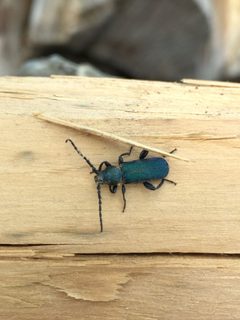
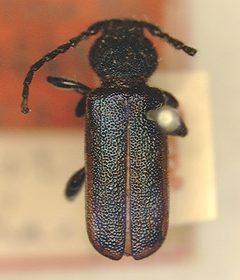
Callidium texanum is a longhorned beetle in the Cerambycidae, described by Schaeffer in 1917. It is commonly known as the Black-horned Juniper Borer. The belongs to the tribe Callidiini, a group of cerambycids typically associated with coniferous . Like other members of its , it is presumed to breed in juniper and related gymnosperms, though specific biological details remain poorly documented in published literature.

Pronunciation
How to pronounce Callidium texanum: //kəˈlɪdiəm ˈtɛk.sə.nəm//
These audio files are automatically generated. While they are not always 100% accurate, they are a good starting point.
Images
Habitat
Pinyon-juniper woodland and related coniferous . Based on -level associations and the , likely associated with Juniperus .
Distribution
North America; United States. Specific range details beyond national-level records are not well documented in available sources.
Host Associations
- Juniperus - presumed larval Inferred from and -level associations; not directly confirmed for this
- Juniperus osteosperma - possible Utah juniper; other Callidium known from this in southwestern U.S.
Similar Taxa
- Semanotus juniperiBoth are rare juniper-associated cerambycids in southwestern North America; S. juniperi has been collected from large limbs of Juniperus osteosperma in Arizona and Utah
- Callidium speciesOther members of the share similar and coniferous associations; specific identification requires examination of antennal and pronotal characters