
Callidium californicum
Casey, 1912
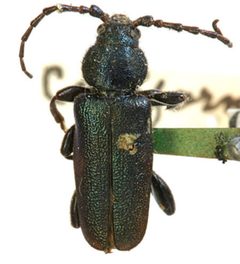
Callidium californicum is a of longhorn beetle in the Cerambycidae, described by Casey in 1912. The Callidium belongs to the tribe Callidiini within the Cerambycinae. Like other members of this genus, it is a wood-boring whose larvae develop in coniferous or hardwood trees. The species epithet "californicum" indicates a type locality or primary distribution in California.
Pronunciation
How to pronounce Callidium californicum: //kəˈlɪdiəm ˌkælɪˈfɔrnɪkəm//
These audio files are automatically generated. While they are not always 100% accurate, they are a good starting point.
Images
Distribution
Recorded from North America, specifically the United States. The epithet suggests California as part of its range, though precise distribution records are limited in the provided sources.
Ecological Role
As a member of the Cerambycidae , larvae likely function as wood-borers in dead or dying trees, contributing to nutrient cycling and creating for other organisms in forest .
Similar Taxa
- Other Callidium speciesMembers of the Callidium share similar and wood-boring habits; precise identification requires examination of specific characters such as antennal length, elytral , and body proportions.
Sources and further reading
- BugGuide
- Wikipedia
- GBIF taxonomy match
- Catalogue of Life
- Bug Eric: Wasp Wednesday: Blue Mud Dauber, Chalybion californicum
- Tents in the Mojave: Western tent caterpillar, Malacosoma californicum — Bug of the Week
- Bug Eric: Wasp Wednesday: Trypoxylon
- Bug Eric: Wasp Wednesday: Chlorion aerarium
- Bug Eric: Tiny Wasp Hero Slays Redback Spiders in Australia
- Bug Eric: Spider Sunday: Spider Enemies