
Typocerus confluens
Casey, 1913
longhorn beetle
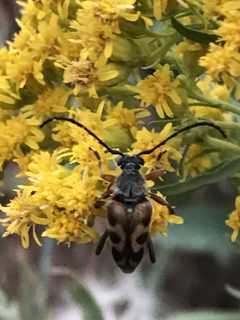
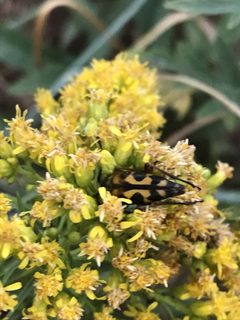
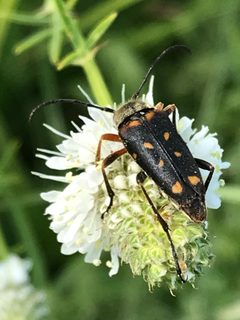
Typocerus confluens is a of flower longhorn beetle in the Cerambycidae, described by Casey in 1913. It belongs to the Lepturinae, characterized by their narrow-necked, broad-shouldered appearance and frequent association with flowers. The species exhibits considerable color variation, ranging from chestnut brown to nearly all black. It is considered a reasonably uncommon species in Missouri and has been documented in the central United States.
Pronunciation
How to pronounce Typocerus confluens: /ˌtɪpoʊˈsɪrəs ˈkɒnfluːɛnz/
These audio files are automatically generated. While they are not always 100% accurate, they are a good starting point.
Identification
Typocerus confluens can be distinguished from T. lugubris, which is always all-black, by its more robust body and the presence of erect hairs on the pronotum. From T. velutinus and T. deceptus, which it may resemble in darker color forms, it differs in body proportions and antennal structure. The lacks the yellow blotches or transverse bands seen in T. lunulatus and T. zebra. The strongly basally depressed prothorax and apically produced antennal segments with distinct poriferous areas (except on antennomere 6) are -level characters useful for placing specimens in Typocerus.
Images
Habitat
Associated with xeric and prairie . Documented from dry sand prairie remnants, xeric dolomite prairie remnants, and areas with yellow roadside composites. In Oklahoma, collected in the Black Mesa region among yellow asters. Likely associated with oak-juniper woodlands and open prairie environments where plants and flower resources are available.
Distribution
North America. Documented from the central United States including Missouri, Oklahoma, and north to Manitoba, Canada. Specific localities include northwestern Oklahoma (Black Mesa area), southwestern Missouri (Hughes Mountain Natural Area), and the Great Plains region generally.
Seasonality
active during summer months. Documented observations in June and July in Missouri and June in Oklahoma. Peak activity likely corresponds with flowering periods of associated plants.
Behavior
have been observed on flowers, consistent with the 'flower longhorn' for the Lepturinae. Attracted to yellow composites (Asteraceae). One observation documents adults found on yellow asters in Oklahoma.
Ecological Role
likely serve as of flowers they visit. Larval unknown, but based on related , larvae probably develop in dead or dying wood of hardwood trees or shrubs.
Similar Taxa
- Typocerus lugubrisBoth can be all-black, but T. lugubris is less robust, lacks erect hairs on the pronotum, and has poriferous areas on antennomere 6
- Typocerus velutinusSimilar appearance, but T. velutinus is more common and differs in details of coloration and body form; T. deceptus is almost identical to T. velutinus
- Typocerus lunulatusBoth occur in Missouri, but T. lunulatus always bears yellow blotches in the basal area of the
- Typocerus zebraBoth occur in Missouri, but T. zebra exhibits yellow transverse bands
More Details
Taxonomic placement
The was described by Thomas L. Casey in 1913 and is classified in the tribe Lepturini within the Lepturinae. The Typocerus contains 15 species in North America, with eight occurring in Missouri.
Collection method
Documented collection methods include sweeping herbaceous vegetation and roadside composites, and beating branches of oaks and junipers. Attracted to ethanol/red wine baited traps in some , though this appears more effective for other cerambycid .
Conservation status
Considered 'rather uncommon' in Missouri and 'reasonably uncommon' in Oklahoma. No formal conservation status assigned, but likely vulnerable due to loss in prairie and glade .