
Cyrtophorus
LeConte, 1850
Species Guides
1- Cyrtophorus verrucosus(Ant-like Longhorn Beetle)
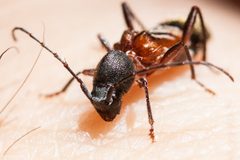
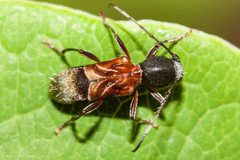
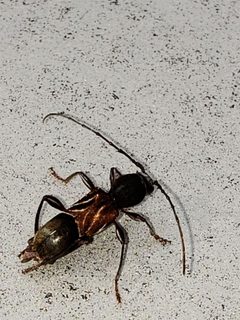
Cyrtophorus is a of longhorned beetles in the Cerambycidae, containing only the Cyrtophorus verrucosus. The genus is notable for its remarkable -mimicry, with bearing a strong resemblance to carpenter ants (Camponotus species). Adults are small, averaging approximately 9 mm in length, and are active primarily in early spring. The single species has a broad distribution across eastern North America.
Pronunciation
How to pronounce Cyrtophorus: /sɪrˈtɒfəˌrʊs/
These audio files are automatically generated. While they are not always 100% accurate, they are a good starting point.
Identification
Cyrtophorus can be distinguished from other -mimicking cerambycid by its compact body form, dark coloration with small amounts of red, and polished ivory-colored ridges at mid- that create the illusion of a narrow waist. The combination of these features produces a convincing resemblance to carpenter ants (Camponotus chromaiodes or C. pennsylvanicus). The genus is further characterized by small size (approximately 9 mm), short , and a somewhat humpbacked profile. The true is relatively small and directed downward, nearly hidden by the pronotum, enhancing the ant-like appearance.
Images
Habitat
are found in wooded environments where their larval trees occur. The single has been documented on various hardwood trees and occasionally on conifers. Adults have been observed on flowers of dogwood species (Cornus florida and C. drummondii), suggesting some adult attraction to flowering vegetation.
Distribution
Eastern North America, ranging across most of the eastern United States and extending into Canada as far west as Alberta. GBIF records indicate presence in the United States including Vermont.
Seasonality
are active from March through July, with peak abundance in early spring. This early-season activity pattern coincides with the flowering period of many hardwood trees and overlaps with the seasonal activity of carpenter ant , potentially enhancing the effectiveness of their -mimicry defense.
Behavior
exhibit rapid, -like movement including quick running and flying. The are moved in a quivering manner reminiscent of , suggesting the possibility of dual mimicry (ant and wasp) or a generalized "nasty hymenopteran" appearance. This behavioral component, combined with morphological mimicry, likely serves as a defense against visual . Adults have been documented visiting flowers, where they presumably feed on pollen or nectar.
Similar Taxa
- EudercesAnother -mimicking cerambycid with similar compact body form, small size, and ant-like coloration; are frequently found on flowers feeding on pollen and nectar.
- MolorchusSmall -mimicking cerambycid with similar overall gestalt and ; active in early spring on flowering trees.
- Tilloclytus-mimicking cerambycid with convergent body shape and coloration, including markings that suggest body segmentation.
- CyrtinusExtremely small -mimicking cerambycid (the smallest North American cerambycid) with similar morphological convergence toward ant appearance.