
Molorchus
Fabricius, 1793
Species Guides
3- Molorchus bimaculatus(Bimaculate Longhorn Beetle)
- Molorchus eburneus
- Molorchus longicollis
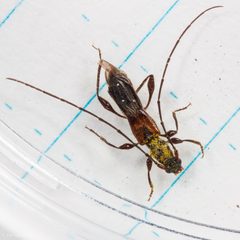
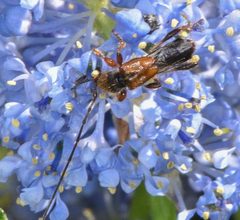
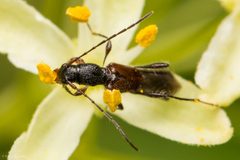
Molorchus is a of small longhorn beetles (Cerambycidae) in the tribe Molorchini. are known for their striking resemblance to ants, representing a clear case of . The genus contains multiple subgenera and distributed across North America, Europe, and Asia. Adults are frequently encountered on flowers, particularly those of dogwood (Cornus spp.), where they feed on pollen and nectar.
Pronunciation
How to pronounce Molorchus: /məˈlɔrkəs/
These audio files are automatically generated. While they are not always 100% accurate, they are a good starting point.
Identification
are distinguished from other small cerambycids by their pronounced -like appearance: small size (typically under 10 mm), dark coloration with pale markings, and a convex body profile that creates the illusion of a constricted waist. The combination of oblique markings and transverse markings enhances the mimicry effect. Unlike similar ant-mimicking such as Euderces and Tilloclytus, Molorchus tend to have a more consistently convex profile and are more strongly associated with flowers as adults.
Images
Habitat
Associated with flowering trees and shrubs, particularly dogwood (Cornus florida and related ). are found on blossoms during peak bloom periods. Larval is poorly documented but presumed to involve woody plants.
Distribution
Holarctic distribution including North America, Europe, and Asia. Specific records include: North America (eastern United States, particularly Missouri and surrounding regions; Vermont), Europe (Denmark, Norway, Sweden), and Asia (multiple across China, Japan, and neighboring regions).
Seasonality
active in early spring, with peak activity coinciding with flowering periods of trees. In Missouri, adults are common during early May when flowering dogwood is in peak bloom.
Diet
feed on pollen and nectar of flowers, particularly dogwood blossoms. Larval diet unknown but presumed to involve woody plant material.
Host Associations
- Cornus florida - flower visitationflowering dogwood; primary association
- Cornus - flower visitationdogwood generally
Behavior
exhibit of ants, with -like appearance and movement. They are strongly attracted to flowers, where they are active during daylight hours. When disturbed, adults may drop from flowers or attempt rapid escape. The ant mimicry likely provides protection from that avoid stinging hymenopterans.
Ecological Role
function as while feeding on floral resources. Their -mimicry represents a defensive that may reduce pressure, potentially allowing them to exploit floral resources with less competition from other flower-visiting insects.
Similar Taxa
- EudercesSimilar small size, -mimicry, and flower association; distinguished by less convex body profile and different elytral markings
- Tilloclytus geminatus-mimicking cerambycid with similar size and appearance; distinguished by larger size in profile, different association (less consistently on flowers), and different elytral pattern
- Cyrtophorus verrucosus-mimicking cerambycid in same ; distinguished by morphological details and flower association records