
Physocnemum
Haldeman, 1847
elm bark borer
Species Guides
3- Physocnemum andreae(Cypress Bark Borer)
- Physocnemum brevilineum(Elm Bark Borer)
- Physocnemum violaceipenne
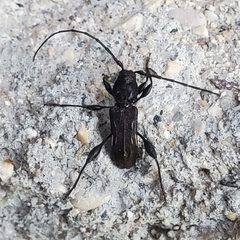
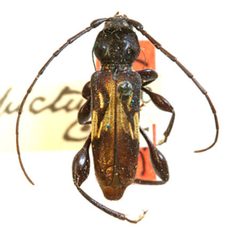
Physocnemum is a small of longhorned beetles ( Cerambycidae) containing three described found in North America. The genus is characterized by - and -mimicking appearance, with dark bodies, small amounts of red coloration, and polished ivory-colored ridges at mid- that create the illusion of a narrow waist. The most well-known species, P. brevilineum (elm bark borer), develops in the bark of living elm trees and has been documented as an occasional pest causing injury to inner bark and cambium. Other species include P. andreae (cypress bark borer) and P. violaceipenne.
Pronunciation
How to pronounce Physocnemum: /ˌfaɪsoʊˈniːməm/
These audio files are automatically generated. While they are not always 100% accurate, they are a good starting point.
Identification
Distinguished from similar -mimicking cerambycids (Cyrtinus, Cyrtophorus, Euderces, Molorchus, Tilloclytus) by combination of: ivory-colored mid-elytral ridges creating false waist appearance; relatively short ; dark body with limited red markings; and -like antennal quivering . P. brevilineum specifically associated with elm; P. andreae with cypress. within distinguished by subtle differences in coloration, pronotal structure, and elytral markings.
Images
Habitat
Associated with bark of living trees, particularly elms (Ulmus spp.) and cypress (Taxodium spp.). Found on trunks and branches of trees. occasionally encountered on dead or fallen wood. P. brevilineum specifically inhabits outer bark of living American elm, with larvae mining inner bark and occasionally damaging cambium.
Distribution
North America. Three with somewhat distinct ranges: P. brevilineum broadly distributed across eastern and central North America where American elm occurs; P. andreae associated with cypress in southeastern United States; P. violaceipenne with more limited distribution.
Seasonality
active during warmer months. P. brevilineum adults observed in late June in Oklahoma. Activity patterns likely vary by and latitude, with peak probably coinciding with tree growing season.
Host Associations
- Ulmus americana - larval American elm; primary for P. brevilineum. Larvae mine bark of living trees, occasionally killing patches of cambium.
- Taxodium - larval cypress; for P. andreae (cypress bark borer)
Life Cycle
Larvae are bark miners, developing in outer and inner bark of living trees. P. brevilineum larvae described as atypical in when developing in felled logs compared to living trees. presumably occurs within bark. timing likely synchronized with host , though specific details undocumented.
Behavior
exhibit distinctive antennal quivering reminiscent of ensign wasps (Evaniidae), likely enhancing -mimicry defense. When disturbed, move in rapid, vibrating manner. Adults may be active on tree bark during day. Larval mining in living bark can cause localized injury to host, occasionally killing patches of cambium. Behavior in felled logs described as atypical for P. brevilineum.
Ecological Role
Bark-boring larvae contribute to tree stress and localized tissue death in living . Role in forest dynamics likely minor given relatively uncommon occurrence and limited host damage under normal conditions. May serve as prey for woodpeckers and other bark-foraging . / mimicry suggests from visual predators such as birds.
Human Relevance
P. brevilineum occasionally reaches minor pest status on American elm, causing bark injury and localized cambium death. Damage generally limited and not considered major economic pest. Historical association with studies due to presence in elm bark, though not directly involved in transmission. Rarely encountered in general collecting, suggesting low abundance or cryptic habits.
Similar Taxa
- CyrtinusSimilar -mimicking cerambycid with constricted body appearance; distinguished by different pronotal and elytral structure, lack of ivory mid-elytral ridges
- Euderces-mimicking cerambycid of similar size; distinguished by different body proportions, antennal structure, and elytral color pattern
- Molorchus-mimicking cerambycid frequently found on flowers; distinguished by smaller size, different elytral markings, and flower-visiting not typical of Physocnemum
- Tilloclytus-mimicking cerambycid with superficially similar appearance; distinguished by different pronotal shape and elytral
More Details
Mimicry and defense
The exhibits remarkable convergence on hymenopteran appearance, combining -mimicking body shape with -mimicking antennal . The ivory elytral ridges create false waist illusion, while antennal quivering enhances wasp resemblance. This dual mimicry may maximize deterrence through generalized 'nasty hymenopteran' appearance rather than specific ant or wasp model.
Rarity in collections
Despite having and documented pest status, Physocnemum are rarely encountered by collectors. P. brevilineum specifically noted as having eluded experienced coleopterists for decades despite active searching, suggesting genuinely low abundance, highly cryptic habits, or both.
Sources and further reading
- BugGuide
- Wikipedia
- GBIF taxonomy match
- iNaturalist taxon
- NCBI Taxonomy
- Catalogue of Life
- The “silky-bellied humpbacked” ant | Beetles In The Bush
- Coleoptera | Beetles In The Bush | Page 10
- Cerambycidae | Beetles In The Bush | Page 5
- entomology | Beetles In The Bush | Page 11
- On the Habits of the Elm Bark Borer Physocnemum brevilineum (Say); (Coleoptera: Cerambycidae)
- Physocnemum andreae, Cypress Bark Borer (Coleoptera: Cerambycidae): A Review of Specimen Records with an Updated Distribution in the USA