
Myolepta nigra
(Loew, 1872)
Black Pegleg
Myolepta nigra, commonly known as the Black Pegleg, is a syrphid fly found in the eastern and central United States and eastern Canada. are flower-visiting hoverflies that feed on nectar and pollen. The larvae develop in rot holes of deciduous trees, making this species dependent on mature forest with suitable tree cavities. It is considered uncommon throughout its range.
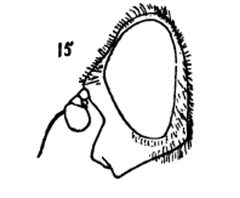
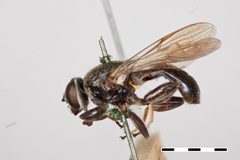
Pronunciation
How to pronounce Myolepta nigra: /maɪˈoʊlɛptə ˈnɪɡrə/
These audio files are automatically generated. While they are not always 100% accurate, they are a good starting point.
Identification
Myolepta nigra can be distinguished from other syrphid flies by its association with rot hole in deciduous trees and its dark coloration. It is one of the few North American in the Myolepta, which is characterized by larvae that develop in tree cavities rather than in soil, water, or colonies like many other hoverfly genera. Accurate identification to species level requires examination of specific morphological characters not detailed in general sources.
Images
Appearance
are hoverflies with the ability to remain nearly motionless in . As suggested by the "Black Pegleg," the exhibits dark coloration. Specific morphological details such as body size, leg coloration patterns, and wing venation are not documented in available sources.
Habitat
Deciduous forests containing mature trees with rot holes. The requires standing trees with cavities formed by decay processes, indicating dependence on relatively undisturbed woodland with ongoing natural tree mortality and decomposition.
Distribution
Eastern and central United States and eastern Canada. Specific state and provincial records are sparse due to the ' uncommon status.
Diet
feed on nectar and pollen from flowers. Larval diet within rot holes is not documented but likely consists of decaying wood matter and associated microorganisms.
Life Cycle
Larvae develop in rot holes of deciduous trees. The developmental duration and specific of are not documented. presumably occurs within the tree cavity.
Behavior
exhibit hovering capability, remaining nearly motionless in air. They are regular flower visitors. Larval within rot holes has not been described.
Ecological Role
function as through flower visitation. Larvae contribute to decomposition processes in tree cavities. The serves as an indicator of mature forest with natural decay processes.
Human Relevance
No direct economic importance. The is of interest to entomologists studying hoverfly diversity and forest insect . Its dependence on tree rot holes makes it relevant to conservation of standing dead wood in forest management.
Similar Taxa
- Other Myolepta speciesFew Myolepta occur in North America; M. nigra is distinguished by geographic range and dark coloration from the more broadly distributed and differently colored M. variegata and other
- Other syrphid flies in tree hole habitatsSome other hoverfly such as certain Chalcosyrphus also use tree holes, but differ in and larval
More Details
Conservation considerations
Myolepta nigra's dependence on rot holes in living or standing dead deciduous trees makes it vulnerable to forest management practices that remove dead wood or sanitize forests. Retention of snag trees and coarse woody debris benefits this and other saproxylic .
Taxonomic note
The was originally described as Myiolepta, with M. nigra described under that spelling by Loew in 1872. The corrected spelling Myolepta is now standard.