- Published on
Pink Katydids!
- Authors

- Name
- Mike Porter
- @bugswithmike
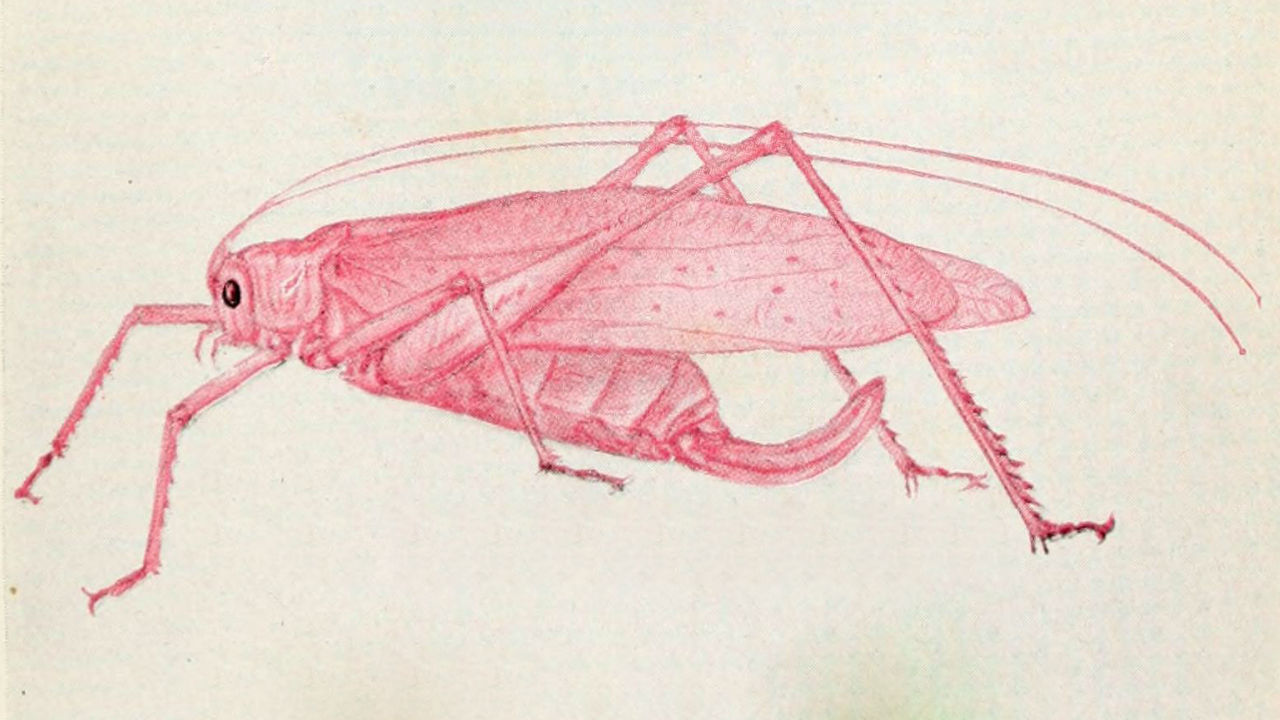
I've never come across a pink Tettigoniidae ). Come to think of it, I don't stumble across many katydids in general. That is due to the fact that I don't usually look specifically for them, but also because they are fantastically camouflaged. I remember once as a kid I found a katydid in the front yard. I ran inside to grab a bottle to put it in, and when I got back outside I had to spend several minutes trying to find it again.
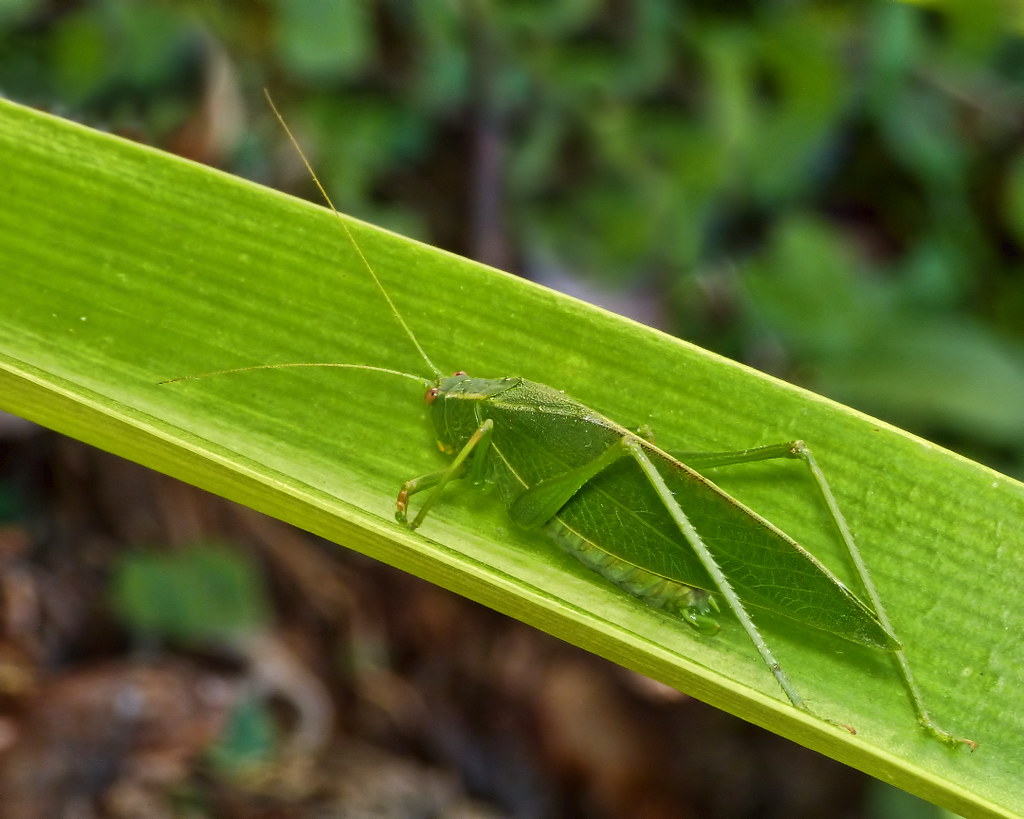
Image by Sid Mosdell (SidPix)
Used under a CC BY 2.0 license.
While katydids are generally green, it is possible to encounter pink The pink color is known as erythrism and is due to a genetic mutation1 . It is thought that this may help some katydids blend in with pink or red flowers. This color typically is present from birth and lasts throughout their life2 .
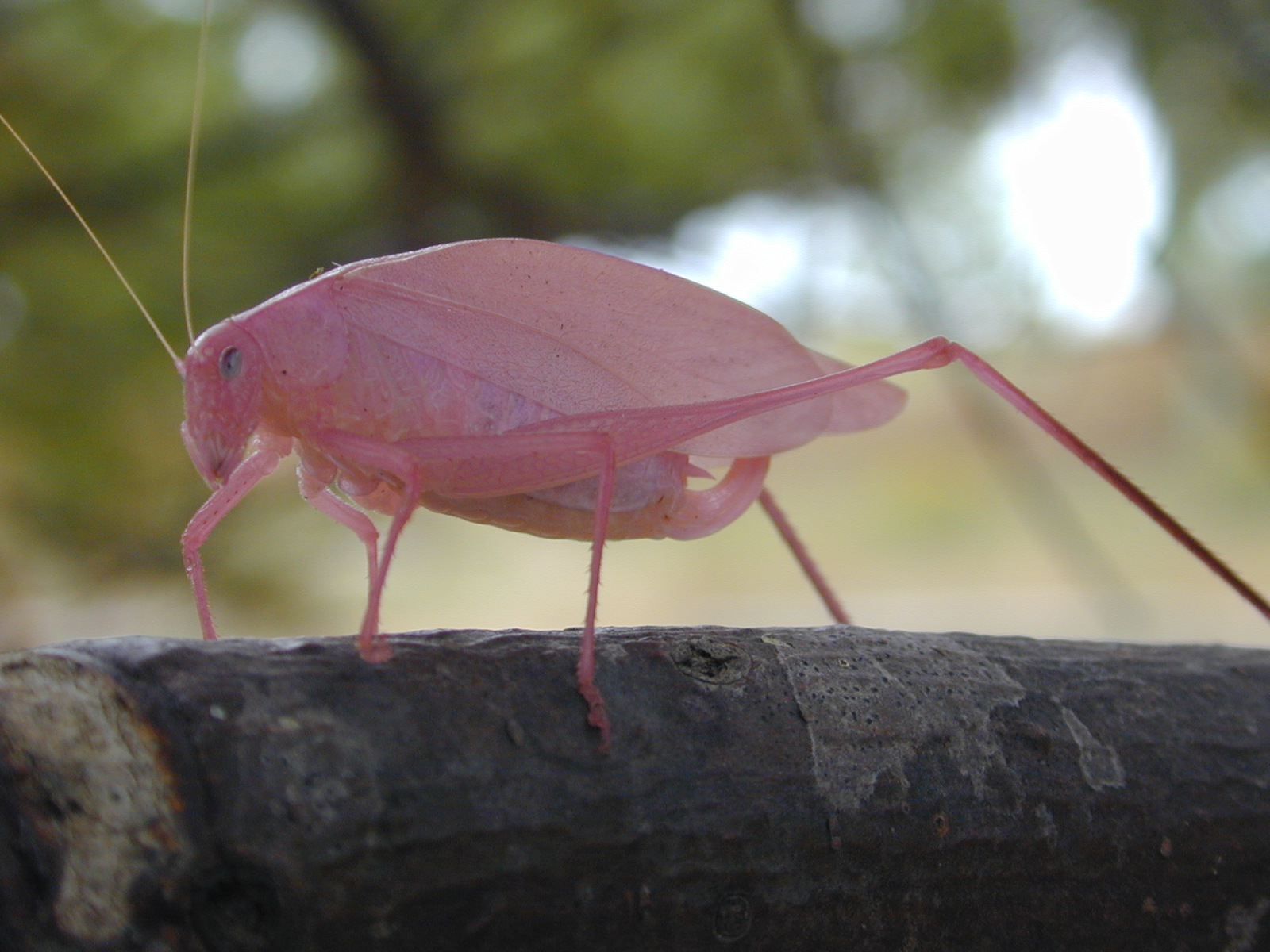
Image by Ric McArthur
Used under a CC BY 2.0 license.
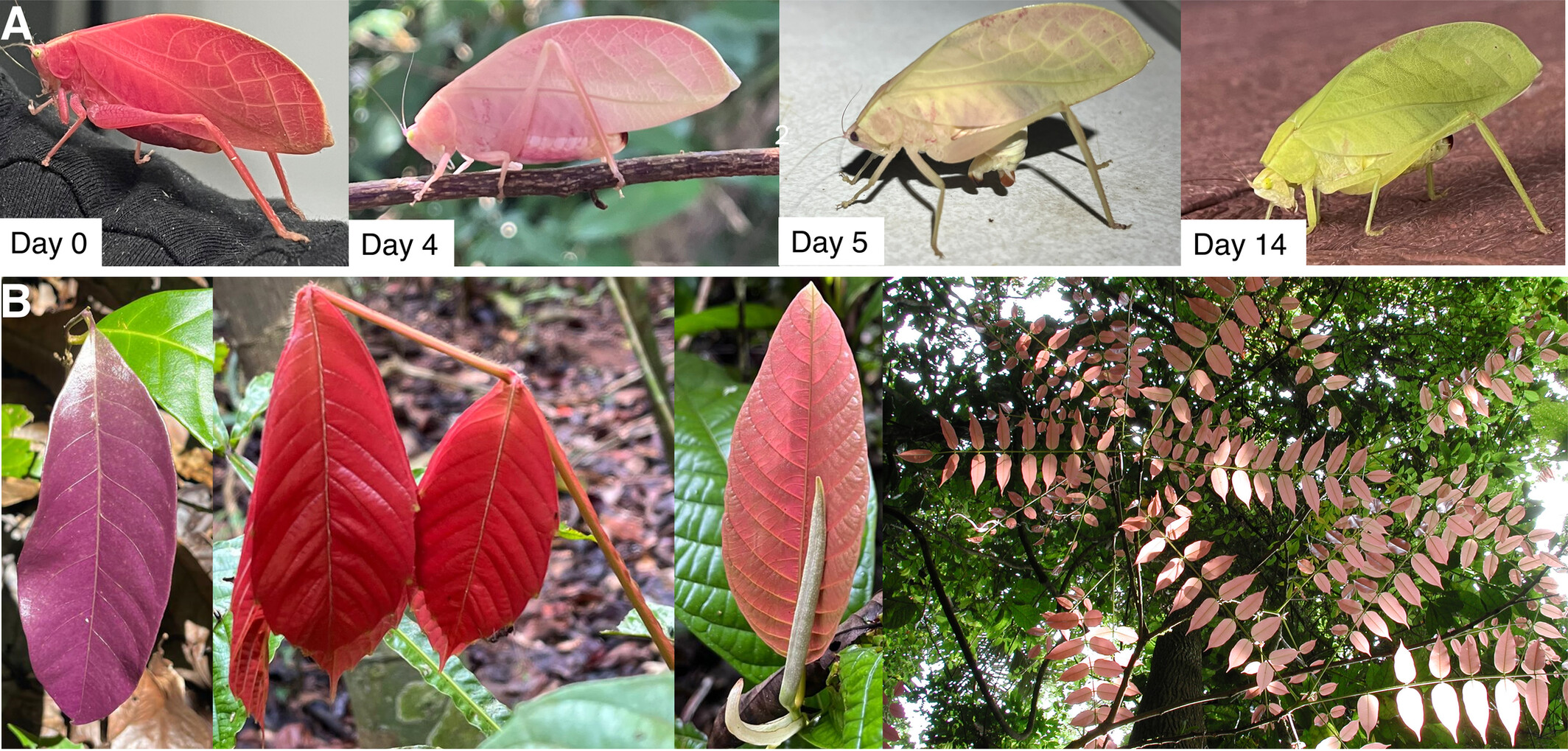
However, there is some recent research showing that some pink katydids can transition to green!34 A pink katydid found in Central and South America was photographed daily (in captivity) for 30 days. After four days, the hot pink had faded to more of a pastel color, then by day 11 it was completely green! This research is purely observational, so it can't say why this species can shift its color, but one hypothesis is to allow it to camouflage on pink flowers/foliage and then transition to green as the leaves change color.