
Teuchocnemis lituratus
(Loew, 1863)
Black Spur Fly
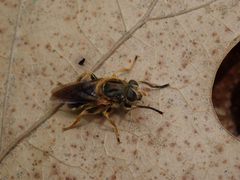
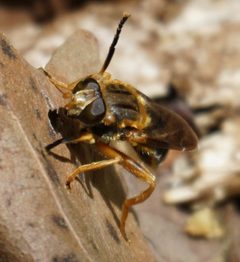
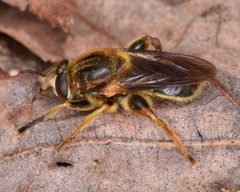
Teuchocnemis lituratus, commonly known as the Black Spur Fly, is an uncommon of syrphid fly found in eastern North America. are medium-sized hover flies, measuring 10.5–15.4 mm in length. The species is distinguished by distinctive morphological features, particularly in males. Larval remains unknown.
Pronunciation
How to pronounce Teuchocnemis lituratus: /ˌteʊkoʊˈniːmɪs ˌlɪtʊˈrætəs/
These audio files are automatically generated. While they are not always 100% accurate, they are a good starting point.
Identification
Medium-sized black syrphid fly with yellow scutellum. Males can be identified by the presence of a spike on the hind tibia. The combination of black body coloration with yellow scutellum and the male hind tibial spike distinguishes this from other Teuchocnemis species and similar syrphids in eastern North America.
Images
Appearance
are 10.5–15.4 mm long. Body predominantly black with yellow scutellum. Males possess a distinctive spike on the hind tibia.
Habitat
Associated with flowering where feed on nectar and pollen. Specific microhabitat preferences for larvae unknown.
Distribution
Eastern half of North America, including Canada and the United States.
Diet
feed on nectar and pollen from flowers.
Life Cycle
Larvae unknown; no published information on stages or development.
Behavior
have been observed hovering around flowers.
Ecological Role
likely contribute to pollination through nectar and pollen feeding at flowers.
Similar Taxa
- Other Teuchocnemis speciesSimilar black coloration and syrphid ; distinguished by male hind tibial spike and yellow scutellum in T. lituratus.
More Details
Taxonomic history
Originally described as Pterallastes lituratus by Loew in 1863, later transferred to Teuchocnemis.