
Myolepta varipes
(Loew, 1869)
Orange-banded Pegleg, Orange-banded Spineleg
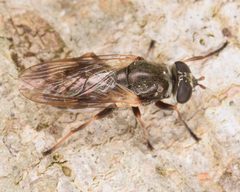
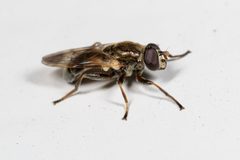
Myolepta varipes is an uncommon syrphid fly found in the eastern United States. visit flowers for nectar and pollen. The is distinguished by orange banding on the legs. Larvae of the develop in rot holes of deciduous trees.
Pronunciation
How to pronounce Myolepta varipes: /maɪoʊˈlɛptə ˈværɪpiːz/
These audio files are automatically generated. While they are not always 100% accurate, they are a good starting point.
Identification
Orange banding on the legs distinguishes this from other Myolepta. The combination of this trait with occurrence in the eastern United States supports identification. Separation from other syrphid relies on leg coloration and overall body proportions typical of Myolepta.
Images
Appearance
have orange-banded legs, a trait referenced in both . As a syrphid fly, body form is consistent with hoverfly . Specific coloration patterns beyond leg banding are not documented in available sources.
Habitat
are found in environments supporting flowering plants. Larval , inferred from -level documentation, consists of rot holes in deciduous trees.
Distribution
Eastern half of the United States. iNaturalist records 27 observations, supporting the assessment of rarity.
Diet
feed on nectar and pollen from flowers. Larval diet is unknown but larvae of the are found in tree rot holes, suggesting saprophagy or on organisms within decaying wood.
Life Cycle
Complete with , larval, pupal, and stages. Larval development occurs in rot holes of deciduous trees, based on -level documentation. Specific timing of life stages is unknown.
Behavior
hover near flowers. includes the ability to remain nearly motionless, a trait common to syrphid flies.
Ecological Role
may contribute to pollination through flower visitation. Larvae in tree rot holes likely participate in nutrient cycling within decaying wood .
Human Relevance
No documented economic or medical importance. Uncommon occurrence limits interaction with humans.
Similar Taxa
- Other Myolepta speciesShare -level ; distinguished by orange leg banding specific to M. varipes
- Other SyrphidaeSimilar hoverfly and flower visitation; separated by leg coloration and body proportions
More Details
Nomenclature
Originally described as Myiolepta varipes by Loew in 1869, now classified under Myolepta. Authority sometimes cited as Loew, 1870 in some databases.
Rarity
Described as uncommon with limited observation records. iNaturalist documentation of 27 observations supports this assessment.