
Trigonarthris atrata
(LeConte, 1850)
flower longhorn
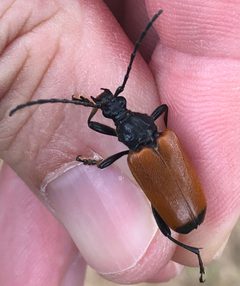
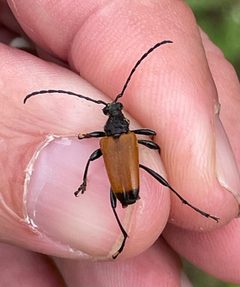
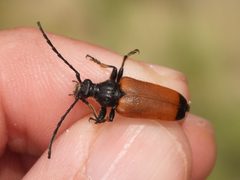
Trigonarthris atrata is a of flower longhorn beetle in the Cerambycidae. It is found in North America and has been documented in the south-central United States, particularly in Oklahoma. The species is considered relatively uncommon and is attracted to sweet red wine and ethanol-based traps.
Pronunciation
How to pronounce Trigonarthris atrata: /ˌtrɪɡoʊˈnɑrθrɪs əˈtreɪtə/
These audio files are automatically generated. While they are not always 100% accurate, they are a good starting point.
Images
Habitat
Juniper/bumelia/hackberry forest in gypsum collapsed cave canyon; soapberry/bumelia copse on south slope of gypsum/red clay mesa. Associated with woodland in the south-central United States.
Distribution
North America; specifically documented in northwestern Oklahoma (Woodward County and Major County), with records from Alabaster Caverns State Park and Gloss Mountain State Park.
Seasonality
Active in June and July; captured in traps during late June and late July in Oklahoma.
Host Associations
- Juniperus virginiana - eastern red-cedar in forested canyon
- Bumelia - soapberry/bumelia copse
- Celtis - hackberry in woodland
Behavior
Attracted to sweet red wine (SRW) and 50:50 mixtures of SRW and ethanol (EtOH) in jug traps. Has been observed in jug traps baited with these mixtures, with individuals captured in both SRW-only and SRW/EtOH baited traps.
Human Relevance
Subject of trapping studies evaluating efficacy of wine and ethanol baits for capturing Cerambycidae. Collected as part of biodiversity surveys in Oklahoma state parks.
Similar Taxa
- Other Trigonarthris speciesGeneric placement distinguishes it from related flower longhorns in Lepturini, but specific diagnostic features for distinguishing T. atrata from are not documented in available sources.
More Details
Trapping records
Documented as 'the most exciting find' during a June 2023 collecting trip to Oklahoma, with one individual captured in each of SRW-baited and SRW/EtOH-baited traps. Second servicing run in late July 2023 again captured the at Alabaster Caverns State Park, with note that it 'seems to be relatively uncommon throughout the south-central U.S. where it occurs.'