
Criorhina nigriventris
Walton, 1911
bare-cheeked bumble fly
Criorhina nigriventris is an uncommon of syrphid fly known as the bare-cheeked bumble fly. are flower visitors that feed on nectar and pollen. The species exhibits mimicry, a common defensive in the Criorhina. Larval development occurs in decaying wood. The species has been documented across northern North America with scattered records in the Appalachian region.

Pronunciation
How to pronounce Criorhina nigriventris: /kri.oʊˈraɪnə ˌnaɪɡrɪˈvɛntrɪs/
These audio files are automatically generated. While they are not always 100% accurate, they are a good starting point.
Identification
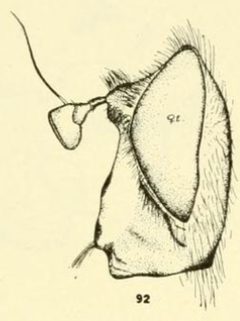
Distinguished from other Criorhina by the combination of bare cheeks (lacking pile) and dark coloration indicated by the specific epithet 'nigriventris' (black-bellied). The Criorhina is characterized by robust, -mimicking flies with broad and stocky bodies. Accurate identification to species level requires examination of facial pile patterns and abdominal coloration.
Images
Habitat
Associated with forested environments where decaying wood is available for larval development. frequent flowering plants in woodland edges and openings.
Distribution
Northern United States, southern Canada, and the Appalachian Mountains. Specific records include Vermont.
Diet
feed on nectar and pollen from flowers. Larval diet unknown but -level larvae develop in decaying wood, likely feeding on decaying plant matter or associated microorganisms.
Life Cycle
Larvae develop in decaying wood. emerge and visit flowers. Specific details on site and adult longevity are not documented.
Behavior
have been observed visiting flowers. Like other hoverflies, capable of nearly motionless hovering .
Ecological Role
contribute to pollination through flower visitation. Larvae participate in wood decomposition processes.
Similar Taxa
- Other Criorhina speciesShare mimicry and general body form; distinguished by facial pile patterns and abdominal coloration, particularly the bare cheeks and dark venter of C. nigriventris
- Bombus species (bumble bees)Visual mimicry; distinguished by single pair of wings, short , and large meeting at top of in flies versus two pairs of wings, longer antennae, and separated in bees