
Brachynemurus irregularis
Currie, 1906
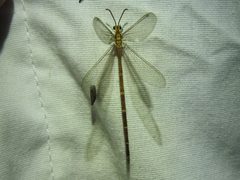
Brachynemurus irregularis is a of antlion in the Myrmeleontidae, first described by Currie in 1906. As a member of the Brachynemurus, its larvae do not construct the characteristic pit traps associated with the genus Myrmeleon; instead, they bury themselves just below the soil surface to ambush prey. are delicate, slender insects with lacy wings and short, clubbed that distinguish them from superficially similar . The species is recorded from North America, though specific details about its remain poorly documented compared to better-studied antlion genera.
Pronunciation
How to pronounce Brachynemurus irregularis: /ˌbrakɪnˈɛmʊrəs ɪrəˈɡjʊlərɪs/
These audio files are automatically generated. While they are not always 100% accurate, they are a good starting point.
Identification
are distinguished from (Odonata) by their short, clubbed versus the long, thread-like antennae of damselflies. Within Myrmeleontidae, Brachynemurus are separated from pit-digging Myrmeleon by larval (subsurface ambush vs. pit construction) and adult . Specific identification of B. irregularis requires examination of genitalic characters and wing venation patterns; the species name 'irregularis' likely refers to distinctive wing markings or venation irregularities.
Images
Habitat
Larvae inhabit dry, sandy or powdery soils where they bury themselves just below the surface. Suitable microhabitats include areas beneath rock overhangs, at the base of trees, under bridges, and in the dirt floors of old barns and sheds—locations that remain perpetually dry. are most often encountered in tall grasses, especially at dusk.
Distribution
Recorded from North America. Specific range boundaries within North America are not well-documented in available sources.
Seasonality
are most frequently observed at dusk and are attracted to lights at night. Activity periods are not precisely documented for this .
Life Cycle
Complete with , larva, pupa, and stages. Larval stage is predatory and of extended duration. occurs underground in a sand-grain-reinforced silken cocoon. Adults are relatively short-lived and do not feed extensively, if at all.
Behavior
Larvae are sit-and-wait that bury themselves just below the soil surface with jaws agape, sensing vibrations from passing prey. Unlike Myrmeleon larvae, they do not construct pit traps. When prey contacts the jaws, the larva injects paralyzing through hollow and imbibes liquefied tissues. fly clumsily and exhibit strong , aligning their bodies with grass stems or twigs to become essentially invisible.
Ecological Role
Larvae function as of small ground-dwelling arthropods, particularly ants. Their role in nutrient cycling in dry soil microhabitats has not been quantified.
Human Relevance
Larvae can be maintained in captivity in containers of fine sand with periodic introduction of prey. occasionally appear at porch lights. No economic significance is documented.
Similar Taxa
- Myrmeleon spp.Larvae construct conical pit traps in sand, whereas Brachynemurus larvae bury themselves without pit construction. of Myrmeleon often have different wing patterning.
- Scotoleon spp.Another pit-digging ; males have particularly elongated with prominent claspers. Scotoleon are generally more western in distribution.
More Details
Larval behavior distinction
The Brachynemurus belongs to the group of antlions whose larvae do not dig pit traps. This represents a major behavioral dichotomy within Myrmeleontidae, with only Myrmeleon and a few other genera exhibiting pit-digging in North America.
Taxonomic note
The epithet 'irregularis' suggests diagnostic irregular patterning, likely in wing markings or venation, though original description details are not excerpted in available sources.