
Brachynemurus sackeni
Hagen, 1888
Sacken's Antlion
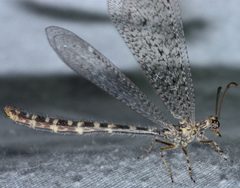
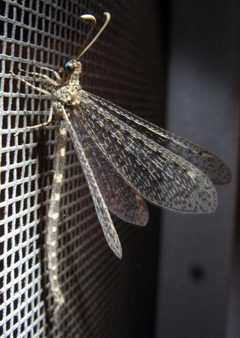
Brachynemurus sackeni is a widespread, arid-adapted antlion in the Myrmeleontidae. Phylogeographic studies using mitochondrial COI sequences have revealed it comprises a cryptic species-complex with two distinct lineages that diverged approximately 3.8–4.7 million years ago, potentially associated with Neogene mountain-building events. This represents the first documented cryptic species-complex in Myrmeleontidae. The species is attracted to mercury-vapor lights and has been documented in juniper chaparral .
Pronunciation
How to pronounce Brachynemurus sackeni: /ˌbrækɪˈnɛmjurəs ˈsækənɪ/
These audio files are automatically generated. While they are not always 100% accurate, they are a good starting point.
Identification
can be distinguished from other antlion by their overall typical of the Brachynemurus, though specific diagnostic features for this species versus its cryptic sibling lineage require molecular analysis. The two lineages identified through COI sequencing are not morphologically distinguishable based on current knowledge.
Images
Habitat
Arid and semi-arid regions, including juniper chaparral. The is adapted to desert environments and shows phylogeographic patterns associated with arid landscapes.
Distribution
Central America and North America. Records include the southwestern United States (Texas, New Mexico, Arizona) and extend south through Mexico and Central America. The is described as widespread across arid-adapted regions.
Seasonality
have been observed in May in west Texas, suggesting spring activity in at least part of the range. Specific seasonal patterns across the full distribution are not well documented.
Life Cycle
As with other antlions, larvae are presumed to be predatory, constructing pit traps in sandy soils to capture prey. Specific details of the for this are not documented.
Behavior
are and attracted to mercury-vapor lights. They have been observed flying to lights in juniper chaparral .
Similar Taxa
- Other Brachynemurus speciesMorphologically similar antlions in the same ; may require dissection or molecular analysis for definitive identification
- Cryptic sibling lineage within B. sackeni species-complexCOI sequencing reveals two distinct lineages that are not morphologically distinguishable; represents first cryptic -complex documented in Myrmeleontidae
More Details
Cryptic Species Complex
This was the first documented cryptic species-complex in Myrmeleontidae. Phylogeographic analysis revealed two distinct mitochondrial lineages that diverged approximately 3.8–4.7 million years ago, likely associated with Neogene mountain-building events. The phylogeographic pattern does not match patterns found in other , suggesting a unique evolutionary history.