
Brachynemurus hubbardii
Currie, 1898
Brachynemurus hubbardii is an antlion in the Myrmeleontidae, distributed across Central America and North America. The Brachynemurus belongs to a diverse group of antlions whose larvae typically do not construct the characteristic funnel-shaped pits associated with the more familiar genus Myrmeleon. Instead, Brachynemurus larvae bury themselves just below the soil surface and wait for prey to pass by. are delicate, lacy-winged insects that resemble damselflies but possess short, clubbed .
Pronunciation
How to pronounce Brachynemurus hubbardii: /ˌbrækɪnɛˈmjʊərəs hʌˈbɑːrdiːaɪ/
These audio files are automatically generated. While they are not always 100% accurate, they are a good starting point.
Identification
distinguished from damselflies (order Odonata) by short, clubbed versus long, thread-like antennae. Within Myrmeleontidae, Brachynemurus are distinguished from Myrmeleon by subtle differences in wing venation and genitalia, requiring expert examination. Brachynemurus hubbardii specifically is identified by combination of geographic range and subtle morphological characters; the species was described by Currie in 1898. Larvae of this do not construct pits, instead lying buried just below the soil surface with jaws agape—behaviorally distinct from pit-digging Myrmeleon larvae.
Images
Appearance
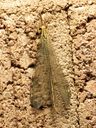
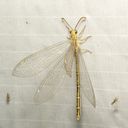
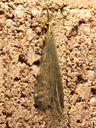
are slender, delicate insects with long, transparent, highly veined wings that give a lacy appearance. The body is elongated with a relatively long . are short, thick, and distinctly clubbed—immediately distinguishing them from damselflies. Wing coloration typically includes dark spots and speckles that provide cryptic camouflage when at rest. Males often have longer abdomens tipped with bracket-like claspers. Larvae are small, wrinkled, and studded with spines, with spindly legs and a pair of long, hooked used to capture prey.
Habitat
Larvae occur in dry, sandy or powdery soils. Prime situations include areas beneath rock overhangs, under bridges, dirt floors of old barns and sheds, and at the base of trees in perpetually dry locations. are found among tall grasses, especially at dusk.
Distribution
Central America and North America. GBIF records confirm presence in Middle America and North America. iNaturalist observations (266 records) support this broad distribution across the two regions.
Seasonality
are most frequently observed at dusk and are attracted to lights at night. Specific seasonal activity patterns for this are not well documented, but antlions generally show adult activity during warmer months.
Life Cycle
Complete with , larva, pupa, and stages. Larvae are predatory, burying themselves in soil and waiting for prey. occurs inside a silken capsule spun underground, with sand grains incorporated into the cocoon. Larval stage duration varies; adults are relatively short-lived.
Behavior
Larvae are ambush that lie buried just below the soil surface with jaws open, detecting prey through vibrations. When prey contacts the jaws, larvae inject digestive through hollow and imbibe liquefied tissues. are weak, clumsy fliers. When alighting on vegetation, adults align themselves with the substrate to become nearly invisible through .
Ecological Role
Larvae function as of small ground-dwelling insects and other . may serve as prey for larger insects, spiders, and other arthropods. The contributes to soil dynamics in arid and semi-arid .
Human Relevance
Larvae are familiar to many as "doodlebugs," though this more properly applies to pit-digging Myrmeleon . The random, cursive trails larvae make when relocating may be the origin of the "doodlebug" name. Larvae can be maintained in captivity with sand and provided prey. occasionally come to porch lights. No economic significance.
Similar Taxa
- Myrmeleon speciesMyrmeleon larvae construct characteristic funnel-shaped pits, while Brachynemurus larvae do not dig pits and instead bury themselves just below the surface. of both appear similar but differ in wing venation details.
- Other Brachynemurus speciesMorphologically similar within the ; precise identification to level requires examination of genitalia and other subtle characters, with B. hubbardii distinguished by geographic distribution and specific morphological traits described by Currie.
- Damselflies (suborder Zygoptera) antlions superficially resemble damselflies in body form and wing posture, but antlions have short, clubbed versus the long, slender antennae of damselflies, and antlions are weak fliers compared to the agile damselflies.
More Details
Etymology
The specific epithet hubbardii honors Henry Guernsey Hubbard (1850-1899), an American entomologist who worked extensively on Neuroptera and other insect groups.
Taxonomic history
First described by Robert Currie in 1898. The Brachynemurus was established by Hagen in 1888 and contains multiple distributed primarily in North and Central America.
Larval behavior note
Unlike the pit-digging Myrmeleon larvae that are most familiar to the public, Brachynemurus represents the more common strategy among antlion : simple burial just below the soil surface without pit construction.