
Brachynemurus nebulosus
(Olivier, 1811)
antlion
Brachynemurus nebulosus is a of antlion in the Myrmeleontidae, distributed across North America. Like other antlions, it undergoes complete with a predatory larval stage and a delicate, lacy-winged stage. The species belongs to a characterized by distinctive wing patterns and among antlions.
Pronunciation
How to pronounce Brachynemurus nebulosus: //ˌbrækɪnɪˈmjʊərəs ˌnɛbjʊˈloʊsəs//
These audio files are automatically generated. While they are not always 100% accurate, they are a good starting point.
Identification
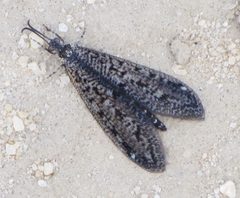
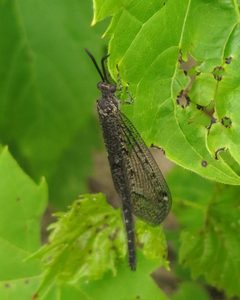
can be distinguished from by their clubbed and wing venation patterns. Within the Brachynemurus, B. nebulosus can be identified by its specific wing patterning—characterized by a nebulous or clouded appearance to the wing markings, as suggested by the epithet 'nebulosus' (meaning cloudy or foggy). The genus Brachynemurus is distinguished from other antlion genera by wing and genitalia structure.
Images
Habitat
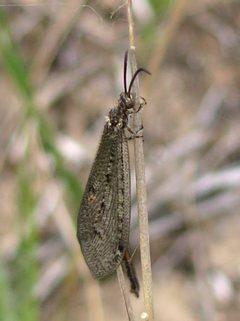
Larvae inhabit dry, sandy or powdery soils, often in sheltered situations such as beneath rock overhangs, under bridges, in the dirt floors of old barns and sheds, or at the base of trees. are typically found in tall grasses and vegetation, especially at dusk, where their cryptic coloration allows them to blend seamlessly against substrates.
Distribution
North America, with records spanning the United States and southern Canada. The has been documented from diverse regions including the eastern United States, the Great Plains, and western states.
Seasonality
are most commonly observed during late spring through summer, with peak activity typically occurring in May through July. Larvae are present year-round in suitable soil substrates, pupating in silken cocoons underground.
Diet
Larvae are predatory, feeding on ants and other small that encounter their submerged jaws. They inject digestive through hollow to liquefy prey tissues, then imbibe the resulting fluids. have reduced mouthparts and do not feed, or feed only sparingly on nectar or other liquids.
Life Cycle
Complete : are laid in soil; larvae develop through instars as ambush ; mature larvae spin silken cocoons underground incorporating sand grains; occurs within the cocoon; emerge to mate and disperse. Larvae do not construct pit traps, instead remaining buried at the soil surface.
Behavior
Larvae are sit-and-wait ambush that remain motionless with jaws agape. When prey contacts the jaws, they snap shut and the larva injects paralyzing . are weak, clumsy fliers most active at dusk. They exhibit remarkable , aligning their bodies against grass stems or twigs to become essentially invisible. Adults are frequently attracted to lights at night.
Ecological Role
Larvae function as of small soil-dwelling arthropods, potentially regulating and other insect in dry soil . serve as prey for various including birds, bats, and predatory insects. The contributes to nutrient cycling through and decomposition processes.
Human Relevance
Larvae are familiar to children and naturalists as 'doodlebugs,' celebrated for their intriguing predatory . The has no agricultural significance but contributes to biodiversity in natural and semi-natural . occasionally appear at porch lights, providing opportunities for observation.
Similar Taxa
- Myrmeleon spp.Pit-digging antlions whose larvae construct characteristic funnel-shaped traps in sand; distinguished from Brachynemurus by larval and wing patterns
- Scotoleon spp.Another of pit-digging antlions with similar but distinct wing patterns and male genitalia
- Glenurus spp.Antlions with striking black, white, and pink wingtip coloration; much more visually distinctive than the subdued patterning of Brachynemurus
More Details
Taxonomic history
Originally described as Myrmeleon nebulosus by Olivier in 1811, later transferred to the Brachynemurus. The genus name derives from Greek roots suggesting 'short thread,' possibly referring to or other morphological features.
Etymology
The specific epithet 'nebulosus' refers to the cloudy or indistinct wing patterning characteristic of this , providing effective camouflage in its .
Conservation status
Not formally assessed; appears to be widespread and locally common in suitable across its range. Threats include habitat loss through urbanization and conversion of dry, sandy habitats.
Sources and further reading
- BugGuide
- Wikipedia
- GBIF taxonomy match
- iNaturalist taxon
- NCBI Taxonomy
- Catalogue of Life
- Bembicid Holdings | Entomology Research Museum
- Meloidae Holdings | Entomology Research Museum
- Bug Eric: Wasp Wednesday: Hoplisoides nebulosus
- Bug Eric: July 2012
- Bug Eric: "Doodlebugs" (Antlions)
- Acanthaceae | Beetles In The Bush