
Ceraeochrysa cincta
(Schneider, 1851)
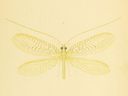
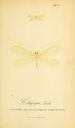
Ceraeochrysa cincta is a green lacewing in the Chrysopidae, distributed across the Americas from North America through the Caribbean to South America. Laboratory studies demonstrate its potential as a agent, with larvae showing instar-specific predatory preferences on prey . in southeast Brazilian agroecosystems exhibit high genetic diversity with broad across different crop systems. The species produces non-pedunculated infertile eggs in later under laboratory conditions, a trait relevant to mass rearing programs.
Pronunciation
How to pronounce Ceraeochrysa cincta: /kɛˈri.oʊˌkraɪsə ˈsɪŋktə/
These audio files are automatically generated. While they are not always 100% accurate, they are a good starting point.
Images
Habitat
Agroecosystems including corn fields, coffee plantations, and organic vegetable farms; broader natural distribution spans multiple biomes across the Americas
Distribution
North America, Caribbean, Middle America, and South America; recorded in Brazilian states including Amazonas, Amapá, Bahia, Ceará, Goiás, Minas Gerais, Mato Grosso, Pará, Pernambuco, Rio de Janeiro, Santa Catarina, and São Paulo
Diet
of Corcyra cephalonica (Lepidoptera: Pyralidae) as alternative prey in laboratory settings; parasitized eggs of this by Trichogramma galloi also consumed
Life Cycle
Three larval instars described with distinct predatory preferences; oviposition studied across three successive under laboratory conditions (25±1°C, 70±10% RH, 12L:12D )
Behavior
First- and third-instar larvae prefer unparasitized , while second-instar larvae prefer parasitized eggs; production of non-pedunculated infertile eggs occurs earlier with successive
Ecological Role
agent in agricultural systems; potential intraguild affecting compatibility with Trichogramma galloi in strategies
Human Relevance
Candidate for mass rearing and field release in programs; genetic diversity and patterns inform sourcing strategies for biocontrol applications
Sources and further reading
- BugGuide
- GBIF taxonomy match
- iNaturalist taxon
- NCBI Taxonomy
- Catalogue of Life
- Grasshoppers of Colorado
- Grasshoppers of Colorado
- Grasshoppers of Colorado
- Species Records and Accounts
- Celebrate Moths at the Bohart Museum on Saturday Night, July 30 | Bug Squad
- Trash Bug Versus Mealybug: Unique Insect Interaction Filmed for First Time
- Genetic Variability of Ceraeochrysa cincta, Ceraeochrysa claveri, and Ceraeochrysa cubana (Neuroptera: Chrysopidae) Populations in Agroecosystems of Southeast Brazil
- Oviposition behavior and biological aspects of Ceraeochrysa cincta (Schneider, 1851) (Neuroptera: Chrysopidae) over successive generations
- Predation behavior of Ceraeochrysa cincta (Schneider, 1851) (Neuroptera: Chrysopidae) on eggs parasitized by Trichogramma galloi Zucchi, 1988 (Hymenoptera: Trichogrammatidae)