
Belonopterygini
Ant-loving Lacewings
Genus Guides
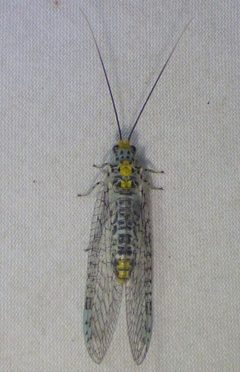
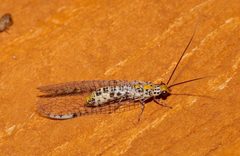
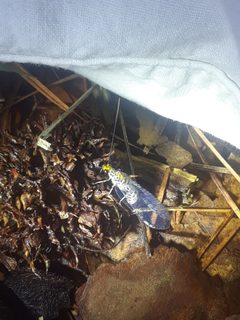
2Belonopterygini is a tribe of green lacewings within the Chrysopidae, commonly known as -loving Lacewings. Members of this tribe exhibit myrmecophilous associations, with larvae living in arboreal ant nests. Larvae possess distinctive morphological adaptations that appear to defend them against ant aggression. The tribe includes at least the Italochrysa, with documented from Australia and Europe.
Pronunciation
How to pronounce Belonopterygini: /bɛləˌnɑptɛˈrɪdʒɪnaɪ/
These audio files are automatically generated. While they are not always 100% accurate, they are a good starting point.
Identification
Larvae can be distinguished from other chrysopids by morphological adaptations associated with myrmecophily, including features that may provide defense against ants. Specific diagnostic characters for the tribe include traits related to debris-carrying and body structure, though detailed tribal-level diagnostic features require further systematic study.
Images
Habitat
Arboreal environments, specifically within nests. Larvae are found in arboreal ant nests, indicating a specialized microhabitat association.
Distribution
Documented from Australia (Italochrysa insignis) and Europe (Italochrysa italica). The tribe likely has broader distribution given the -level range of Chrysopidae, but specific records are limited to these regions in available sources.
Host Associations
- ants - myrmecophilyLarvae live in arboreal nests; relationship appears mutualistic or commensal with defensive adaptations against ant aggression
Life Cycle
Third instar larvae have been described for at least two (Italochrysa insignis and Italochrysa italica), indicating a standard holometabolous development with three larval instars typical of Neuroptera.
Behavior
Myrmecophily: larvae are associated with arboreal nests. Debris-carrying serves as a defensive against ants. Larvae exhibit morphological adaptations that may protect them from ant aggression while living within nests.
Similar Taxa
- other Chrysopidae tribesLarvae of Belonopterygini possess morphological adaptations for myrmecophily and debris-carrying defense that distinguish them from larvae of other chrysopid tribes
- Italochrysa italica vs. I. insignisLarvae of these congeneric share myrmecophilous adaptations but have distinct morphological differences at the species level
More Details
Myrmecophily review
The source includes a brief review of myrmecophily in Belonopterygini, suggesting this association is a defining tribal characteristic rather than an isolated .
Systematic value of larval characters
Larval morphological characters show potential systematic value at tribal, generic, and levels, indicating that stages may be important for phylogenetic studies within Chrysopidae.