
Climacia
spongillaflies
Species Guides
2- Climacia areolaris(spongillafly)
- Climacia californica
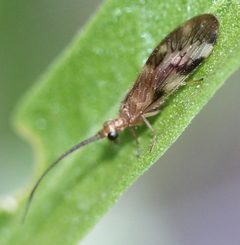
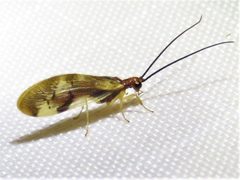
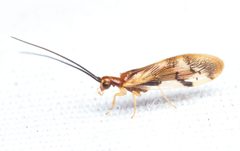
Climacia is a of spongillaflies in the Sisyridae, containing more than 20 described . Larvae of this genus are obligate associates of freshwater sponges, feeding on sponge tissues. are short-lived and non-feeding. The genus is found in freshwater across North America.
Pronunciation
How to pronounce Climacia: /klaɪˈmeɪʃə/
These audio files are automatically generated. While they are not always 100% accurate, they are a good starting point.
Identification
Climacia are distinguished from other neuropteran by their association with freshwater sponges and their small, delicate form. Within Sisyridae, species-level identification requires examination of wing venation and genitalia. Larvae are recognized by their elongated, slender bodies adapted for moving within sponge canals.
Images
Habitat
Freshwater aquatic environments, specifically those supporting of freshwater sponges ( Spongillidae). Larvae inhabit the internal canals of living sponges. are found near water bodies where sponges occur.
Distribution
North America; documented from California, Utah, New York (upper-Susquehanna Watershed, Otsego County), and other regions where freshwater sponges occur.
Seasonality
exhibit seasonal occurrence patterns tied to from sponges; specific timing varies by and locality.
Diet
Larvae feed on tissues of freshwater sponges (Spongillidae). are non-feeding.
Host Associations
- freshwater sponges (Spongillidae) - obligate Larvae develop within and feed on sponge tissues
Life Cycle
Larvae develop as within freshwater sponges, feeding on sponge tissues. emerge from sponges, are short-lived, and do not feed. are presumably laid in or near sponge hosts.
Behavior
Larvae are obligate of freshwater sponges, not . Larvae may exhibit microhabitat shifts within sponges in response to temperature changes. are non-feeding and short-lived.
Ecological Role
of freshwater sponges; may affect sponge in freshwater . May influence freshwater sponge distribution and abundance.
Similar Taxa
Misconceptions
Climacia were historically misunderstood as of freshwater sponges rather than . Research on Climacia areolaris established that the relationship is truly parasitic, with larvae feeding on living sponge tissue rather than consuming dead or dying sponge material.
More Details
Taxonomic note
Climacia californica was described by Chandler in 1953 and has been documented in Utah, expanding its known range beyond the type locality in California.
Research history
The of Climacia areolaris was among the first to be thoroughly documented for the , revealing the true parasitic nature of the larval stage and correcting earlier misconceptions about sponge-feeding .
Sources and further reading
- BugGuide
- Wikipedia
- iNaturalist taxon
- NCBI Taxonomy
- Catalogue of Life
- The Life History of Climacia areolaris (Hagen), a Neuropterous 'Parasite' of Fresh Water Sponges
- Climacia californicaChandler, 1953 (Neuroptera: Sisyridae) in Utah: taxonomic identity, host association and seasonal occurrence
- Distribution of Sisyridae and Freshwater Sponges in the upper-Susquehanna Watershed, Otsego County, New York with a New Locality for Climacia areolaris (Hagen)
- Temporal changes in temperature may suggest microhabitat shifts in larval spongillafly Climacia areolaris Hagen (Neuroptera: Sisyridae) abundance and density in a temperate freshwater lake