
Sisyridae
spongillaflies, spongeflies
Genus Guides
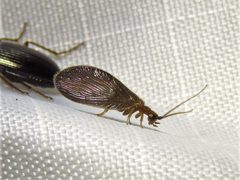
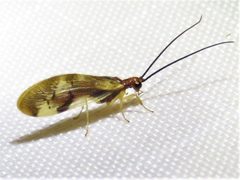
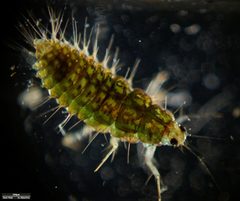
2, commonly known as spongillaflies or spongeflies, are a small of aquatic Neuroptera with approximately 60 extant worldwide. are small, brownish or greyish insects resembling brown lacewings (Hemerobiidae), with forewings spanning 4–10 mm. The family is distinguished by their unique larval : larvae are aquatic and obligate of freshwater sponges (Porifera: Spongillidae) and bryozoans (Phylactolaemata), using elongated to extract contents. Larvae possess seven pairs of jointed, movable tracheal gills on the —a trait unique among extant insects. The family has a fossil record extending to the Late Cretaceous, with two extant (Sisyrinae and Paradoxosisyrinae) and four living : Climacia, Sisyborina, Sisyra, and Sisyrina.
Pronunciation
How to pronounce Sisyridae: /sɪˈsaɪrɪdiː/
These audio files are automatically generated. While they are not always 100% accurate, they are a good starting point.
Identification
distinguished from similar brown lacewings (Hemerobiidae) by wing venation: few cross , mostly unforked, with Sc and R1 near wingtip. Larvae immediately identifiable by seven pairs of jointed abdominal tracheal gills—no other extant insect possesses this trait. First instar larvae lack these gills and are free-floating, resembling osmylid larvae but with different use.
Images
Habitat
Freshwater aquatic-terrestrial . associated with riparian vegetation overhanging lakes, ponds, and slow-moving rivers. Larvae develop in water on living freshwater sponges and bryozoans. Terrestrial stages (, pupa) restricted to moist microhabitats near water edge such as under rocks or bark. Bank structure is a decisive factor for local occurrence.
Distribution
Worldwide distribution across six continents. North America: two (Climacia, Sisyra), six in Canada, Mexico, and United States. South America: Amazon Basin with eight known species; Brazil with 17 species including first records from Caatinga and Espírito Santo. Africa: Western Palaearctic and Afrotropical regions including South Africa, Zimbabwe, Democratic Republic of the Congo, Nigeria, Senegal, Cameroon, Guinea, Zambia, Ivory Coast. Europe: multiple species including Austria, with records. Australia: Tasmania and mainland with described species including Sisyra pedderensis. Asia: Myanmar (Burmese amber fossils), Russia (Taimyr amber), Israel, Saudi Arabia. Fossil record extends to Late Cretaceous (Cenomanian) with Paradoxosisyrinae.
Seasonality
Activity patterns vary by climate. In temperate regions, larvae overwinter in cocoons and pupate the following spring. Development duration from larva to ranges from several weeks to one year depending on water temperature and condition. are or .
Diet
are : primarily scavengers on dead arthropods, also consume pollen and honeydew, and occasionally hunt small live including aphids. Larvae are obligate of freshwater sponges ( Spongilla and relatives) and freshwater bryozoans (Phylactolaemata), piercing tissues and sucking out contents.
Host Associations
- Spongillidae (freshwater sponges) - obligate larval Primary larval food source; larvae pierce sponge tissues to feed on contents. No strict specificity observed.
- Phylactolaemata (freshwater bryozoans) - obligate larval Secondary larval ; used alongside sponges.
- Gyrinophagus aper (Pteromalidae) - Parasitizes prepupal and pupal stages of Sisyra fuscata; recorded in Austria.
- Trichomalopsis sisyrae (Pteromalidae) - of Sisyra in Tasmania, Australia.
Life Cycle
laid on overhanging vegetation with protective silk covering. First instar larvae drop into water and are free-floating, serving as stage. Second and third instars are benthic, developing on living sponges and bryozoans; duration depends on water temperature and condition. Larvae exit water to pupate in terrestrial cocoon near water's edge. In temperate climates, larvae overwinter in cocoons and pupate the following spring; voltinism varies by region.
Behavior
are or . First instar larvae are free-floating and serve as the primary stage, allowing of new water bodies. Larvae use stouter-than-appearing to aid locomotion on substrates. Where sympatric, congeneric may show slight temporal separation but can overlap spatially.
Ecological Role
Larvae function as of freshwater sponges and bryozoans, potentially regulating . Serve as hosts for (Pteromalidae), linking aquatic and terrestrial . contribute to nutrient cycling as scavengers and may incidentally pollinate while feeding on pollen.
Human Relevance
None documented. Not pests; no economic importance. Occasionally studied as indicators of healthy freshwater due to dependence on living sponges and bryozoans.
Similar Taxa
- Hemerobiidae (brown lacewings) resemble brown lacewings in general appearance and coloration; distinguished by wing venation details (fewer cross , Sc and R1 near wingtip) and aquatic larval .
- Osmylidae (osmylids)Larvae superficially similar to first instar spongillaflies in having long and threadlike mouthparts; distinguished by absence of seven pairs of jointed abdominal tracheal gills in second-third instars, and different (osmylid larvae typically in moist terrestrial habitats or different aquatic , not specialized sponge ).
More Details
Fossil record
The has substantial fossil representation. Paradoxosisyrinae is known from Late Cretaceous Burmese amber (Cenomanian) and Taimyr amber (Santonian), representing the oldest confirmed family members. Extinct Paleosisyra occurs in Eocene Baltic and Oise ambers. The extinct genus Cratosisyrops from Brazilian Aptian deposits was tentatively assigned to but this placement remains uncertain.
Systematic position
are placed in superfamily Osmyloidea, with and as closest relatives. Molecular and morphological studies support this placement, though larval specializations for sponge are unique to Sisyridae.
Conservation notes
Local are limited by abundance (freshwater sponges and bryozoans) and bank structure. degradation affecting freshwater sponge would directly impact spongillafly populations.
Sources and further reading
- BugGuide
- Wikipedia
- GBIF taxonomy match
- iNaturalist taxon
- NCBI Taxonomy
- Catalogue of Life
- An overview of the African spongillaflies (Neuroptera: Sisyridae)
- Neuroptera of the Amazon Basin. Part 1. Sisyridae
- Eidonomy and Ecology of two European Spongillafly Species (Neuroptera: Sisyridae)
- Spongillaflies (Neuroptera: Sisyridae) of North America with a key to the larvae and adults
- The spongillafly genus Sisyra Burmeister, 1839 (Neuroptera: Sisyridae) from Brazil: Distributional, taxonomical and bionomical notes
- Foraging Behavior and Food of Adult Spongila-Flies (Neuroptera: Sisyridae)
- A new distribution record for the spongilla fly, Sisyra fuscata (Neuroptera, Sisyridae)
- A new genus of paradoxosisyrine lacewings from mid-Cretaceous Hkamti amber (Neuroptera: Sisyridae)
- Biology, ecology and voltinism of the Australian spongillafly Sisyra pedderensis Smithers (Neuroptera: Sisyridae)
- Taxonomic and distributional notes on Spongilla-flies (Neuroptera: Sisyridae) from Southeastern Brazil with first interactive key to the species of the country
- Trichomalopsis sisyrae Askew, sp. Nov. (Hymenoptera: pteromalldae), a parasitoid of Sisyra (Neuroptera: sisyridae) in Tasmania, Australia
- Studies on Southern Sisyridae (Spongilla-flies) with a Key to the Third-Instar Larvae and Additional Sponge-Host Records
- An Achiasmatic Mechanism That Ensures the Regular Segregation of Sex Chromosomes in Male Meiosis in the Black Spongilla-fly Sisyra nigra (Retzius 1738), Sisyridae, Differs from the Mechanism Commonly Observed Within Neuroptera.