
Chrysopini
green lacewings
Genus Guides
10- Apertochrysa
- Ceraeochrysa(trash-carrier lacewings)
- Chrysopa(Green lacewings)
- Chrysoperla(Common Green Lacewings)
- Chrysopodes
- Eremochrysa(Shadow Lacewings)
- Kymachrysa
- Meleoma
- Nineta(Nineta lacewings)
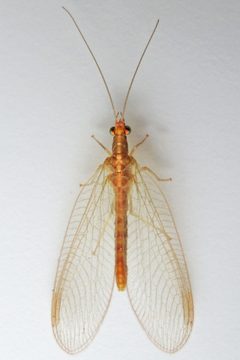
Chrysopini is a tribe of green lacewings within the Chrysopidae, comprising approximately 17-32 and 300-926 described . Members are recognized by their delicate, net-veined wings and often green or yellow-green bodies. The tribe represents one of the most species-rich and commonly encountered groups of lacewings in temperate and tropical regions worldwide.


Pronunciation
How to pronounce Chrysopini: //krɪˈsɒpɪnaɪ//
These audio files are automatically generated. While they are not always 100% accurate, they are a good starting point.
Identification
Distinguished from other Chrysopidae tribes primarily by genitalic characters, particularly male claspers and female subgenitale structure. of Chrysopini generally lack the dark longitudinal stripes on the and pronotum characteristic of some other chrysopid groups. The combination of green body coloration, golden , and dense wing venation with few costal crossveins distinguishes them from Hemerobiidae (brown lacewings). Larvae have elongated, somewhat flattened bodies with prominent, curved and lack the debris-carrying seen in some related groups.
Images
Habitat
Occurs in diverse vegetated environments including deciduous and coniferous forests, meadows, agricultural fields, orchards, and urban gardens. Abundance is strongly tied to vegetation structure and prey availability. frequently inhabit the and understory of woody plants. Larvae are found on foliage where they actively hunt prey.
Distribution
distribution with recorded from all biogeographic regions except Antarctica. Particularly diverse in temperate zones of the Northern Hemisphere and tropical regions of Asia, Africa, and the Americas. Individual species ranges vary from widespread (multiple continents) to highly restricted (single mountain ranges or islands).
Seasonality
activity patterns vary by latitude and . In temperate regions, most species are active from spring through autumn, with peak abundance in summer. Some species overwinter as adults in protected microhabitats. In tropical regions, adults may be present year-round with fluctuations tied to wet and dry seasons. Larvae are generally present whenever prey populations are sufficient.
Diet
Larvae are predatory, feeding primarily on soft-bodied arthropods including aphids, scale insects, , mites, , and or early instars of Lepidoptera and other insects. Some supplement diet with pollen or nectar. of most species are predatory, though some feed on honeydew, nectar, and pollen; a minority are known to be exclusively predatory.
Life Cycle
Holometabolous development with , larva, pupa, and stages. Females deposit eggs singly or in small groups on stalks (mucilaginous filaments) attached to vegetation, reducing among emerging larvae. Larvae pass through three instars, actively dispersing and hunting throughout development. Third instar larvae spin spherical, silken cocoons attached to vegetation or in concealed locations for . time varies from several weeks to multiple months depending on temperature and ; some species are , others or multivoltine.
Behavior
are primarily and , though some are active diurnally. Strong ability allows among patches. Adults of many species produce substrate-borne vibrational signals during courtship. Larvae are solitary, active that stalk or ambush prey. Defensive include the release of volatile compounds from prothoracic glands in some species, producing a disagreeable odor.
Ecological Role
Human Relevance
Widely recognized as beneficial insects in and . and larvae are commercially available for in greenhouse and field crop systems. are attracted to lights and occasionally enter structures. Some have been introduced outside native ranges for programs.
Similar Taxa
- NothochrysiniAnother tribe of Chrysopidae; often larger with more elaborate wing venation and frequently brown or patterned coloration rather than uniform green
- LeucochrysiniChrysopidae tribe distinguished by distinctive markings and different male genitalia structure; many have prominent dark stripes on head and pronotum
- HemerobiidaeBrown lacewing ; are generally smaller, brownish, with less dense wing venation and no golden coloration
More Details
Taxonomic Uncertainty
counts and generic composition vary substantially between sources due to ongoing taxonomic revision. The tribe has been subject to repeated phylogenetic reorganization, and some formerly included have been transferred to other tribes.
Commercial Use
Several Chrysopini , particularly in the Chrysoperla, are mass-reared and sold commercially under trade names such as 'Green Lacewing' or ' Lion' for applications.