
Micromus posticus
(Walker, 1853)
brown lacewing
Micromus posticus is a of brown lacewing in the Hemerobiidae. It is a predatory insect found across the Caribbean, Central America, and North America. Both larvae and feed on aphids, making it a potentially beneficial species in agricultural and garden settings. The species has been documented through blacklighting observations and is one of the more commonly encountered brown lacewings in its range.
Pronunciation
How to pronounce Micromus posticus: /ˈmɪkroʊməs ˈpɒstɪkəs/
These audio files are automatically generated. While they are not always 100% accurate, they are a good starting point.
Identification
Micromus posticus can be distinguished from similar brown lacewings by two key wing venation characters: the inner gradate on the forewing are separated by a distance less than or equal to their length, and the lacks conspicuous markings. These traits require examination of the wing under magnification. The is smaller than many green lacewings (Chrysopidae), and lacks the bright green coloration typical of that . Accurate identification to species level within Micromus typically requires reference to specialized keys and examination of genitalic characters.
Images
Appearance
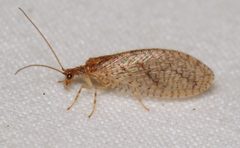
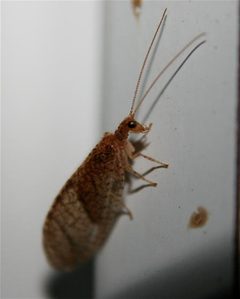
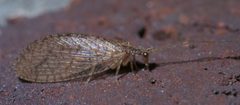
measure 7–9.5 mm from to wingtip. Adults are (fully winged). The forewing has inner gradate separated by a distance less than or equal to their length. The lacks conspicuous markings. Like other brown lacewings, adults are generally brown in coloration, though they may appear more reddish or pinkish in autumn and spring.
Habitat
Found in diverse environments where prey occurs, including forests, agricultural areas, and suburban gardens. overwinter and become active in early spring. Has been observed at blacklights in residential yards, indicating presence in human-modified landscapes. Specific microhabitat preferences for larvae are poorly documented but likely include vegetation with aphid colonies.
Distribution
Caribbean, Central America, and North America. Documented from the eastern United States (including Vermont) through the Caribbean and into Central America. The has been recorded as far north as the northeastern United States.
Seasonality
are active year-round in warmer regions, with winter survival as adults. In temperate North America, adults become active in early spring (March–April), with observations at blacklights beginning in mid-March. Activity continues through the growing season. The likely has multiple per year in warmer parts of its range, though specific is poorly documented.
Diet
Both larvae and are predatory, feeding on aphids. The is an throughout its life stages.
Life Cycle
, larval, pupal, and stages occur. Larvae are predatory on aphids. Adults overwinter, becoming active in early spring. Specific details of developmental duration, number of , and site selection are not well documented in available sources.
Behavior
are and attracted to ultraviolet and mercury vapor lights. They are active , hunting aphids on vegetation. Adults overwinter and resume activity in early spring when temperatures permit. Both life stages are predatory.
Ecological Role
Functions as a agent of . As a aphid , it may help suppress pest aphid in natural and agricultural . Its role in includes consumption of herbivorous insects (aphids) and likely serves as prey for larger predators such as birds and other insects.
Human Relevance
Potentially beneficial in agriculture and horticulture due to . May contribute to natural of aphid pests without human intervention. Not known to be a pest or to have negative impacts on human activities. Occasionally encountered by citizen scientists during blacklighting activities.
Similar Taxa
- Micromus variegatusAnother brown lacewing in the same ; requires examination of wing venation and genitalia for separation
- Hemerobius stigmaBrown pine lacewing in the same ; differs in associations and wing venation patterns
- Chrysoperla speciesGreen lacewings are larger, bright green, and in a different (Chrysopidae); easily distinguished by color and size
More Details
Research history
The was described by Walker in 1853. Despite being a widespread species, detailed studies remain limited. A 1923 study in Journal of Economic Entomology addressed life history, but full text access is needed for detailed parameters.
Citizen science documentation
The has been documented through iNaturalist observations, with expert identification confirming its presence in blacklighting . These observations help document seasonal activity and geographic distribution.