
Chrysopodes
Navás, 1913
Species Guides
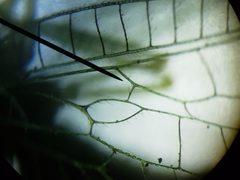
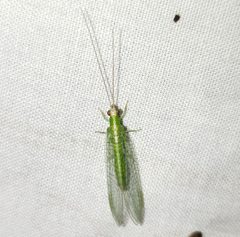
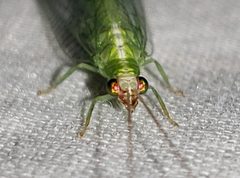
1Chrysopodes is a of green lacewings in the Chrysopidae, order Neuroptera. The genus currently comprises 47 described , with new species continuing to be discovered, particularly in the Neotropics. Species in this genus are predatory and are found in agricultural and disturbed . Accurate identification to species level requires examination of genital characters.
Pronunciation
How to pronounce Chrysopodes: /krɪˈsɒpoʊˌdiːz/
These audio files are automatically generated. While they are not always 100% accurate, they are a good starting point.
Identification
-level identification within Chrysopodes requires examination of genital features in males or females. External characters alone are insufficient for definitive identification, though each species possesses distinguishing external traits that may guide preliminary classification.
Images
Habitat
Agricultural and disturbed in tropical and subtropical regions. Has been collected in Brazil in agricultural settings and areas with anthropogenic disturbance.
Distribution
Neotropical region, with documented from Brazil and other parts of South America. The has a widespread distribution across the Neotropics.
Similar Taxa
- ChrysoperlaBoth are of green lacewings in Chrysopidae with similar general appearance. Chrysopodes is distinguished by genital characters and is primarily Neotropical, whereas Chrysoperla has a more distribution and different genital .
- CeraeochrysaAnother of green lacewings in Chrysopidae found in the Neotropics. Chrysopodes can be distinguished by specific genital characters, though external features may overlap.
More Details
Taxonomic Note
Chrysopodes is treated as a by NCBI and GBIF, but as a subgenus (Chrysopodes (Chrysopodes)) within the genus Chrysopodes by some sources including Catalogue of Life. The subgenus Chrysopodes (Chrysopodes) contains the majority of described .
Species Diversity
As of 2012, the contained 47 described . Three new Brazilian species were described in that year: Chrysopodes angularis, C. bocainensis, and C. serra.