
Taracticus ruficaudus
Curran, 1930
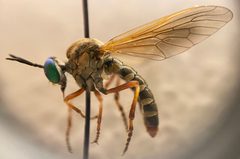
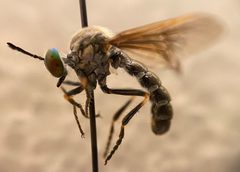
Taracticus ruficaudus is a of robber fly described by Charles Howard Curran in 1930. As a member of the Asilidae, it is a predatory fly that hunts other insects in . The specific epithet ruficaudus refers to its reddish tail. The Taracticus comprises small to medium-sized robber flies found primarily in the Americas.
Pronunciation
How to pronounce Taracticus ruficaudus: /tæˈræktɪkəs ˌruːfɪˈkɔːdəs/
These audio files are automatically generated. While they are not always 100% accurate, they are a good starting point.
Identification
The specific epithet ruficaudus (reddish tail) suggests the tip is reddish in color, which may help distinguish this from . As with other Taracticus species, it likely has a compact body form with relatively short, stout legs adapted for seizing prey. Positive identification requires examination of male genitalia and comparison with .
Images
Distribution
The distribution of Taracticus ruficaudus has not been well documented in available sources. The Taracticus is primarily Neotropical and Nearctic in distribution.
Ecological Role
As a member of the Asilidae, Taracticus ruficaudus functions as an aerial of other insects, contributing to control of various in its .
Similar Taxa
- Other Taracticus species share the compact body form and predatory habits; distinguishing features likely involve abdominal coloration and male genitalia structure
- Small Asilidae in the subfamily DasypogoninaeSimilar size and general appearance; Taracticus may be distinguished by specific wing venation and facial characteristics
More Details
Taxonomic history
Described by Canadian dipterist Charles Howard Curran in 1930. Curran was a prolific describer of Asilidae and other Diptera during the early-to-mid 20th century.
Data deficiency
This is extremely poorly known, with only 3 observations recorded in iNaturalist as of the data cutoff. No published biological studies or ecological observations were found in the provided sources.