
Trepobates pictus
(Herrich-Schaeffer, 1847)
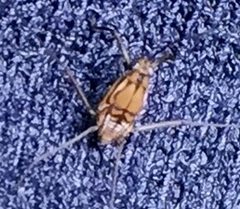
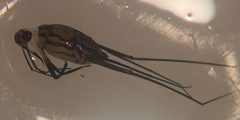
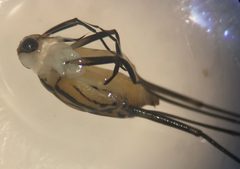
Trepobates pictus is a of water strider in the Gerridae, first described by Herrich-Schaeffer in 1847. It is distributed across eastern North America from Texas to Florida, extending northward to Illinois, Maine, and Ontario, as well as the Caribbean and South America. The species inhabits freshwater surface where it utilizes the water surface tension to move and forage.
Pronunciation
How to pronounce Trepobates pictus: /ˌtrɛpoʊˈbeɪtiːz ˈpɪktəs/
These audio files are automatically generated. While they are not always 100% accurate, they are a good starting point.
Identification
Trepobates pictus can be distinguished from other water striders by its geographic distribution in eastern North America and its association with the Trepobates, which is characterized by specific genitalic and structural features. The is one of approximately 10 recognized species in the genus Trepobates. Precise identification requires examination of male genitalia and other taxonomic characters typical of the Trepobatinae.
Images
Appearance
As a member of the Gerridae, Trepobates pictus possesses the characteristic elongated body form and long, slender legs adapted for locomotion on water surfaces. The specific epithet "pictus" (Latin for "painted") suggests distinctive coloration or patterning, though detailed morphological descriptions are not available in the provided sources. Water striders typically have hydrophobic leg setae that enable them to exploit surface tension.
Habitat
Freshwater surface including ponds, lakes, slow-moving streams, and other calm water bodies. The is associated with lentic and slow lotic freshwater environments where surface tension can be exploited for locomotion.
Distribution
Eastern North America from Texas to Florida, northward to Illinois, Maine, and Ontario; also recorded from the Caribbean and South America (Caribbean, North America, and South America present according to GBIF records).
Diet
Predatory, feeding on small trapped on the water surface, including insects and other arthropods that fall onto or are caught in the surface film.
Life Cycle
As with other Gerridae, development proceeds through , nymphal, and stages. The is tied to freshwater , with occurring on water surfaces.
Behavior
Utilizes the water surface tension to skate across water surfaces. Water striders are predatory and forage by detecting vibrations of struggling prey on the water surface. They are capable of rapid movement and can exploit ripples for communication and prey detection.
Ecological Role
in freshwater surface , controlling of small . Serves as prey for larger aquatic and terrestrial predators including fish, birds, and other insects.
Human Relevance
Subject of ecological and taxonomic research. Water striders are generally not considered pests and do not bite humans. They may serve as indicators of freshwater health.
Similar Taxa
- Other Trepobates speciesApproximately 10 in share similar and preferences; require genitalic examination for definitive identification
- Other Gerridae genera (e.g., Gerris, Aquarius)Share water surface locomotion habit and general body plan; distinguished by structural features of the Trepobatinae
More Details
Taxonomic History
Originally described as Halobates pictus by Herrich-Schaeffer in 1847, later transferred to the Trepobates. The basionym Halobates pictus reflects early taxonomic confusion within the Gerroidea.
Research Gaps
Detailed morphological descriptions, behavioral studies, and ecological research specific to T. pictus appear limited in the accessible literature. Most information is inferred from -level characteristics.