
Trepobatinae
Matsuda, 1960
small waterstriders
Genus Guides
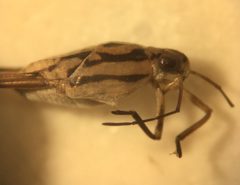
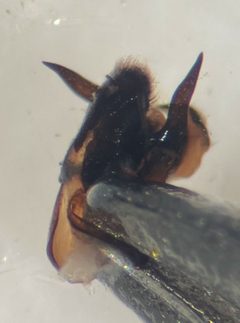
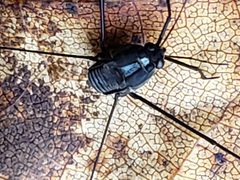
2Trepobatinae is a of small waterstriders (Gerridae) established by Matsuda in 1960. The group has undergone extensive radiation on New Guinea and surrounding archipelagos, with particularly high diversity in Melanesia. Four tribes are currently recognized: Metrobatini, Naboandelini, Stenobatini, and Trepobatini. The subfamily includes both freshwater and marine forms, with marine concentrated in the New Guinea region.
Pronunciation
How to pronounce Trepobatinae: /ˌtrɛpoʊˈbætɪniː/
These audio files are automatically generated. While they are not always 100% accurate, they are a good starting point.
Identification
Trepobatinae can be distinguished from other Gerridae by their small body size and specific tribal-level morphological characters. The four tribes are separated by genitalic and other structural features: Metrobatini and Trepobatini are primarily freshwater, while Stenobatini contains the marine forms. Keys to tribes and have been developed for regional faunas, particularly for New Guinea and Australia.
Images
Habitat
include both freshwater and marine surface waters. Freshwater occupy lakes, streams, and rivers. Marine forms are found in coastal and intertidal habitats, with all known marine species of the occurring in the New Guinea region and surrounding archipelagos except for one on brackish water in the eastern tropical Pacific.
Distribution
Center of diversity is New Guinea and surrounding archipelagos including the Solomon Islands, Halmahera, Vogelkop Peninsula, and numerous smaller islands. Distribution extends to Australia, Southeast Asia (Borneo, Philippines, Andaman Islands), Sri Lanka, and the eastern tropical Pacific. The pattern reflects influence of tectonic events, particularly accretion of island arc terranes from the Solomons and Halmahera arc systems.
Similar Taxa
- RhagadotarsinaeAnother of small Gerridae sharing surface-dwelling habits; distinguished by different tribal structure and primarily freshwater distribution
More Details
Tribal classification
The is divided into four tribes: Metrobatini (type Metrobates), Naboandelini (type genus Naboandelus), Stenobatini (type genus Stenobates), and Trepobatini (type genus Trepobates). This classification was established through a series of revisions by Polhemus & Polhemus (1993–2002) and supported by cladistic analysis.
Biogeographic significance
Distribution patterns in Trepobatinae have been strongly influenced by past tectonic events. Marine is concentrated around Halmahera, the Vogelkop Peninsula, and northeastern New Guinea, while Naboandelini shows vicariance patterns with Australia across the Torres Strait.
Taxonomic history
The was extensively revised in a six-part monographic series by Polhemus & Polhemus (Insect & Evolution, 1993–2002), which established the modern tribal classification and documented the New Guinea radiation.
Sources and further reading
- BugGuide
- iNaturalist taxon
- NCBI Taxonomy
- Catalogue of Life
- Australian water striders of the subfamilies Trepobatinae and Rhagadotarsinae (Hemiptera : Gerridae)
- The Trepobatinae (Heteroptera: Gerridae) of New Guinea and surrounding regions, with a review of the world fauna. Part 1. Tribe Metrobatini
- The Trepobatinae (Gerridae) of New Guinea and surrounding regions, with a review of the World fauna. Part 5. Taxonomic and distributional addenda
- The Trepobatinae (Heteroptera: Gerridae) of New Guinea and surrounding regions, with a review of the world fauna. Part 2. Tribe Naboandelini
- The Trepobatinae (Heteroptera: Gerridae) of New Guinea and surrounding regions, with a review of the World fauna. Part 4. The marine tribe Stenobatini
- The Trepobatinae (Gerridae) of New Guinea and surrounding regions, with a review of the world fauna. Part 6. Phylogeny, biogeography, world checklist, bibliography and final taxonomic addenda