
Dipsocoromorpha
minute litter bugs
Family Guides
2- Ceratocombidae(minute litter bugs)
- Schizopteridae(minute litter bugs)
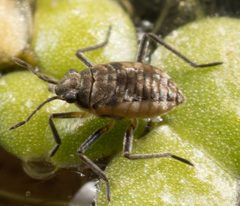
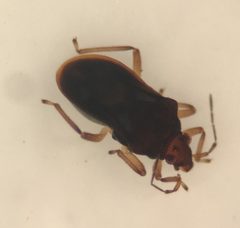
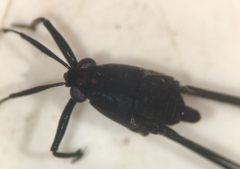
Dipsocoromorpha is an infraorder of minute true bugs within Heteroptera, containing approximately 300 in one superfamily (Dipsocoroidea). Members are among the smallest true bugs, typically 0.5–4.0 mm in length. The group exhibits highest diversity in tropical regions, with many species remaining undescribed due to their cryptic habits and small size.
Pronunciation
How to pronounce Dipsocoromorpha: /ˌdɪpsəˌkɔːrəˈmɔːrfə/
These audio files are automatically generated. While they are not always 100% accurate, they are a good starting point.
Identification
Distinguished from other Heteroptera by combination of minute size (under 4 mm), flattened broad body, and long, with conspicuous setae. Males of some possess diagnostic wing modifications, such as the 'wing organ' in Chinannus—an enlarged, sclerotized wing with fine structures. Male genitalia, particularly asymmetrical and intricate structures, provide -level diagnostic features. Schizopteridae, the largest , is characterized by diverse genitalic morphologies that are taxonomically informative.
Images
Habitat
Primarily ground-dwelling and leaf litter inhabitants. Also occurs in mangroves, low vegetation areas, and zones of streams. Some occupy unique microhabitats distinct from .
Distribution
with highest abundance in tropical regions. Documented from North and South America, Europe, Asia (including Turkey, Iran, Korea, Thailand, Japan), and the Caribbean. Many have restricted geographic ranges; new species are frequently discovered with each distinct tropical locality sampled.
Life Cycle
Nymphal stages occur; development has been documented in European Ceratocombidae and . Detailed information is limited for most .
Behavior
Inhabits cryptic microhabitats, suggesting secretive . Abundant in bulk and residue from tropical and subtropical regions, indicating high densities in suitable microhabitats despite low individual visibility.
Human Relevance
No direct economic or medical significance documented. Represents a poorly studied component of leaf litter and ground-dwelling . Historical specimens in natural history collections continue to yield new discoveries.
Similar Taxa
- EnicocephalomorphaAnother primitive infraorder of Heteroptera with small body size; distinguished by different and preferences
- GerromorphaSemiaquatic true bugs that may co-occur in zones; distinguished by adaptations for surface locomotion on water and generally larger body size
- LeptopodomorphaSemiaquatic to shore-dwelling true bugs; distinguished by different body proportions and specialization along water margins
More Details
Taxonomic Diversity
The infraorder contains one superfamily (Dipsocoroidea) with approximately 300 described , but true diversity is believed to be substantially higher. Schizopteridae alone comprises more than 250 described species across 56 , with extensive undescribed diversity in the Neotropics. Recent revisions of Schizoptera subgenera have doubled or tripled species counts, suggesting similar patterns await discovery in other lineages.
Phylogenetic Position
Considered one of the most primitive infraorders within Heteroptera based on morphological and chromosomal evidence. Fossil records extend to the Early Cretaceous, though preservation is poor and phylogenetic placement remains difficult to assess.
Chromosomal Characteristics
Exhibits relatively conserved numbers compared to other heteropteran groups. Sex determination systems include XY and XO mechanisms, with typical heteropteran featuring achiasmatic pairing and chiasmatic autosomal pairing.
Sources and further reading
- BugGuide
- Wikipedia
- iNaturalist taxon
- NCBI Taxonomy
- Catalogue of Life
- Twenty-six New Species of Minute Litter Bugs Described in New Book
- minute litter bugs Archives - Entomology Today
- An annotated catalog of the Iranian Dipsocoromorpha, Enicocephalomorpha, Gerromorpha, Leptopodomorpha and Nepomorpha (Hemiptera: Heteroptera)
- Chromosomes and their Meiotic Behavior in Two Families of the Primitive Infraorder Dipsocoromorpha (Heteroptera)
- Annotated catalogue of Enicocephalomorpha, Dipsocoromorpha, Nepomorpha, Gerromorpha, and Leptopodomorpha (Hemiptera: Heteroptera) of Turkey, with new records
- First record of family Dipsocoridae (Hemiptera: Heteroptera: Dipsocoromorpha) from the Korean Peninsula and a new generic combination for Cryptostemma japonicum Miyamoto
- Scratching the surface? Taxonomic revision of the subgenus Schizoptera <br />(Odontorhagus) reveals vast undocumented biodiversity in the largest litter bug genus Schizoptera Fieber (Hemiptera: Dipsocoromorpha)
- Checklist, distribution, and habitat of the semiaquatic and aquatic bugs from Cuba (Hemiptera: Heteroptera: Dipsocoromorpha, Leptopodomorpha, Gerromorpha and Nepomorpha)
- Synopsis of Schizopteridae (Hemiptera, Heteroptera, Dipsocoromorpha) from the United States, with description of seven new species from the US and Mexico
- Ceratocombus sirindhornae sp. nov. (Hemiptera: Heteroptera: Dipsocoromorpha: Ceratocombidae): A New Species of the Minute Litter Bugs from Thailand
- Taxonomic revision of the minute litter bug subgenus Schizoptera (Zygophleps) McAtee & Malloch, 1925 (Heteroptera: Dipsocoromorpha: Schizopteridae)
- Nymphal development and diagnostics, and biology of three European Ceratocombidae and Dipsocoridae species (Hemiptera: Heteroptera: Dipsocoromorpha)