
Rheumatobates
Bergroth, 1892
water strider
Species Guides
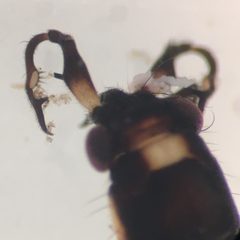
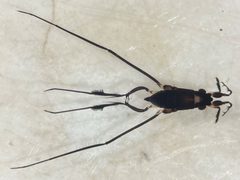
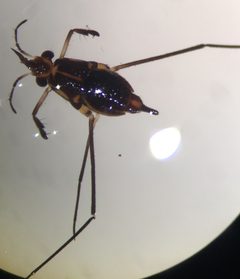
8Rheumatobates is a of water striders (Hemiptera: Gerridae) containing approximately 30–39 described . Males of this genus exhibit elaborate secondary sexual traits, including highly modified and hind legs used during pre-copulatory struggles with females. These sexually antagonistic traits have evolved through multiple independent origins and show an escalation pattern across the genus . The genus occupies diverse aquatic including estuarine environments and mangroves.
Pronunciation
How to pronounce Rheumatobates: /ˌrjuːmətoʊˈbeɪtiːz/
These audio files are automatically generated. While they are not always 100% accurate, they are a good starting point.
Identification
Males are distinguished from other by bizarre modifications of the and hind legs, including structures used to grasp females around the and lift their hind legs above the water surface during pre-copulatory struggles. -level identification relies on male genitalia, antennae, and fore leg characteristics.
Images
Habitat
Estuarine waters and mangroves; occupies water surface .
Distribution
Colombian Caribbean region; Colombia; Vermont, United States.
Diet
Feeds on terrestrial insects; lipid composition indicates synthesis of 20:5 from C-18 precursors.
Behavior
Males repeatedly harass females, which respond by evasive skating. If grasped, a pre-copulatory struggle ensues; short struggles typically lead to copulation, while prolonged struggles result in disengagement. During pre-copulatory struggles, males use modified to encircle the female's and hind legs to lift the female's hind legs off the water surface. Neither antennae nor hind legs are used during copulation itself. Females isolated from males for extended periods become less reluctant to mate. After brief copulation, males withdraw their genitalia and dismount.
Similar Taxa
- GerrisFreshwater with different lipid composition (lower triglyceride storage, different profiles) and lacking the elaborate male secondary sexual modifications of and hind legs seen in Rheumatobates.
- HalobatesMarine distinguished by presence of 22:6 derived from marine plankton food, higher triglyceride lipid storage (74–92% vs. 46–72%), and lack of the elaborate sexually antagonistic male appendage modifications characteristic of Rheumatobates.
Sources and further reading
- BugGuide
- Wikipedia
- GBIF taxonomy match
- iNaturalist taxon
- NCBI Taxonomy
- Catalogue of Life
- Functional significance of elaborate secondary sexual traits and their evolution in the water strider genusRheumatobates
- A comparative study of the lipids of water‐striders from marine, estuarine, and freshwater environments: Halobates, Rheumatobates, Gerris (Heteroptera: Gerridae)1
- A new species of Rheumatobates Bergroth (Hemiptera: Heteroptera: Gerridae) from mangroves of the Colombian Caribbean region, new records, and a key to species recorded from the country