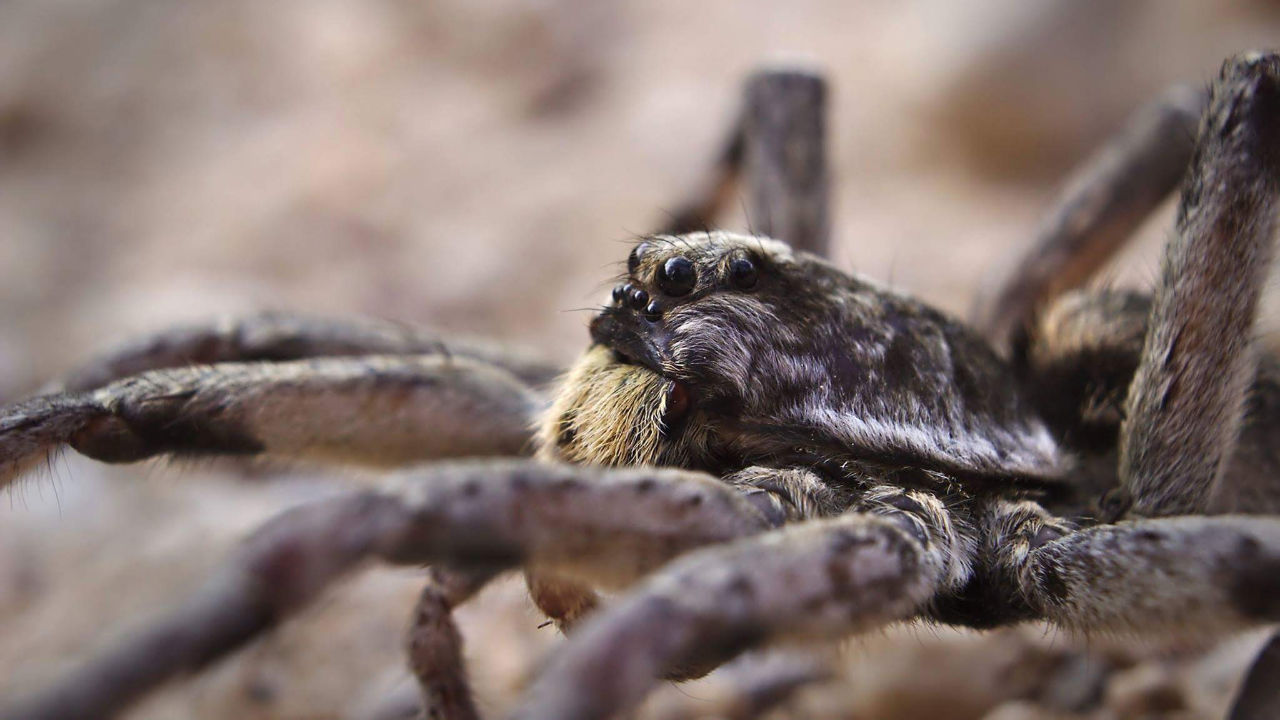
Acanthepeira marion is an orb-weaving spider in the family Araneidae, first described by Levi in 1976. The species is distributed across the United States and Mexico. As a member of the genus Acanthepeira, it shares the distinctive spiny abdominal tubercles characteristic of this group of orbweavers.
Mites and Ticks, mites, ticks
Acari is a subclass of arachnids containing mites and ticks. The group exhibits extraordinary diversity with fossil records dating to the early Devonian period. Recent phylogenetic analyses have challenged the monophyly of Acari, suggesting that the two main lineages—Parasitiformes (ticks and allies) and Acariformes (dust mites, spider mites, chiggers, and allies)—may not share a single common ancestor exclusive of other arachnids. This would render Acari a paraphyletic or polyphyletic grouping rather than a natural taxon. The traditional unifying character, the gnathosoma (a modified mouthpart region), has been shown to be absent or differently constructed in many species across both lineages.
Black Walnut Petiole Gall Mite
Aceria caulis, the Black Walnut Petiole Gall Mite, is an eriophyid mite in the superfamily Eriophyoidea. Like other members of its genus, this species is a plant parasite that induces abnormal plant growth. The specific epithet 'caulis' and common name suggest association with walnut petioles, though detailed biological studies of this particular species appear limited in the available literature.
Buttonbush Mite
Aceria cephalanthi, commonly known as the Buttonbush Mite, is an eriophyid mite in the genus Aceria. Eriophyid mites are minute, worm-like arachnids with four legs that are specialized plant parasites. Members of this genus typically infest specific host plants, with this species associated with buttonbush (Cephalanthus). Like other eriophyids, it likely has a short development period and lives in protected areas of the plant.
Aceria vaga is a species of eriophyid mite in the family Eriophyidae. Eriophyid mites are minute, worm-like arachnids with four legs that are specialized plant parasites. Many species in this group cause distinctive growth abnormalities on their host plants, including galls, witches' brooms, and leaf distortions. Aceria vaga is among the numerous eriophyid species that remain poorly studied despite the group's significant agricultural and ecological importance.
Acuclavella shoshone is a species of harvestman (order Opiliones) in the family Ischyropsalididae. It was described by Shear in 1986 and is known from North America. The specific epithet "shoshone" likely refers to the Shoshone region or peoples, reflecting its geographic association. As a member of the suborder Dyspnoi, it belongs to a group of harvestmen characterized by particular respiratory and morphological features. Very little detailed biological information has been published for this species.
Agnyphantes arboreus is a species of sheet-web weaver spider in the family Linyphiidae, first described by Emerton in 1915 under the name Bathyphantes arborea. It is a small spider native to western North America, with confirmed records from Alberta and British Columbia in Canada. Like other linyphiids, it constructs flat sheet webs to capture prey. The species epithet 'arboreus' suggests an association with trees or woody vegetation.
Agyneta serrata is a sheet weaver spider described by Emerton in 1909. It belongs to the family Linyphiidae, one of the largest families of spiders commonly known as money spiders or sheet web weavers. The species has been documented in Canada and the United States.
Allocosa sublata is a species of wolf spider in the family Lycosidae, first described by Montgomery in 1902. It is a ground-dwelling spider known from the United States. Very few observations exist in public databases, with only five records on iNaturalist as of the latest data. The genus Allocosa contains multiple North American species, many of which occupy similar terrestrial habitats.
whip spiders, tailless whip scorpions, amblypygids
Amblypygi is an ancient order of arachnids comprising approximately 280 species across five families. These nocturnal predators are characterized by extremely elongated first pair of legs modified as sensory "whips" and raptorial pedipalps for capturing prey. They lack venom glands, silk production, and the tail-like flagellum present in their relatives the whip scorpions (Uropygi). Several species exhibit unusual social behaviors including maternal care and kin recognition.
Florida Camel Spider
Ammotrechella stimpsoni is a species of solifugid (camel spider) in the family Ammotrechidae, commonly known as the Florida Camel Spider. It is one of the few solifugid species found in the southeastern United States, representing a group of arachnids more commonly associated with arid regions. The species was described by Putnam in 1883. Like other solifugids, it possesses large chelicerae and is an active predator.
Southeastern Wandering Spider
Anahita punctulata, commonly known as the southeastern wandering spider, is a species of wandering spider in the family Ctenidae. It is found in the United States. The species was first described by Hentz in 1844.
Anchigarypus californicus is a pseudoscorpion species originally described by Nathan Banks in 1909 as Garypus californicus. The species has since been reclassified from Garypus to Anchigarypus based on morphological and taxonomic revisions. It belongs to the family Garypidae, a group of pseudoscorpions commonly found in coastal and intertidal habitats. The species is known from North America, with records primarily from California and surrounding regions.
ghost spider
Anyphaena californica is a species of ghost spider in the family Anyphaenidae, first described by Banks in 1904. It is native to the western United States, particularly California, where it inhabits various terrestrial environments. As a member of the ghost spider family, it is likely nocturnally active and hunts without constructing permanent webs for prey capture.
ghost spider
Anyphaena celer is a species of ghost spider (family Anyphaenidae) native to North America. It is one of 32 previously described species in the species-rich celer group within the genus Anyphaena. The species was originally described as Clubiona celer by Hentz in 1847. Like other anyphaenids, it is nocturnally active and associated with vegetation.
Eastern Spurred Ghost Spider
Anyphaena pectorosa is a species of ghost spider in the family Anyphaenidae, first described by L. Koch in 1866. It belongs to the pectorosa species group, one of five groups recognized within the North American and Mexican Anyphaena fauna. The species is distributed across the United States and Canada. As a member of Anyphaenidae, it is a wandering hunter rather than a web-builder.
Chiricahuan Gray Tarantula
Aphonopelma gabeli is a medium-sized tarantula species in the family Theraphosidae, native to the Chihuahuan Desert region of the southwestern United States. It is commonly known as the Chiricahuan Gray Tarantula due to its occurrence in the Chiricahua Mountains area of southeastern Arizona and adjacent regions. The species was described by Andrew M. Smith in 1995 and is considered less commonly encountered than the sympatric Texas brown tarantula (Aphonopelma hentzi).
Aphonopelma joshua is a species of tarantula in the family Theraphosidae, described by Prentice in 1997. It is native to California, United States. Like other members of the genus Aphonopelma, this species is a large-bodied, ground-dwelling spider that constructs burrows. The genus has undergone significant taxonomic revision, with a 2016 study reducing the number of recognized U.S. species from 55 to 29 based on integrative morphological, molecular, and ecological data.
Apollophanes texanus is a species of running crab spider in the family Philodromidae. The species was described by Nathan Banks in 1904. It occurs in the southern United States and Mexico. Like other philodromids, it is an active hunter that does not construct webs to capture prey.
Typical Spiders, True Spiders, Labidognatha
Araneomorphae is a suborder of spiders comprising approximately 92% of all living spider species. Members are distinguished by chelicerae (fangs) that oppose each other diagonally forward and cross in a pinching action, contrasting with the parallel, downward-pointing fangs of Mygalomorphae. This diverse group includes orb-weavers, cobweb spiders, jumping spiders, wolf spiders, crab spiders, and huntsman spiders. Most species have at most one pair of book lungs and typically exhibit annual life cycles.
Redlined Wolf Spider
Arctosa rubicunda is a wolf spider in the family Lycosidae, commonly known as the Redlined Wolf Spider. It occurs in North America, with confirmed records from the United States and Canada including Alberta and British Columbia. The species has been documented as a host for the spider wasp Priocnemis minorata, which paralyzes it to provision nests for its larvae.
Attidops cutleri is a small jumping spider in the family Salticidae, first described by Edwards in 1999. The species is known from limited observations, with only 8 documented records on iNaturalist. It occurs in the southern United States and Mexico. Like other salticids, it possesses excellent vision and hunts by stalking prey rather than building webs.
Attidops youngi is a small jumping spider in the family Salticidae, first described by the Peckhams in 1888. This species is found in the United States and Canada, representing one of the few North American members of the genus Attidops. Like other salticids, it possesses the characteristic enlarged anterior median eyes that provide acute vision for hunting and navigation. The genus Attidops is relatively understudied, with limited published information on the biology and ecology of its constituent species.
Attulus finschi is a species of jumping spider in the family Salticidae. It occurs across northern regions of North America and Eurasia, with documented populations in Russia (from West Siberia to the Far East), Canada, and the United States. As a member of the Attulus genus, it shares the characteristic jumping ability and visual acuity typical of salticid spiders.
Azilia affinis is a species of long-jawed orb-weaver spider in the family Tetragnathidae. It was described by O. Pickard-Cambridge in 1893. The species occurs from the southern United States through Central America to Panama. Like other members of Tetragnathidae, it possesses elongated chelicerae (jaws) adapted for capturing prey while building orb-shaped webs.
Barronopsis texana is a species of funnel weaver spider in the family Agelenidae. It belongs to the large-bodied B. texana species group, characterized by distinctive genital morphology and larger body size relative to congeners. The species has been recorded across the United States with over 1,500 observations documented.
Short Sheetweb Weaver
Bathyphantes brevis is a species of sheetweb spider in the family Linyphiidae, first described by Emerton in 1911. It is found in the United States and Canada. As a member of the Linyphiidae, it constructs flat, horizontal sheet webs. The species is part of the diverse genus Bathyphantes, which contains numerous small-bodied spiders.
Hump-headed Shield Sheetweaver
Bathyphantes keeni is a species of sheetweb spider in the family Linyphiidae. It occurs in Canada and the United States. The species is part of the diverse sheetweb weaver group, which constructs flat or dome-shaped webs rather than orb webs. Little specific information has been published on its biology.
Blabomma californicum is a species of true spider first described by Simon in 1895. It belongs to the family Cybaeidae (previously placed in Dictynidae). The species is notable for having only six eyes rather than the typical eight eyes found in most spiders. It occurs in western North America across Canada, the United States, and Mexico, and is listed as imperiled in Canada.
Brachypylina is a diverse infraorder of oribatid mites (beetle mites) comprising the majority of oribatid species. These mites are characterized by heavily armored, beetle-like bodies with a distinct separation between the notogastral shield and other body regions. They occupy a wide range of terrestrial habitats and play significant roles in decomposition and nutrient cycling.
Branchia potens is a species of solifuge (sun spider) in the family Ammotrechidae, described by Muma in 1951. It belongs to the genus Branchia, which is classified within the subfamily Saronominae. The species is known from North America. As with many solifuges, detailed biological information remains limited in published literature.
armoured harvestman
Calicina galena is a species of armoured harvestman (order Opiliones) in the family Phalangodidae. It was described by Ubick and Briggs in 1989 and is known from North America. As a member of the Laniatores suborder, it possesses the characteristic armoured body form typical of this diverse group of arachnids.
Calicina mariposa is a species of armoured harvestman in the family Phalangodidae. It was originally described as Sitalcina mariposa by Briggs in 1968 before being transferred to the genus Calicina. The species is known from North America. Very little published information exists regarding its biology or ecology.
Callidosoma is a genus of mites in the family Erythraeidae, subfamily Callidosomatinae. Members are classified within the superfamily Erythraeoidea, a group of predatory mites commonly known as velvet mites or rain mites. The genus was established by Womersley in 1936 and is distributed across multiple continents. Erythraeid mites are generally characterized by their soft, often brightly colored bodies and active predatory habits.
basket-web weavers
Calymmaria is a genus of small North American spiders known for their distinctive inverted cone-shaped webs. These araneomorph spiders were first described in 1937 and contain 31 species, with most distributed along the Pacific coast of the United States and Canada. They are primarily nocturnal and construct unique 'basket' webs under bark, rocks, and other sheltered substrates.
Calymmaria californica is a species of true spider in the family Cybaeidae. It was described by Nathan Banks in 1896. The species is found in the United States, though specific details about its biology and ecology remain poorly documented in published literature.
Calymmaria emertoni is a small true spider in the family Cybaeidae (formerly Hahniidae). It is one of approximately 31 Calymmaria species found north of Mexico, with most species restricted to the Pacific coast region. This species is notable for its distinctive basket-shaped web and nocturnal habits.
Calymmaria persica is a species of true spider in the family Cybaeidae, found in the United States. It belongs to the marronoid clade, a diverse group of small to medium-sized spiders united by genetic rather than obvious morphological characteristics. The species constructs distinctive basket-shaped webs and is primarily nocturnal.
Calymmaria suprema is a species of true spider in the family Cybaeidae, first described by Chamberlin and Ivie in 1937. It belongs to the genus Calymmaria, which contains 31 species north of Mexico, most restricted to the Pacific coast region. The species occurs in the United States and Canada, though specific details about its biology remain limited in published literature.
Prairie Ant-mimic Sac Spider
Castianeira alteranda is a species of ant-mimic spider in the family Corinnidae. It occurs in the northern United States and southern Canada, with records from Alberta, Manitoba, and Saskatchewan. The species was described by Gertsch in 1942. Like other members of the genus Castianeira, it exhibits ant-mimicry as a defensive strategy.
Castianeira athena is a species of ant-mimic spider in the family Corinnidae, first described by Reiskind in 1969. Like other members of its genus, it exhibits Batesian mimicry of ants as a defensive strategy against predators. The species occurs in the United States and Mexico. As a corinnid spider, it is an active hunter rather than a web-builder.
Castianeira dorsata is a species of true spider in the family Corinnidae, first described by Banks in 1898. It is distributed across the United States and Mexico. Like other members of its genus, it is an ant-mimicking spider, though specific behavioral and ecological details for this species remain poorly documented.
Castianeira thalia is a species of ant-mimic spider in the family Corinnidae, first described by Reiskind in 1969. It belongs to a genus known for ant-mimicry, where spiders resemble ants in appearance and behavior to avoid predation. The species has been documented in the western United States, particularly along the West Coast.
Castianeira walsinghami is a species of true spider in the family Corinnidae. It occurs in the United States and Canada. Beyond basic taxonomic placement and geographic distribution, detailed natural history information for this specific species is limited in available sources.
dwarf spiders
Centromerus is a genus of dwarf spiders in the family Linyphiidae, containing approximately 88 species and two subspecies. The genus has a broad distribution spanning the Holarctic region, with species recorded across Europe, North America, Asia, and North Africa. Many species exhibit restricted geographic ranges, while a few such as C. sylvaticus have exceptionally wide distributions. The genus was established by Dahl in 1886.
Centromerus persolutus is a species of sheetweb spider (family Linyphiidae) described by O. Pickard-Cambridge in 1875. It is a small-bodied spider that constructs flat, sheet-like webs to capture prey. The species occurs in northeastern North America, with documented records from the United States and Canada.
sheetweb spider, money spider
Centromerus sylvaticus is a small sheetweb spider in the family Linyphiidae, commonly known as money spiders. The species has a broad Holarctic distribution spanning North America, Europe, and Asia. Adults measure 2.2–4 mm in body length. Two subspecies are recognized: the nominate C. s. sylvaticus and C. s. paucidentatus described from Bulgaria.
dwarf spiders
Ceraticelus is a genus of dwarf spiders in the family Linyphiidae, subfamily Erigoninae. First described by Eugène Louis Simon in 1884, the genus currently contains approximately 34 species and two subspecies distributed primarily in North America, with some species occurring in Europe and Asia. The genus definition has been historically problematic due to superficial treatment of male palpal bulb morphology. Recent taxonomic work has clarified diagnostic characters through examination of the type species, C. fissiceps.
dwarf spider
Ceraticelus minutus is a species of dwarf spider in the family Linyphiidae, first described by James Henry Emerton in 1882. It is one of the smallest North American spiders, typically measuring only 1–2 mm in body length. The species is distributed across the United States and Canada, with records from provinces including Alberta, Manitoba, and Ontario. Like other linyphiids, it constructs small sheet webs close to the ground in vegetation.
dwarf spider
Ceratinopsis interpres is a species of dwarf spider in the family Linyphiidae, first described by O. Pickard-Cambridge in 1874. It belongs to a genus of small sheet-web weavers. The species is known from limited observations in the United States.